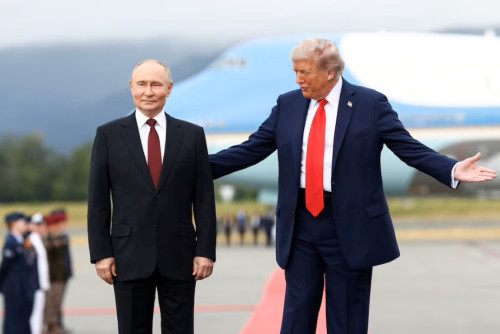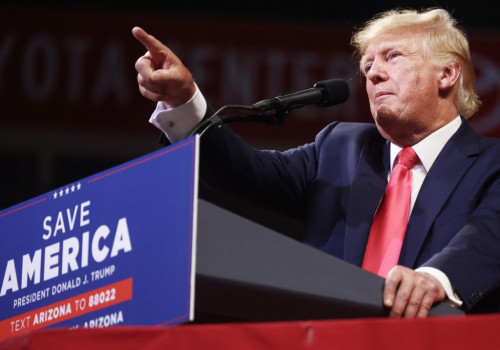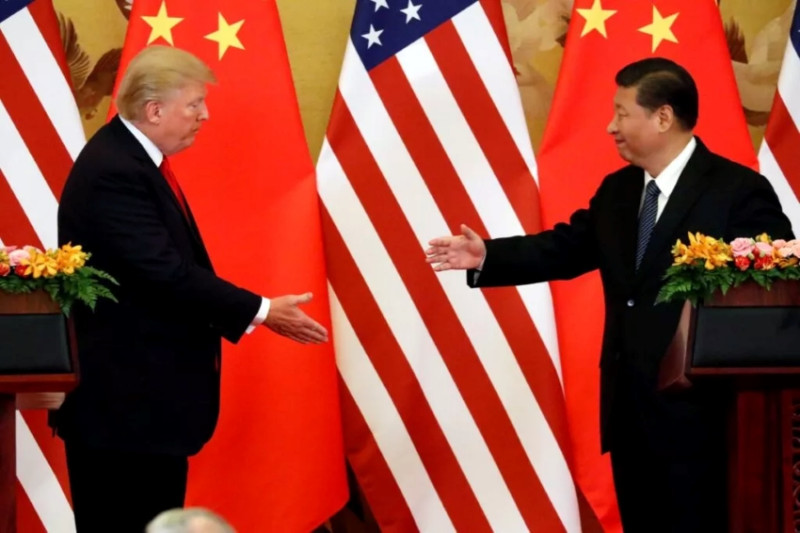
HARDLINERS on China and senior Democratic lawmakers have sharply criticised President Donald Trump’s decision to allow Nvidia to export its second-most advanced artificial intelligence chip, the H200, to China.
Reuters reported on Wednesday that they argue that Beijing could exploit the technology to strengthen its military capabilities, undoing years of efforts to restrict Chinese access to cutting-edge US hardware.
Trump announced the policy shift on Monday in a social media post, confirming that Washington would impose a 25 per cent levy on the exports and that AMD and Intel would also be authorised to sell comparable chips to China.
The move represents the most dramatic step yet in his new push to relax curbs on sales of advanced US AI technology overseas as he seeks fresh markets for American firms, amid China’s own export limits on rare-earth minerals crucial to global manufacturing.
Critics, however, warned that the policy jeopardises national security. Brad Carson, a former Under Secretary of the Army, said the decision “puts our competitive edge up for sale, all for a 25% cut of chip exports.”
He added: “When China starts supplying their military with AI built on U.S. chips, the world will regret this decision.”
The White House framed the policy very differently. Spokesman Kush Desai said the administration remained committed to maintaining US leadership in artificial intelligence “without compromising on national security.”
China, for its part, called for stability in global commerce. Liu Pengyu, spokesperson for Beijing’s embassy in Washington, said: “China hopes that the U.S. will take concrete actions to maintain the stability and smooth functioning of global supply chains.”
The Commerce Department did not immediately comment.
The reversal stands in stark contrast to Trump’s first term, when his administration imposed sweeping restrictions on Chinese access to advanced US technologies, citing allegations—denied by Beijing—that China systematically appropriated American intellectual property and channelled commercial technologies into military programmes.
The current administration, led on AI strategy by White House adviser David Sacks, now argues that allowing limited sales of high-performance chips such as the H200 will disincentivise Chinese firms, including Huawei, from accelerating efforts to close the technology gap.
Sacks warned earlier this year that if, within five years, Huawei-made AI chips were ubiquitous, “that means we lost … We can’t let that happen.”
Many in Washington remain unconvinced. Stewart Baker, a former senior official at the Department of Homeland Security and the National Security Agency, rejected the administration’s argument as “a delusion.”
He said: “There’s no world in which they are not going to continue to press as hard as possible to have a domestic industry that will ultimately have as its goal the bankruptcy of Nvidia and the dependence of the United States on Chinese AI.”
Democratic lawmakers echoed such concerns.
Senator Ron Wyden accused Trump of being “taken to the cleaners by China yet again” and argued that “every American will be less safe because of his terrible deal on AI technology.”
Congressman Raja Krishnamoorthi described the approval of chip sales as “a profound national security mistake and a gift to our top strategic competitor.”
Some China hawks, however, said the impact may be short-lived. James Mulvenon, a leading analyst of China’s military modernisation who helped drive the original 2020 sanctions against Chinese chipmaker SMIC, argued that Beijing had already committed to technological self-sufficiency.
“Regardless of this decision, the Chinese government has made it clear that it is not their long-term strategic goal to be dependent on Nvidia or any other Western technology, so these gains will likely be transitory,” he said.
Trump’s decision opens a new front in the global contest over AI supremacy, intensifying debates in Washington over whether economic opportunity can be reconciled with long-term security imperatives. - December 10, 2025