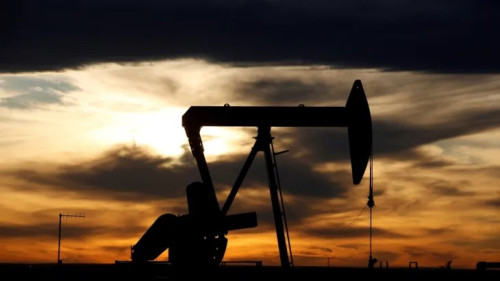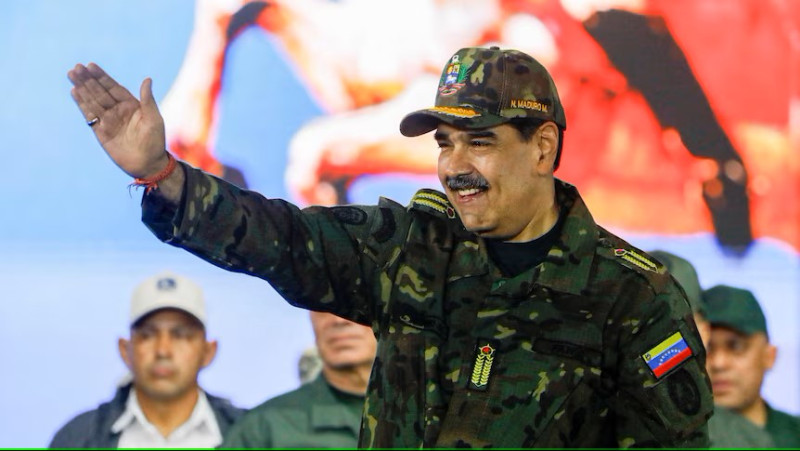
DEPOSED Venezuelan leader Nicolás Maduro arrived in New York on Saturday evening after being captured in a dramatic overnight US military operation, as President Donald Trump declared that the United States would temporarily “run” Venezuela and exploit its vast oil reserves for sale to other nations.
AP reported on Sunday that Maduro and his wife, Cilia Flores, were seized from their home in the Venezuelan capital during a surprise incursion that rocked Caracas with overnight explosions.
They were transported on a US warship before being flown to New York, where they are expected to face narco-terrorism conspiracy charges.
The operation marked the most assertive US effort to forcibly change a foreign government since the 2003 invasion of Iraq and has raised sharp questions about the legality of Washington’s actions under international law. Legal experts said the scale and audacity of the seizure went beyond even the most aggressive past US interventions against autocratic leaders in Panama, Iraq and elsewhere.
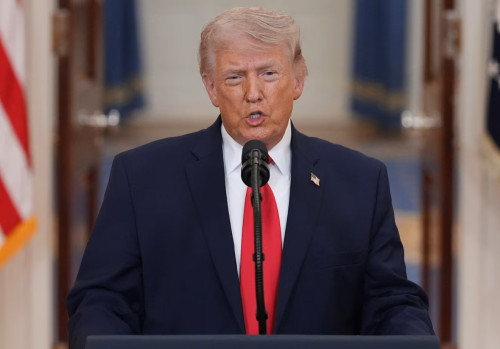
Speaking hours after Maduro was removed from power, Trump said the United States would assume control of Venezuela “for a period of time” and manage the country until a political transition could be achieved, while also tapping its oil reserves.
When asked at a press conference who would govern Venezuela during the interim, Trump said “the people that are standing right behind me” would be running the country, referring to senior US officials including Secretary of State Marco Rubio, Defense Secretary Pete Hegseth and senior military leaders.
The Trump administration said the operation, along with earlier deadly strikes on vessels in the Caribbean Sea, was necessary to curb the flow of dangerous drugs originating from Venezuela.
According to Gen. Dan Caine, chairman of the Joint Chiefs of Staff, US forces had rehearsed the operation for months. He said they had gathered extensive intelligence on Maduro’s movements and personal habits. Trump later said on Fox News that the military had practised the extraction on a replica of the building where Maduro was seized.
The capture followed months of mounting pressure within the administration, led by Rubio and other long-time opponents of Maduro, who had urged Trump to take decisive action against the Venezuelan leader.
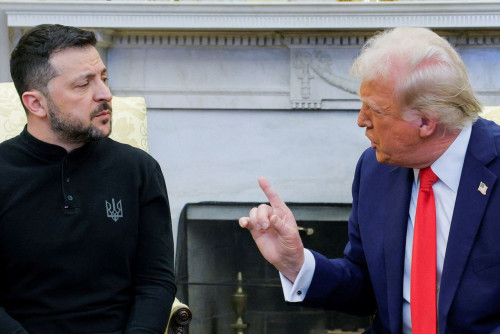
As Maduro was flown out of the country, uncertainty spread across Venezuela over who was in charge. Trump said the US was in contact with Maduro’s deputy, Vice President Delcy Rodríguez, and suggested she had been sworn in as president in line with the country’s constitution. However, Venezuelan state television did not broadcast any such ceremony.
In a televised address, Rodríguez did not declare herself acting president or acknowledge any transfer of power. A ticker on the screen continued to identify her as vice president, and she made no indication that she was cooperating with Washington.
“What is being done to Venezuela is an atrocity that violates international law,” Rodríguez said. “History and justice will make the extremists who promoted this armed aggression pay.”
Rodríguez, who has served as vice president since 2018 and oversees Venezuela’s oil-dependent economy and intelligence services, was previously sanctioned by the United States during Trump’s first term for her role in undermining Venezuelan democracy.
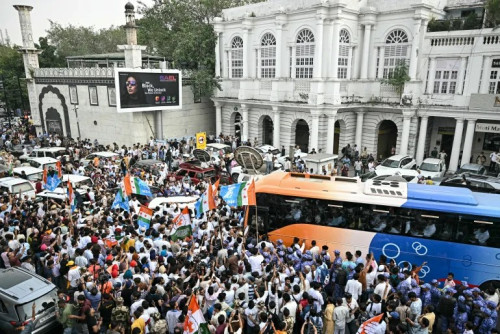
While uncertainty prevailed inside Venezuela, celebrations erupted among Venezuelans in South Florida following news of Maduro’s capture. In Doral, a Miami suburb with a large Venezuelan population, crowds gathered waving flags and chanting “Liberty! Liberty! Liberty!”
Outside a Venezuelan restaurant, one man held a piece of cardboard with the word “Libertad” written in black marker, echoing the hopes of many who see the US action as a turning point.
“We’re like everybody — it’s a combination of feelings, of course,” said Alejandra Arrieta, who moved to the United States in 1997. “There’s fears. There’s excitement. There’s so many years that we’ve been waiting for this. Something had to happen in Venezuela. We all need the freedom.”
As Maduro prepares to face trial in New York and Washington signals an open-ended role in Venezuela’s future, the operation has reshaped the political landscape in the region, leaving unresolved questions about sovereignty, governance and how long the United States intends to stay. - January 4, 2025