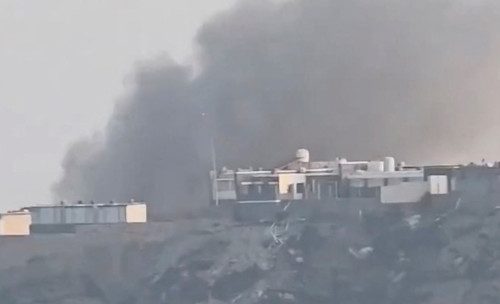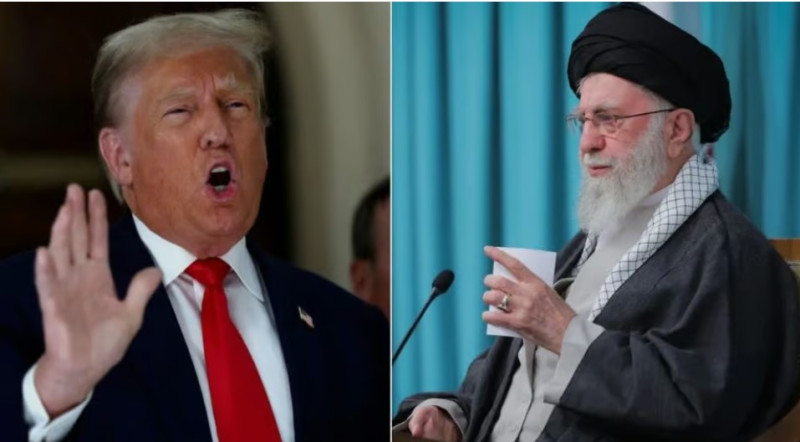
THE Middle East edged closer to full-scale regional war after the United States claimed that Iran’s Supreme Leader, Ali Khamenei, had been killed in joint American and Israeli airstrikes, an assertion not confirmed by Tehran and one that carries profound implications for Iran’s political future.
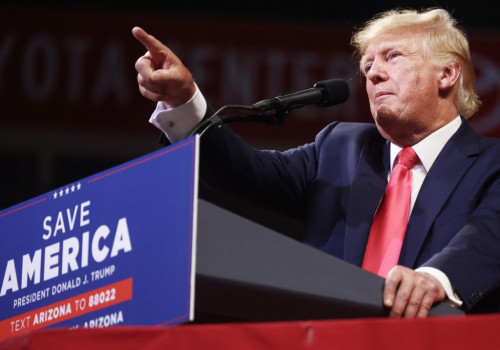
AP reported U.S. President Donald Trump saying on Sunday that said the cleric had died following what he described as a precise and sustained bombardment of Iranian military and governmental targets.
Declaring the moment pivotal, he said the killing represented “the single greatest chance for the Iranian people to take back their Country.”
He added that “heavy and pinpoint bombing” would continue “uninterrupted throughout the week or, as long as necessary to achieve our objective of PEACE THROUGHOUT THE MIDDLE EAST AND, INDEED, THE WORLD!”
In a subsequent interview with NBC News, the president said of reports that Khamenei had been killed: “We feel that that is a correct story.” He claimed that “a large amount of leadership” in Iran had been eliminated, adding, “I don’t mean like two people,” and asserting that “most” of the country’s senior leadership was “gone.”
Iranian authorities have issued no confirmation of Khamenei’s death. Earlier, Iran’s foreign minister told NBC News that the country’s supreme leader and president were alive “as far as I know.”
During an emergency meeting of the United Nations Security Council, Iran’s ambassador refrained from addressing the claim directly, focusing instead on condemning the strikes.
In Israel, Prime Minister Benjamin Netanyahu told a national audience that there were “growing signs” the Iranian leader had been killed when Israeli forces struck his compound.
Two Israeli officials later indicated privately that his death had been confirmed, although no formal public statement was released.
Washington has defended the military action as necessary to halt what it says was renewed Iranian progress in rebuilding its nuclear infrastructure and advancing missile capabilities.
At the United Nations, US Ambassador Mike Waltz declared: “Iran cannot have a nuclear weapon. That principle is not a matter of politics.
“It’s a matter of global security. And to that end, the United States is taking lawful actions.”
The immediate consequence was swift retaliation. Iran launched missiles and drones towards Israel and US military installations across the region.
In Israel, emergency services reported casualties, including the death of a woman in the Tel Aviv area following missile strikes.
Israel’s ambassador to the United Nations, Danny Danon, defended the operation as pre-emptive, saying: “We acted out of necessity,” to counter what he described as “an existential threat.”
Tehran signalled defiance. Ali Larijani, secretary of Iran’s National Security Council, warned that Israel and the United States would “regret their actions.”
He added: “The brave soldiers and the great nation of Iran will deliver an unforgettable lesson to the hellish international oppressors.”
At the United Nations, Secretary-General António Guterres urged restraint, saying: “Everything must be done to prevent a further escalation.”
He warned that “The alternative is a potential wider conflict with grave consequences for civilians and regional stability.”
Russia’s ambassador condemned the assault as “another unprovoked act of aggression,” insisting that “the United States and Israel immediately cease their aggressive actions.”
China’s envoy expressed alarm at “the sudden escalation of regional tensions” and said that “the sovereignty, security and territorial integrity of Iran and other regional countries must be respected.”
France’s representative described the conflict as “dangerous for everyone -- and it must cease immediately,” while also condemning “the indiscriminate attacks by Iran against several countries in the region.”
Beyond the principal combatants, the violence reverberated across the Gulf.
Meanwhile, missile and drone activity was reported near major airports in the United Arab Emirates, where authorities spoke of a “blatant attack involving Iranian ballistic missiles.”
European Union foreign ministers convened emergency discussions, warning that the confrontation risked drawing in further states.
Within Iran, uncertainty reigned.
Witnesses in Tehran reported that some residents reacted to news of Khamenei’s reported death with visible celebration, while others remained cautious amid the absence of official confirmation.
The cleric, who succeeded Ayatollah Ruhollah Khomeini in 1989, had no publicly designated successor, raising the prospect of an internal power struggle should his death be formally acknowledged.
The removal of the Islamic Republic’s second supreme leader, if verified, would mark the most consequential moment in Iran’s political history since the 1979 revolution.
As airstrikes persist and diplomatic channels strain under mounting pressure, the question facing regional and global powers alike is whether this episode signals the beginning of regime change in Tehran or the onset of a far wider war. - March 1, 2026


.jpeg)