THE downing of two United States military aircraft by Iranian forces marks a significant escalation in the nearly five-week conflict, with one service member still missing and a search-and-rescue operation under way.
AP reported on Saturday that the incident is the first confirmed loss of US aircraft in the war, highlighting the continued effectiveness of Iran’s air defence systems despite earlier assertions by President Donald Trump that American forces had “beaten and completely decimated Iran” and would “finish the job” swiftly.
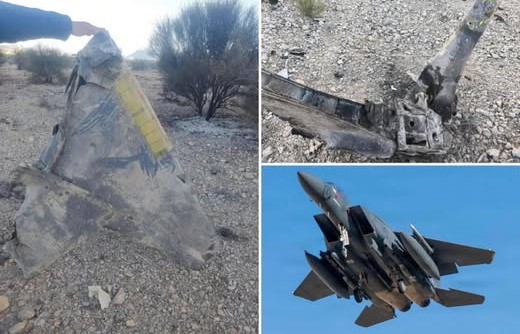
One aircraft, identified by Iranian state media as an F-15E Strike Eagle, was shot down over Iranian territory. One crew member was rescued, while another remains unaccounted for, with US forces continuing efforts to locate the missing service member.
In a separate incident, Iranian reports stated that an A-10 attack aircraft crashed in the Persian Gulf after being struck by air defences.
The White House and Pentagon have released limited information, although the US military confirmed it had received notification of “an aircraft being shot down” in the region.
The status of the second crew member remains unclear.
Speaking briefly, Trump dismissed suggestions that the incident would affect diplomatic efforts, stating: “No, not at all. No, it’s war.”
The incidents come amid intensified Iranian strikes across the Middle East, targeting energy infrastructure and sustaining pressure on Israel and Gulf states aligned with Washington.
Attacks on key facilities in Kuwait, including the Mina al-Ahmadi refinery and a desalination plant, underscored the vulnerability of critical infrastructure in the region.
Air raid sirens were reported in Bahrain, while Saudi Arabia said it intercepted several drones. In the United Arab Emirates, a gas field was shut down after missile debris reportedly ignited a fire.
The downing of the aircraft may represent a turning point in the conflict, signalling heightened risks for US personnel and raising the possibility of a pilot evading capture within Iran.
Iranian state-linked media have urged civilians to report or detain any “enemy pilot,” offering rewards for cooperation.
The war, which began on February 28 following US and Israeli strikes that killed Iran’s Supreme Leader Ali Khamenei, has since expanded across the region, involving multiple actors and causing significant casualties.
More than 1,900 people have reportedly been killed in Iran, while deaths have also been recorded in Israel, Gulf states and Lebanon. The conflict has displaced over one million people in Lebanon and claimed the lives of US service members and Israeli soldiers.
At the same time, Iran’s continued control of the strategically vital Strait of Hormuz has intensified global economic concerns.
The waterway, through which a substantial portion of the world’s oil supply passes, remains a focal point of international tension.
Trump has sent mixed signals on the issue, at times threatening action if Iran does not reopen the route, while also urging other nations to secure their own energy supplies.
In a social media post, he said: “With a little more time, we can easily OPEN THE HORMUZ STRAIT, TAKE THE OIL, & MAKE A FORTUNE.”
Oil markets have reacted sharply, with Brent crude prices rising by more than 50 per cent since the start of the conflict, reflecting fears of prolonged disruption and further escalation. - April 4, 2026