US President Donald Trump has signalled that Iran must take the initiative if it wishes to revive negotiations to end the two-month conflict, insisting that any agreement hinges on Tehran abandoning nuclear weapons ambitions as diplomatic momentum falters.
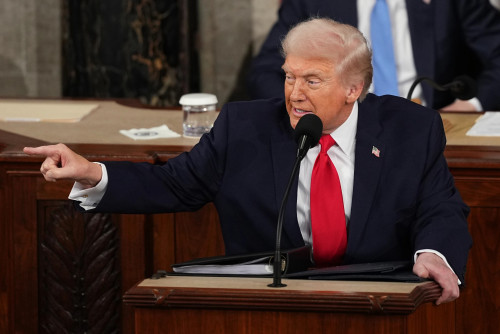
Speaking on Sunday, Trump indicated that the door to talks remains open but placed responsibility squarely on Tehran to make contact.
“If they want to talk, they can come to us, or they can call us. You know, there is a telephone. We have nice, secure lines,” Reuters reported him saying on Monday.
“They know what has to be in the agreement. It's very simple: They cannot have a nuclear weapon, otherwise there's no reason to meet,” Trump said.
Efforts to restart negotiations suffered a setback after the cancellation of a planned visit to Islamabad by U.S. envoys Steve Witkoff and Jared Kushner, underscoring widening gaps between the two sides. Iran, meanwhile, has demanded that Washington remove barriers to a deal, including a blockade on its ports, before meaningful talks can resume.
Iranian Foreign Minister Abbas Araqchi intensified shuttle diplomacy over the weekend, travelling between Pakistan and Oman before heading to Russia for talks with President Vladimir Putin. Tehran’s ambassador in Moscow, Kazem Jalali, said the visit forms part of a broader effort to advance Iran’s interests amid mounting external pressure.
Although large-scale fighting has paused following a ceasefire in a war that began with U.S.-Israeli strikes on Iran on February 28, no agreement has been reached to end hostilities.
The conflict has already claimed thousands of lives, disrupted global energy flows and clouded the outlook for economic growth.
Markets reacted swiftly to the stalled diplomacy, with oil prices rising and investor sentiment weakening as shipping through the strategically vital Strait of Hormuz remains heavily restricted.
Iran has effectively curtailed access to the passage, through which roughly a fifth of the world’s oil supply typically transits, while the United States continues to enforce maritime restrictions on Iranian ports.
Domestic pressure is mounting on Trump to bring the conflict to a close as approval ratings decline, while Iran, despite military setbacks, has leveraged its control over regional shipping routes to strengthen its negotiating position.
Tehran has maintained that it will not engage under coercion. Iranian President Masoud Pezeshkian told Shehbaz Sharif that Iran would not enter “imposed negotiations” conducted under threat or blockade, urging Washington to first remove obstacles to dialogue.
The dispute extends beyond Iran’s nuclear programme. Washington is seeking to curb Tehran’s support for regional groups such as Hezbollah and Hamas, as well as its ballistic missile capabilities, while Iran is demanding sanctions relief and an end to Israeli military actions.
Earlier talks in Islamabad, led by U.S. Vice President JD Vance and Iranian parliamentary speaker Mohammad Baqer Qalibaf, concluded without progress, highlighting entrenched divisions.
Trump, who cancelled the latest diplomatic trip citing costs and what he described as an insufficient Iranian offer, said Tehran “offered a lot, but not enough,” while also pointing to internal discord within Iran’s leadership.
Iranian officials, however, have rejected such characterisations. Pezeshkian recently asserted that there are “no hardliners or moderates” in Tehran, emphasising unity behind the country’s supreme leadership.
The broader Middle East remains volatile, with the conflict spilling across borders. In Lebanon, Israeli strikes have reignited hostilities with Hezbollah, leaving civilians dead and injured, and further underscoring the risks of a wider regional escalation. - April 27, 2026



.jpg)