NEWLY classified American intelligence assessments have revealed that Iran has regained operational access to most of its missile infrastructure, including strategic sites along the Strait of Hormuz, despite repeated public assertions by President Donald Trump that the Iranian military had been “decimated”.
The assessments, compiled earlier this month and shared with senior policymakers, indicate that Tehran has restored access to 30 of its 33 missile facilities positioned along the strategically critical waterway, raising fresh concerns within sections of the US national security establishment over the vulnerability of American naval assets and global oil shipping routes.
The New York Times, citing officials familiar with the findings, reported that Iran has also retained approximately 70 per cent of its mobile missile launchers and a similar proportion of its pre-war missile stockpile, including both ballistic and cruise missile systems.
The intelligence further concluded that nearly 90 per cent of Iran’s underground missile storage and launch facilities across the country are now assessed to be “partially or fully operational”.
The findings sharply contradict months of public statements by Trump and Defence Secretary Pete Hegseth, who repeatedly claimed that the joint US-Israeli military campaign known as Operation Epic Fury had crippled Iran’s military capabilities for years.
On March 9, Trump declared during an interview with CBS News that Iran’s “missiles are down to a scatter” and that the country had “nothing left in a military sense”.
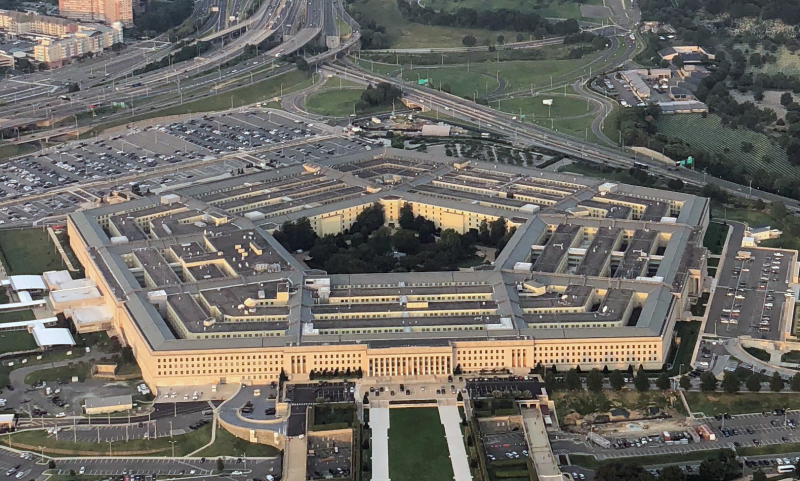
Weeks later, Hegseth told reporters at the Pentagon that Operation Epic Fury had “decimated Iran’s military and rendered it combat-ineffective for years to come”.
However, intelligence gathered less than a month after those remarks suggests that Iranian military infrastructure and operational capacity remain substantially intact.
Officials familiar with the assessments said the surviving missile facilities continue to support mobile launcher operations, enabling Iran to reposition missiles rapidly or, in some instances, launch directly from existing fixed platforms.
Only three missile sites along the Strait of Hormuz are considered fully inaccessible following the conflict.
The Strait remains one of the world’s most strategically important maritime corridors, carrying roughly one-fifth of global daily oil consumption.
American naval forces have maintained an intensified presence in the region since the outbreak of hostilities, with US Central Command confirming that more than 20 warships are currently involved in enforcing maritime operations linked to Iran.
The assessments have also intensified concerns regarding the sustainability of American military stockpiles after months of intensive combat operations.
According to officials and previous reporting, the United States expended approximately 1,100 long-range stealth cruise missiles during the war, alongside more than 1,000 Tomahawk missiles and over 1,300 Patriot interceptor missiles.
The scale of munitions consumption has placed significant strain on US defence manufacturing capacity, with analysts warning that replenishment could take years.
Lockheed Martin currently produces around 650 Patriot interceptor missiles annually, though the company has announced plans to increase production substantially.
Defence officials, however, privately acknowledge that expanding production capacity — particularly for rocket motors and precision-guided systems — remains a major industrial challenge.
Despite those concerns, the Trump administration has continued to dismiss suggestions that American military inventories are under severe pressure.
Responding to questions regarding the intelligence assessments, White House spokesperson Olivia Wales reiterated the administration’s position that Iran’s military had been “crushed”.
She said Iran’s leadership understood that its “current reality is not sustainable” and added that anyone who “thinks Iran has reconstituted its military is either delusional or a mouthpiece” for Iran’s Revolutionary Guard.
Wales also pointed to a social media statement by Trump on May 12 in which the president described suggestions that Iran’s military remained operationally capable as “virtual treason”.
The Pentagon similarly criticised reporting on the intelligence findings.
“It is so disgraceful that The New York Times and others are acting as public relations agents for the Iranian regime in order to paint Operation Epic Fury as anything other than a historic accomplishment,” said Joel Valdez, the acting Pentagon press secretary.
Sean Parnell, the Pentagon’s chief spokesperson, also defended the administration’s position, insisting that the US military retained adequate capabilities despite the heavy expenditure of advanced weaponry.
“We have executed multiple successful operations across combatant commands while ensuring the US military possesses a deep arsenal of capabilities to protect our people and our interests,” he said.
General Dan Caine, chairman of the Joint Chiefs of Staff, told a House appropriations subcommittee on May 12 that, “We have sufficient munitions for what we’re tasked to do right now.”
Nevertheless, the intelligence assessments have renewed debate in Washington and among allied governments over the long-term strategic consequences of the conflict.
European allies, many of whom have purchased American munitions on behalf of Ukraine, are reportedly increasingly concerned that prolonged confrontation with Iran could further strain US weapons inventories and delay future deliveries.
The findings have also revived criticism from anti-interventionist factions within Trump’s political base, who opposed direct US involvement in the conflict and warned that prolonged military engagement risked overstretching American resources while failing to neutralise Iran’s core military capabilities.
Although the joint US-Israeli campaign inflicted extensive damage on Iranian infrastructure and killed several senior military figures, the latest intelligence suggests Tehran retains substantial strategic depth and the ability to sustain future military operations should the fragile ceasefire collapse. - May 13, 2026