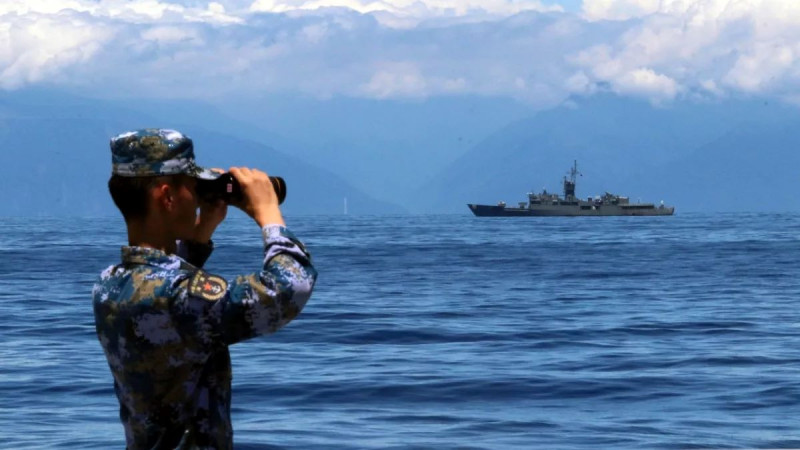
TAIWAN has intensified efforts to prepare for a potential conflict with China, with Defence Minister Wellington Koo warning that the military must be capable of responding immediately to an attack as the window for advance warning continues to shrink.
The warning comes as Taiwan conducts five days of "immediate combat readiness" exercises designed to test how quickly its armed forces can transition from peacetime operations to wartime conditions.
Koo said the drills reflect growing concerns that China could rapidly escalate one of its regular military exercises around the island into a genuine military offensive.
"It is intended to build the speed we believe is necessary for converting from peacetime to wartime status.
"In other words, given the current threat situation from the enemy, and as we believe the warning time is shortening, we need to verify that we can respond immediately," Reuters cited him telling reporters in the nation’s Parliament.
The exercises mark a shift in Taiwan's defence planning, with military scenarios increasingly based on the possibility of a surprise Chinese attack rather than a prolonged build-up to conflict.
Tensions rose further after China's newest aircraft carrier sailed through the Taiwan Strait on Tuesday, underscoring Beijing's growing military presence around the self-governed island.
China regards Taiwan as part of its territory and has maintained near-daily military operations in the surrounding airspace and waters, while refusing to rule out the use of force to achieve unification.
Responding to the drills, China's Taiwan Affairs Office accused Taiwan's ruling administration of seeking independence through military means.
Spokesperson Zhang Han said the exercises demonstrated the ruling Democratic Progressive Party's "malicious intent to seek independence by force".
"In the face of the powerful people's army, the DPP authorities' posturing is completely futile; it will only harm and destroy Taiwan and bring about their own destruction," she said.
Zhang reiterated Beijing's long-standing position that it preferred peaceful reunification but would not abandon military options.
"However, we will never pledge to renounce the use of force, and we will never leave any room for separatist activities seeking Taiwan independence in any form."
The latest drills come ahead of Taiwan's annual Han Kuang military exercises in August and form part of a broader military modernisation programme led by President Lai Ching-te.
Lai has set an ambitious target of increasing defence spending to five per cent of gross domestic product before 2030 as Taiwan seeks to strengthen deterrence capabilities amid mounting regional security challenges.
"I ask all senior generals to lead force transformation with innovative thinking," Lai said during a military promotion ceremony.
"Rapidly changing regional conditions and multidimensional, non-traditional, complex challenges" required a stronger and more adaptable military, he added.
Taiwan's defence push continues to receive strong backing from the United States, its principal security partner and arms supplier.
Raymond Greene, Washington's top diplomat in Taipei, said regional allies shared a common objective of preventing a crisis in the Taiwan Strait and strengthening deterrence against any attempt to alter the status quo by force.
"In line with the U.S. national security strategy, we aim to work alongside regional allies to maintain the status quo of the first island chain and prevent any attempts to take Taiwan by force," Greene said.
The developments highlight the increasingly fragile security environment across the Taiwan Strait, where both sides are accelerating military preparations amid fears that future confrontations could unfold with little or no warning. - June 24, 2026

.JPG)