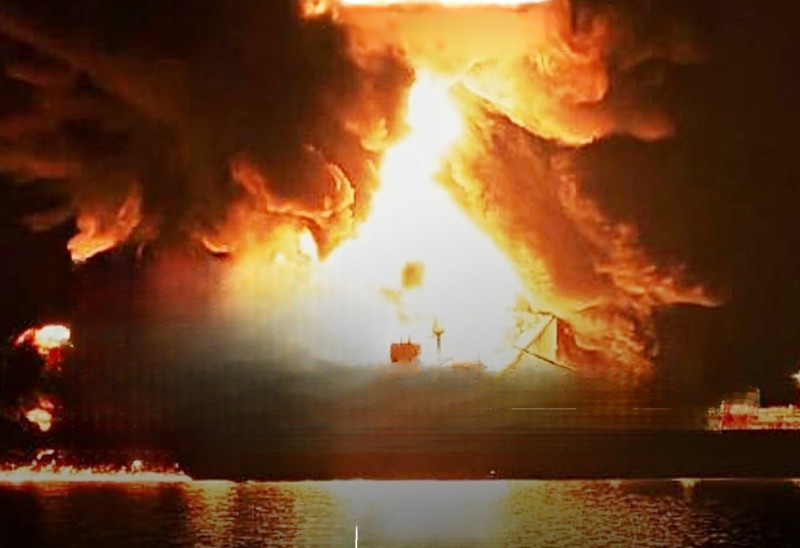
US President Donald Trump has warned Iran that the United States could dramatically escalate military action after ordering a new round of airstrikes against Iranian military targets in response to what Washington described as repeated violations of a two-week-old ceasefire agreement.
The latest strikes mark the most serious deterioration in relations since the United States and Iran agreed to an interim truce aimed at ending four months of hostilities, with both sides now accusing each other of breaching the accord.
Reuters reported on Sunday Trump saying that the US military had struck Iranian missile and drone storage facilities, coastal radar installations and other military infrastructure after Tehran allegedly failed to honour the ceasefire.
"There may come a point when we are no longer able to be reasonable, and will be forced to militarily complete the job that we very successfully started.
"If that happens, the Islamic Republic of Iran will no longer exist," Trump wrote on his Truth Social platform.
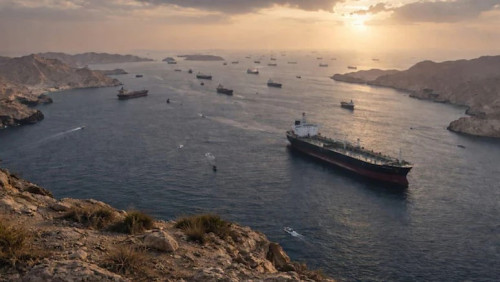
US Central Command (CENTCOM) said the operation was launched after Iran allegedly attacked a merchant vessel in the Strait of Hormuz early on Saturday.
"Iran had a chance to honour the ceasefire agreement but elected not to," CENTCOM said, adding that the strikes were "in direct response to continued Iranian aggression against commercial shipping."
According to the US military, the operation targeted Iranian surveillance infrastructure, communications systems, air defence sites, drone storage facilities and mine-laying capabilities.
A US defence official later confirmed that the strikes had been completed.
Iranian state broadcaster IRIB reported explosions near Sirik in southern Iran early on Sunday but did not provide details on the cause or any damage.
The latest escalation follows an attack on a Panama-flagged tanker in the Strait of Hormuz after another commercial vessel was reportedly targeted earlier in the week, incidents that have renewed concerns over security along one of the world's busiest oil shipping routes.
Britain's UK Maritime Trade Operations (UKMTO) said the tanker sustained damage to its bridge, although all crew members were reported safe, while the Joint Maritime Information Center raised its maritime security threat level following the recent attacks.
Iran has not directly acknowledged attacking commercial vessels but said its Revolutionary Guards had fired what it described as "warning shots" at ships using navigation channels not approved by Tehran, claiming some vessels were now seeking Iranian permission before transiting the strategic waterway.
Tehran also maintained that its military actions were defensive and accused Washington of violating the interim agreement through continued regional military operations and support for allied forces.
The broader regional tensions also extended beyond the Gulf, with Bahrain reporting that Iranian drones had targeted its territory, describing the incident as a serious threat to national security.
Meanwhile, tensions remain high along the Israel-Lebanon border despite a separate US-brokered ceasefire announced on Friday. Hezbollah leader Naim Qassem dismissed the agreement as "null and void," while Israel said it would maintain control of its security zone in southern Lebanon.
The renewed confrontation has cast fresh uncertainty over the durability of the US-Iran ceasefire, with both governments insisting the other bears responsibility for the latest military escalation. - June 28, 2026