By Murray Hunter
HISTORY has a cruel habit of repeating its tragedies in new technological wrappers.
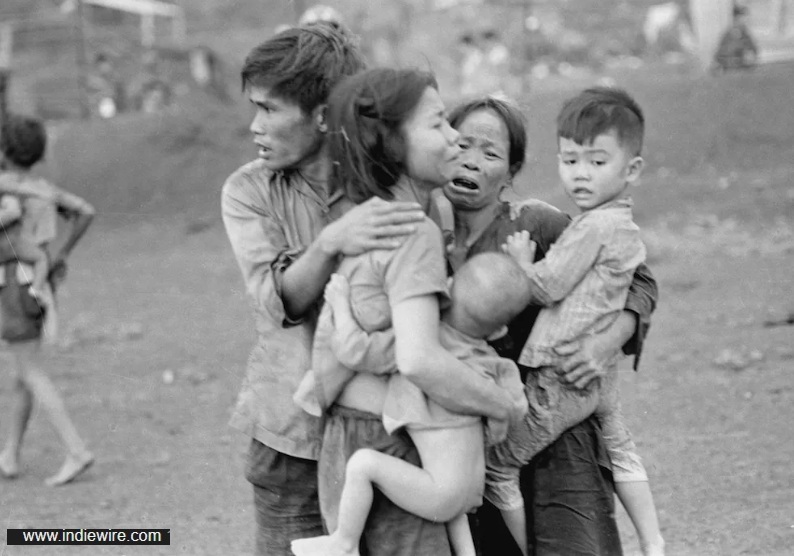
In March 1968, American soldiers entered the Vietnamese hamlet of My Lai and slaughtered hundreds of unarmed women, children, and infants in a frenzy that later became a symbol of a war gone morally bankrupt.
The official story at first was “enemy engagement.”
The truth, when it leaked out, shattered illusions about American exceptionalism in warfare.
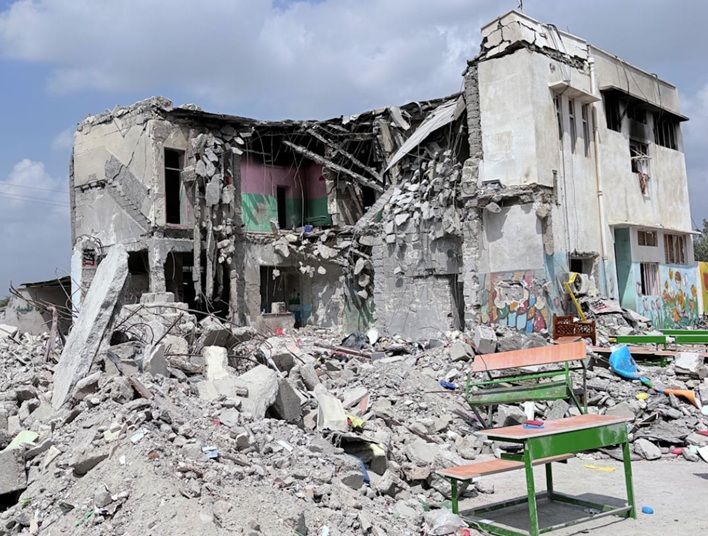
Fast forward to February 28, 2026. On the very first day of the American-Israeli military campaign against Iran, a US Tomahawk missile slammed into the Shajareh Tayyebeh Elementary School in the coastal city of Minab.
More than 120 students, many aged just 6 to 13, and 26 teachers died in the strike.
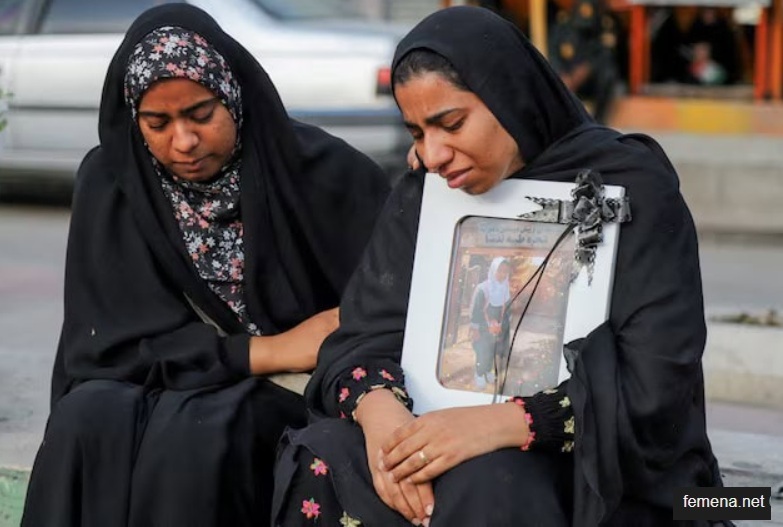
The images of rubble, tiny shoes in the dust, and grieving parents are as visceral today as the grainy black-and-white photos from My Lai were then.
A Bloomberg probe, citing sources familiar with the US Central Command investigation, reveals the reason was not fog of war chaos or Iranian deception, but something more systemic and damning. Bureaucratic failure and institutional blindness were the cause.
Years earlier, in 2019, a US intelligence analyst had spotted that a site previously designated as an IRGC naval facility had become an elementary school.
He entered the update into a digital intelligence tool.
That tool was not linked to the authoritative Pentagon database used for actual strike planning.
The warning never reached commanders.
The “significant and longstanding gaps” in target analysis allowed the school to remain on the target list as if it were still a military installation.
This was not a rogue platoon high on adrenaline.
This was a precision-guided policy meeting outdated data in a high-tech system supposedly designed to prevent exactly this kind of horror. The missile flew true. The children did not.
Echoes of My Lai
The parallels to My Lai are uncomfortable but illuminating.
In both cases, initial narratives sought to diffuse responsibility. In Vietnam, it was “search and destroy” gone wrong.
In Minab, we hear talk of “missiles flying all over the place” from the highest levels, with suggestions that the culprit “may never be established.”
President Trump’s recent remarks fit the pattern: deflection through uncertainty.
Iran calls it a calculated, phased assault and a crime against humanity.
The Pentagon’s investigation, completed months ago, remains unpublished.
My Lai was not just a massacre. It exposed a military culture that had dehumanised the enemy to the point where villages became free-fire zones.
Minab exposes a different but related pathology: a remote, algorithmic way of war where human verification has been outsourced to disconnected databases and legacy intelligence labels.
Children become collateral not through bloodlust on the ground, but through the quiet violence of unintegrated spreadsheets and unheeded analyst notes.
The body count may differ in intimacy, as boots on the ground versus a cruise missile launched from hundreds of miles away. Nevertheless, the moral weight feels eerily similar.
Both incidents involved the killing of innocents in a conflict sold as necessary.
Both triggered international outrage and domestic discomfort.
Both risk becoming footnotes if accountability is managed carefully enough.
Broader Implications
What makes Minab particularly haunting is its timing and context.
It occurred on day one of a new conflict, when scrutiny should have been highest.
The school sat adjacent to a legitimate military target, but the wall separating them, built years ago, apparently did not update the digital soul of American targeting doctrine. Multiple databases still fail to speak to one another.
This is not an isolated glitch; it is a feature of a system optimised for speed and lethality over caution.
Emily Tripp of Airwars noted the difficulty in attributing the hundreds of incidents of civilian harm across Iran. Yet Minab stands out with clear evidence of American munitions, a known site, and now an internal probe confirming the intelligence failure.
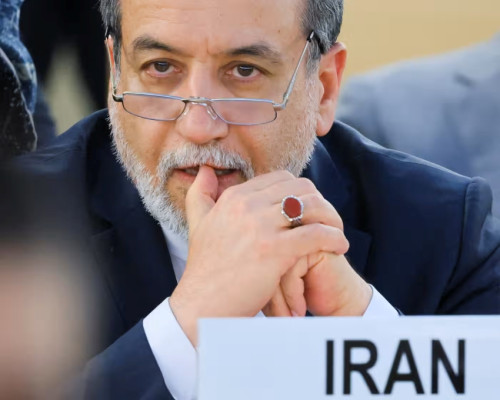
Iran’s Foreign Minister Abbas Araghchi was not engaging in mere rhetoric when he demanded accountability.
For many in the region and beyond, this is the face of the war: a girls’ school reduced to rubble on opening day.
The My Lai massacre eventually led to courts-martial, though few convictions and helped turn American and global opinion further against the Vietnam War.
It became a cultural scar.
Will Minab receive even that level of reckoning? The signs are not promising. Investigations drag on.
Political statements blur responsibility.
The machinery of modern war of drones, missiles, AI-assisted targeting, with even Musk’s Grok reportedly playing a role in volume moves on to the next set of coordinates.
In both cases, the victims were not collateral in the fog of battle so much as they were rendered invisible by the way power processes the world. Vietnamese peasants became “gooks.” Iranian schoolchildren became outdated database entries.
As we reflect on Minab, the question we must ask is not merely “who is to blame,” but what kind of civilisation builds systems so sophisticated they can deliver a missile through a classroom window while remaining so bureaucratically primitive that a child’s desk can be mislabeled as an enemy asset for years?
History does not repeat exactly. But its moral lessons do.
My Lai taught that dehumanisation and cover-up corrode the soul of a nation.
Minab whispers the same warning from the rubble of an Iranian schoolyard.
Whether we listen this time may determine if future generations remember 2026 as another shameful chapter, or as the moment we finally demanded better.
The children of Minab, like those of My Lai, deserved better than to become symbols.
Yet here we are again, with nothing learnt from history, and humankind’s moral compass not rising together with our advancements in technology. – June 29, 2026






.jpeg)