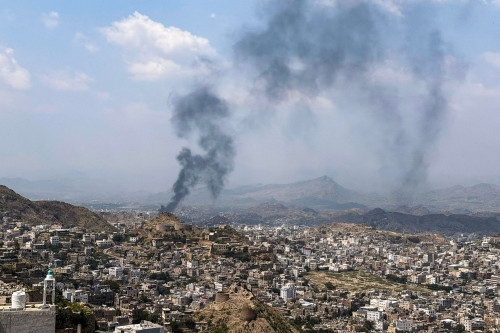
A POWERFUL 7.1-magnitude earthquake struck Japan's Kumamoto Prefecture on Tuesday, killing at least three people and injuring dozens after a shopping mall explosion and a separate building collapse compounded the devastation across the country's south-western island of Kyushu.
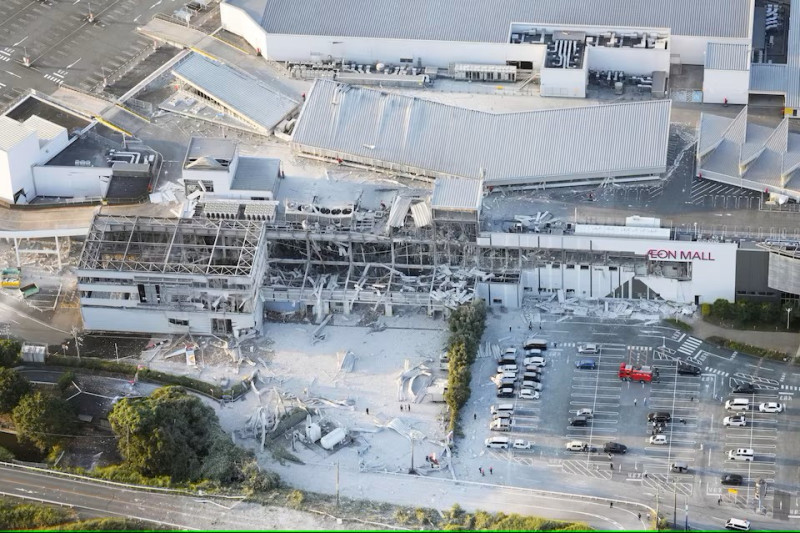
Japanese authorities said two women in their 20s were killed after an explosion tore through the Aeon Mall Kumamoto, while another person died in the collapse of a building near the earthquake's epicentre.
Rescue teams worked through the night at the shopping complex, where eight people were pulled from the wreckage. Of those rescued, two women were confirmed dead, one person remained in cardiopulmonary arrest and five others sustained injuries that were not believed to be life-threatening.
Prime Minister Sanae Takaichi said the government was continuing to assess the scale of the disaster as emergency services responded to multiple incidents involving collapsed buildings, fires, damaged roads and power outages.
“We have already been informed that people have been injured. Power outages and fires have occurred in some areas, and there has also been damage to roads and bridges and the collapse of buildings,” Reuters reported her saying in Tokyo.
Around 300,000 residents were advised to evacuate as strong aftershocks continued across Kyushu, with authorities warning that further powerful tremors and landslides remained possible over the coming week.
The explosion at the Aeon shopping centre severely damaged one side of the complex, exposing steel beams and scattering debris across the surrounding car park. Mall operator Aeon said customers and staff had been evacuated immediately after the earthquake, while authorities were investigating whether the blast had been caused by a gas leak.
A witness, Kazuya Tsurunaga, who was inside a pub about 300 metres from the mall when the explosion occurred, described the impact as overwhelming.
“It was a huge impact,” he said. “A large cloud of smoke billowed up, and because the wind happened to be blowing and the wind direction was towards the shop, the area around us was in a state like volcanic ash was falling.”
Elsewhere, several people remained missing after a chimney collapsed at a Nippon Paper Industries factory, while two hospitals each reported treating more than 50 patients, including several with serious injuries. Railway operators also reported injuries among passengers aboard high-speed trains during the earthquake.
The quake caused extensive disruption to infrastructure, leaving about 48,000 homes without electricity, damaging major roads and forcing the suspension of rail services, including Kyushu's Shinkansen bullet trains. Kumamoto Airport temporarily closed its runway, leading to flight cancellations and diversions.
Several major manufacturers halted operations as a precaution. Taiwan Semiconductor Manufacturing Company (TSMC), Sony and Fujifilm evacuated employees from their facilities, although TSMC later said its plant had not sustained damage and production was gradually resuming. Semiconductor equipment manufacturer Tokyo Electron suspended operations at its two Kumamoto factories through Wednesday, while Honda temporarily halted production at its motorcycle plant in the prefecture.
The earthquake struck approximately 20 kilometres south of Kumamoto City, home to about 700,000 people, and prompted a brief tsunami alert for parts of the coastline.
Japan's Nuclear Regulation Authority confirmed there were no abnormalities at nearby nuclear power stations.
Japan, which lies along the seismically active Pacific Ring of Fire, experiences some of the world's most frequent and powerful earthquakes. Kumamoto was previously devastated by a series of earthquakes in 2016 that claimed 275 lives, injured more than 2,700 people and caused widespread destruction across the prefecture.
Authorities also warned residents to take precautions against heatstroke, with temperatures forecast to reach 34°C on Wednesday. - July 29, 2026