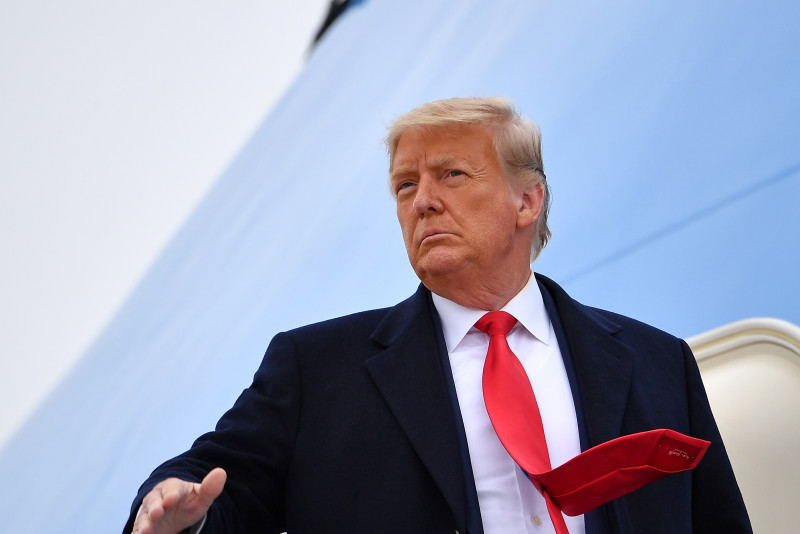
CONFLICTING statements from Washington and Tehran have cast fresh doubt over the prospects of a diplomatic breakthrough, after United States President Donald Trump claimed negotiations with Iran were under way while Iranian officials insisted no talks had taken place or were planned.
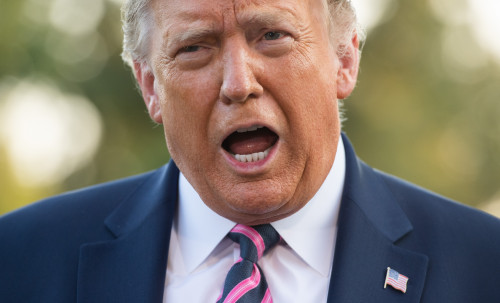
Speaking to reporters during an Oval Office event on Monday, Trump said discussions were already in progress and described them as Iran's "last chance" to secure an agreement ending the five-month conflict.
"They are going on right now," Reuters reported Trump saying when asked about the status of negotiations, adding that the discussions were taking place at the request of Iran, Saudi Arabia, the United Arab Emirates and Qatar, among others.
"This is a last chance for them (Iran) to sign a good document," he said.
Trump's remarks came days after he said he had cancelled what would have been "massive attacks" against Iran in favour of allowing diplomatic contacts to proceed, continuing a pattern in which threatened military action has been followed by announcements of renewed negotiations.
Tehran, however, swiftly rejected the President's account.
Iranian Foreign Ministry spokesman Esmail Baghaei said no negotiations with the United States were taking place and that no meetings had been scheduled. He added that Iran had no plans to host foreign delegations or dispatch negotiators abroad in the coming days.
According to Baghaei, all Iranian negotiators remained in the country except Foreign Minister Abbas Araqchi, who was on a religious pilgrimage in Iraq. He said the only ongoing discussions involved Oman and concerned the management of the Strait of Hormuz.
A senior Iranian source also told Reuters that no talks were planned and that Araqchi would remain unavailable until at least the end of the week.
Despite the conflicting accounts, financial markets reacted positively to the possibility of renewed diplomacy, reflecting investor hopes that negotiations could eventually ease tensions threatening global energy supplies.
Analysts, however, said Iran appeared to be pursuing a longer-term strategy of increasing economic pressure on Washington and its regional allies rather than seeking immediate concessions.
Gulf officials and regional experts believe Tehran is attempting to outlast the United States by using the Middle East's trade routes, shipping lanes and energy infrastructure as strategic pressure points, raising the economic costs of continued confrontation.
"Their big advantage is that they can hurt the regional states and the global economy," said Michael Knights of the Washington Institute.
Later on Monday, Trump intensified his rhetoric in a post on Truth Social, describing Iran's leadership as "unbelievably duplicitous" while maintaining that Tehran had requested a meeting and that further discussions were scheduled in the "immediate future."
He also repeated his assertion that the United States Navy exercised complete control over the Strait of Hormuz, through which around one-fifth of global oil and liquefied natural gas supplies flowed before the conflict.
"'The United States Wall of Steel!' Nothing gets through to Iran, unless we want it to, and nothing will get through, unless a Deal, or Total Surrender, is accomplished," he wrote.
The latest developments reinforce a pattern that has emerged since Trump launched "Operation Epic Fury" alongside Israel more than five months ago, with repeated threats of military escalation followed by claims that diplomatic engagement had prompted Washington to step back.
Iran has consistently rejected negotiations with the United States since a memorandum of understanding aimed at ending the conflict collapsed in early July.
The dispute over the Strait of Hormuz remains at the centre of the impasse. Washington maintains that the failed June memorandum required Iran to reopen the strategic waterway, while Tehran argues the agreement explicitly preserved its authority over shipping movements.
The disagreement has left the United States unable to secure one of its principal war aims — reducing Iran's leverage over one of the world's most important maritime trade routes — while continuing uncertainty has driven higher global oil prices and increased politically sensitive fuel costs in the United States. - August 4, 2026
.jpg)



_director_Datuk_M._Kumar.jpg)