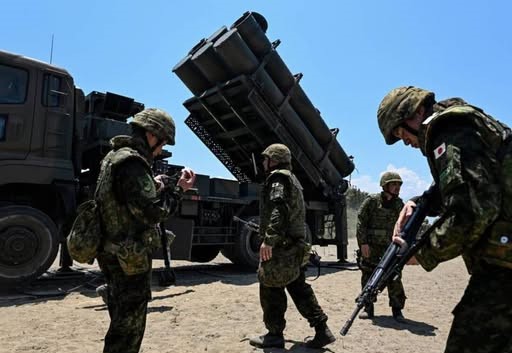
JAPAN has presented defence investment as a driver of economic growth and technological innovation in its latest annual defence white paper, signalling a broader effort to build public support for continued military expansion amid growing regional security challenges.
The report argues that strengthening the country's defence industry can deliver wider economic benefits by accelerating technological development, supporting start-ups and increasing the use of commercial technologies in military equipment.
According to a presentation by the Defence Ministry, the white paper "stresses that investment in defence benefits the wider economy and people's lives."
According to Reuters, the message is consistent with Prime Minister Sanae Takaichi's broader economic strategy of using targeted government investment to stimulate long-term growth while enhancing national resilience.
Reflecting that theme, this year's white paper features an anime-style cover depicting a smiling family against the backdrop of a futuristic, high-technology city, replacing the military imagery that has traditionally appeared on previous editions.
A Defence Ministry official said the design was intended to project a "futuristic image."
The publication comes as Takaichi's administration prepares a new National Security Strategy, which is widely expected to recommend further increases in defence spending, primarily to strengthen deterrence against China and prepare for the possibility of a conflict over Taiwan that could also involve Japan.
The white paper identifies Beijing as Tokyo's principal strategic concern.
"China's military activities and other actions are a matter of serious concern to Japan and the international community, and represent Japan's greatest strategic challenge," the report states.
Relations between Tokyo and Beijing have remained strained since Takaichi said last November that Japan could deploy its Self-Defense Forces if a Chinese attack on Taiwan threatened Japan's national survival, prompting China to demand that she withdraw what it described as an "egregious" remark.
Japan has already embarked on its largest military expansion since the Second World War, funding the build-up through a combination of tax increases, spending reforms and one-off revenue measures.
Defence expenditure has now reached approximately two per cent of gross domestic product, meeting a long-term strategic target.
However, analysts note that Takaichi has yet to outline how any additional military expansion would be financed without placing further strain on Japan's already stretched public finances.
Her administration secured a record national budget of 122.3 trillion yen for the fiscal year ending March 2027 and subsequently approved a supplementary spending package worth 3.1 trillion yen to help households and businesses cope with rising energy costs, highlighting competing demands on government finances.
Much of the increased defence spending has so far been directed towards acquiring long-range missiles capable of striking targets more than 1,000 kilometres away.
Military analysts expect future investment to focus increasingly on drones and other unmanned systems, reflecting lessons drawn from the extensive use of such technologies in the war in Ukraine and the changing nature of modern warfare. - August 4, 2026
.jpg)




_director_Datuk_M._Kumar.jpg)