HONG KONG – The mass arrests of Hong Kong opposition figures under a new security law has demolished assurances only a “tiny majority” would be targeted, analysts say, as China shrugs off international censure to purge the city of dissent.
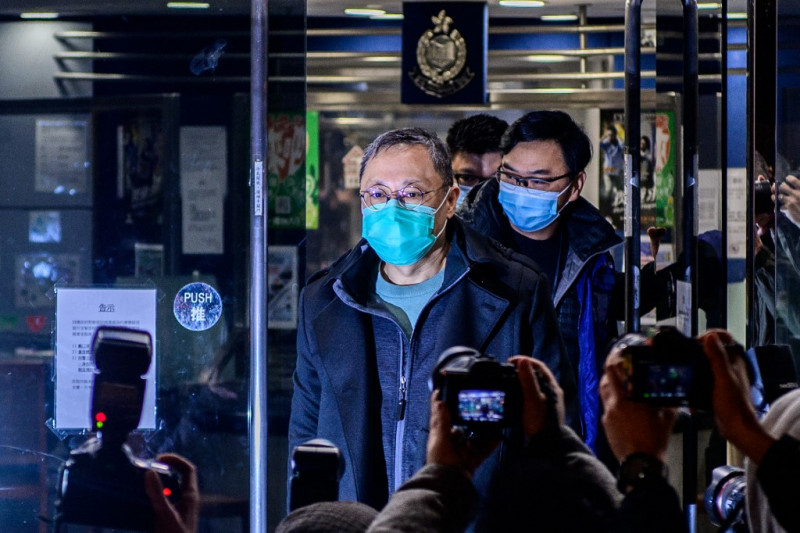
Benny Tai emerged from the police station squinting under the glare of camera lights about 36 hours after he was arrested last week by officers from Hong Kong's new national security unit.
The 56-year-old law professor is no stranger to police interview rooms and has previously been jailed for his democracy campaigning.
But he was shocked by the scale of last week’s operation.
“Hong Kong has entered into a harsh winter, with fierce and cold winds blowing,” he told reporters.
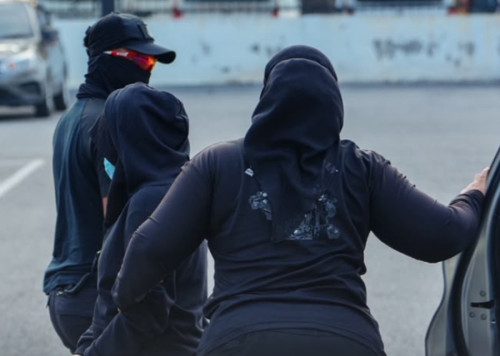
Over two days, more than 1,000 officers fanned out across the city and detained 55 democracy advocates on suspicion of “subversion” – one of the new crimes in the broadly worded security law.
The list of those arrested reads like who’s who of the democracy movement; from veteran moderates and former lawmakers to lawyers, academics, social workers and youth activists.
“This whole thing is targeted at democrats across the board, across the spectrum,” said former lawmaker Claudia Mo.
Activists say their worst fears have come true. The new law, they say, is not the scalpel Beijing promised would only be used to excise genuine threats to China’s national security – it is a sledgehammer.
After his release on bail, former lawmaker Ray Chan referred to a speech last year by city leader Carrie Lam.
“Carrie Lam said the national security law would affect only a small number of people,” he said.
“Instead Hong Kong has become the city in China with the greatest number of people accused of committing national security offences.”
Subversive primary
Lam gave that speech to the United Nations Human Rights Council the day the security law was imposed, its contents kept secret until the moment it was enacted.
“It will only target an extremely small minority of people,” she assured listeners. “Basic rights and freedoms of the overwhelming majority of Hong Kong residents will be protected.”
Yet both the wording of the security law and how authorities have wielded it has done little to convince sceptics.
Last week the UN's rights office said the latest arrests confirmed "as had been feared, the offence of subversion under the National Security Law is indeed being used to detain individuals for exercising legitimate rights to participate in political and public life".
What shocked many observers was the "offence" that Hong Kong police considered subversion.
Last summer the usually fractured pro-democracy opposition united to decide who might stand for ultimately scrapped local legislature elections.
Aiming to win a majority for the first time in the partially elected chamber, they hoped they could then veto budgets and potentially spark a recall of Lam.
In a democracy, this would be seen as the standard rough and tumble of politics
But China saw it as an attempt to upend a system with a veneer of choice that is ultimately designed to ensure it maintains full control.
Those arrested, said Hong Kong security chief John Lee, were trying to "overthrow" the government.
A distracted US
Victoria Hui, an expert at the University of Notre Dame in the United States, said the arrests confirm the security law overrides the Basic Law -- the mini-constitution which once guaranteed Hong Kong would maintain certain freedoms.
“If trying to win elections and vetoing government budget as allowed in the Basic Law is now defined as illegal by the national security law, then it is clearly meant to... impose direct mainland rule on Hong Kong,” she said.
“This wave of arrests will surely not be the last.”
International criticism has been vocal, but ineffective.
Among those arrested was the first foreigner, an American lawyer who practised in Hong Kong for decades. US Secretary of State Mike Pompeo warned fresh sanctions could be imposed.
But Beijing has shrugged off that threat, aided in part by the European Union agreeing a China trade deal despite years of mounting rights concerns.
Whether deliberate or not, the arrests came at a time when Washington is distracted by its own political chaos.
“Beijing is taking advantage of the transition period of the US presidency, the power vacuum in Washington,” Willy Lam, an expert at the Center for China Studies said, adding international censure would have little impact.
The incoming administration of Joe Biden, he added, would have “limited” options against Beijing’s grand plan.
“The goal is to silence not only the pro-democracy politicians, but civil society in general,” he said. – AFP January 12, 2021