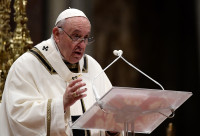
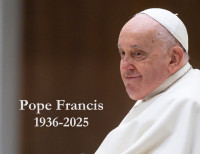
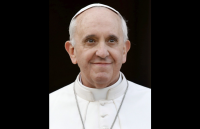
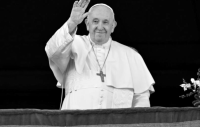
NAJAF – Pope Francis extended his hand to the world’s Shia Muslims today, meeting top cleric Grand Ayatollah Ali Sistani in a landmark moment in modern religious history.
The two elderly, respected men of religion met at Sistani’s humble home in the shrine city of Najaf early today, the second day of the first-ever papal visit to Iraq.
The 84-year-old pontiff is defying a second wave of coronavirus cases and renewed security fears to make a “long-awaited” trip to Iraq, aiming to comfort the country’s ancient Christian community and deepen his dialogue with other religions.
He landed at the Najaf airport, where posters had been set up featuring a famous saying by Ali, the fourth caliph and the Prophet Mohammed’s relative, who is buried in the holy city.
“People are of two kinds, either your brothers in faith or your equals in humanity,” read the banners.
A convoy of cars carried him into the Old City, which was under extremely tight security. He stepped out in one of Najaf’s tiny alleyways and an AFP correspondent saw him cross the threshold into Sistani’s office.
No press were allowed inside the meeting as the 90-year-old grand ayatollah is highly reclusive and almost never seen in public.
The visit is one of the highlights of Francis’s four-day trip to war-scarred Iraq, where Sistani has played a key role in tamping down tensions in recent decades.
It took months of careful negotiations between Najaf and the Vatican to secure the one-on-one meeting.
“We feel proud of what this visit represents and we thank those who made it possible,” said Mohamed Ali Bahr al-Ulum, a senior cleric in Najaf.
Francis, a strong proponent of interfaith efforts, has met top Sunni clerics in several Muslim-majority countries, including Bangladesh, Morocco, Turkey, and the United Arab Emirates.
Sistani, meanwhile, is followed by most of the world’s 200 million Shia – a minority among Muslims but the majority in Iraq – and is a national figure for Iraqis.
“Ali Sistani is a religious leader with a high moral authority,” said Cardinal Miguel Angel Ayuso Guixot, the head of the Pontifical Council for Interreligious Dialogue and a specialist in Islamic studies.
Sistani began his religious studies at the age of five, climbing through the ranks of Shia clergy to grand ayatollah in the 1990s.
While Saddam Hussein was in power, he languished under house arrest for years, but emerged after the United States-led invasion toppled the repressive regime in 2003 to play an unprecedented public role.
In 2019, he stood with Iraqi protesters demanding better public services and rejecting external interference in Iraq’s domestic affairs.
Yesterday in Baghdad, Pope Francis made a similar plea.
“May partisan interests cease, those outside interests who don’t take into account the local population,” Francis said.
Sistani has had a complicated relationship with his birthplace Iran, where the other main seat of Shia religious authority lies: Qom.
While Najaf affirms the separation of religion and politics, Qom believes the top cleric – Iran’s supreme leader Ayatollah Ali Khamenei – should also govern. – AFP, March 6, 2021