JAKARTA – Siti Rohani remembers the day her teenaged daughter came home in tears after being bullied for not wearing a hair-covering hijab at her Indonesian school.
The world’s biggest Muslim-majority country recognises six official religions and has pockets of Christians, Hindus and other minorities living around the nation.
But the growing strength of religious conservatism in recent years has fuelled fears of rising intolerance – a force also directed against Muslims like Rohani and her family.
Students at her daughter’s school taunted her with Quranic verses and said her parents would go to hell unless she wore Islamic garments.
“She was begging to drop out of school and move to another one because she was picked on by her peers and older students,” Rohani, a mother of four, told AFP.
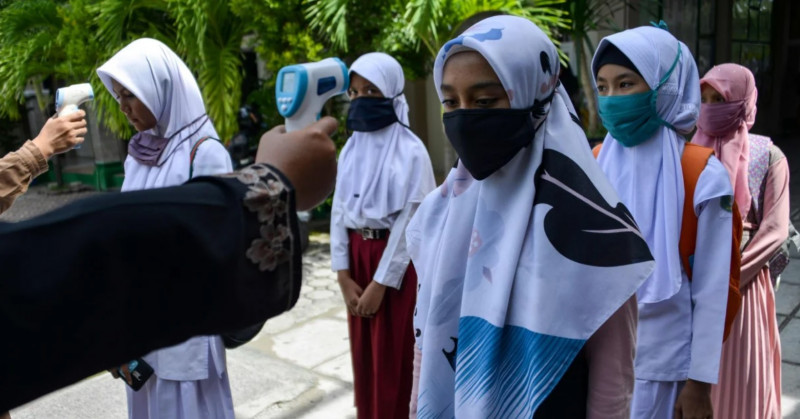
Schoolgirls, female teachers and civil servants across Indonesia are often forced or pressured to wear Islamic head coverings, according to a report published today by Human Rights Watch (HRW).
The pressure extends to Christians and other non-Muslim minorities and has “increased substantially in recent years”, the study said.
Tip of the iceberg
Many of the nearly 300,000 state schools around Indonesia require Muslim girls to wear hijab starting in primary school, backed by dozens of ordinances issued at the local or provincial level, according to the report.
The issue made headlines earlier this year after a young Christian pupil in Sumatra was pressured to cover up, triggering a backlash.
The student refused and her parents later secretly recorded a meeting with an official who insisted that school rules required all girls to wear hijab, regardless of their religion.
That prompted the Education Ministry last month to ban state schools from forcing any female student – Muslim or non-Muslim – to wear headscarves, and threaten to pull government funding for non-compliance.
Religious Affairs Minister Yaqut Cholil Qoumas has criticised the practice of forcing the hijab on non-Muslims and described the Sumatra case as the “tip of the iceberg”.
Indonesia’s government did not respond to requests for comment on the HRW report. The rights watchdog warned that it remained to be seen if the new Education Ministry rules would be enforced.
Peer pressure
Schools across the vast country of nearly 270 million have long used a combination of psychological pressure, public humiliation, and sanctions to persuade girls to wear hijab, HRW said.
“This environment encourages peer pressure and bullying by teachers and fellow students to ensure that ’good Muslim girls’ wear a hijab,” the report said.
Among the cases cited by HRW were former students who said scissor-wielding teachers would sometimes snip off strands of hair poking out of their hijab, or tear at clothing deemed too revealing.
Elsa, a 23-year-old Catholic, recalled the humiliation of being forced to wear a head covering in high school.
“Every time I look back now, I always feel ashamed that I didn’t fight for my rights,” Elsa, who asked that her real name not be used, told AFP.
Teachers and female civil servants are also pressured to wear conservative dress, and some government offices require that visitors wear head coverings to enter, according to the report.
“(This has) led to harassment of women in public spaces who choose not to wear (hijab) and imposition of pressure to conform,” it said.
Rohani – whose teenaged daughter begged to drop out of her school over hijab bullying – said one of her younger daughters is also now facing pressure to conform.
None of her family wear Islamic headscarves.
“We’re Muslim but we have different beliefs about Islamic clothing,” Rohani said.
“Good character doesn’t just come from what you wear.” – AFP, March 18, 2021