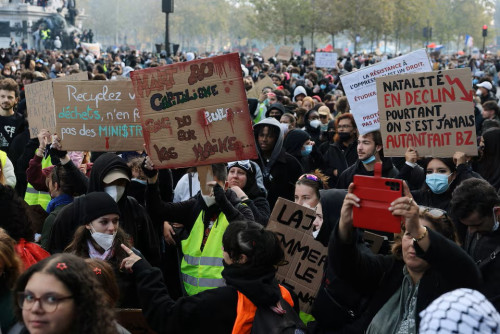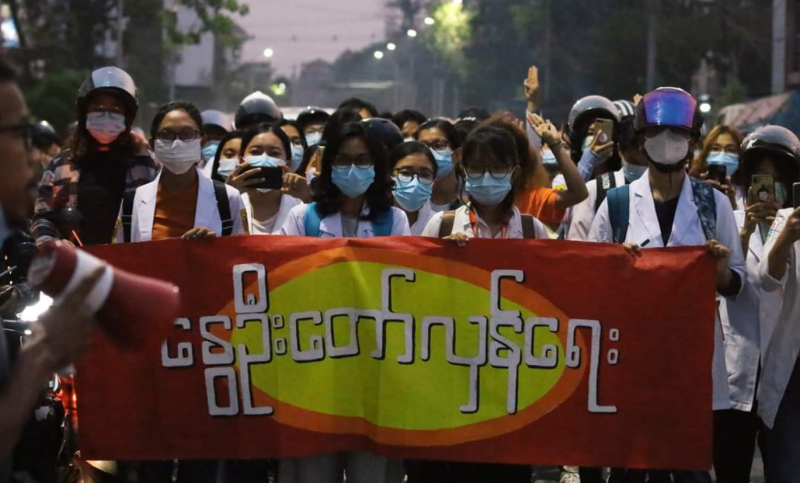
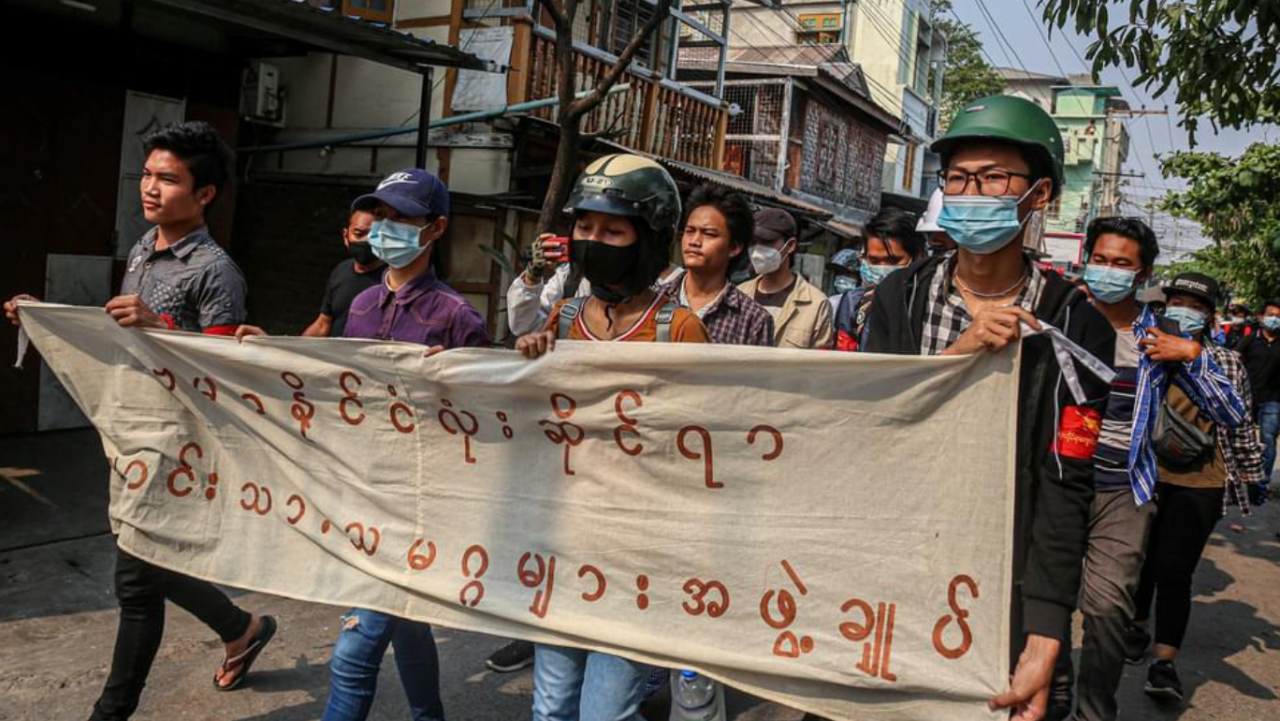
BANGKOK – Tens of thousands of Myanmar workers have gone on strike over the past two months, hoping that economic paralysis will force the hand of the wealthy generals who ousted civilian leader Aung San Suu Kyi on February 1.
Bank employees, doctors, engineers, customs officers, dockers, railway staff and textile workers have all downed tools as part of a civil disobedience movement.
Some striking workers are among the 550 people killed in the military’s crackdown on anti-coup protests, while many others have been arrested or gone missing.
But they say the junta has forced them to take radical action, even if they cannot march in the streets alongside many of their compatriots.
“I have no more money, I am terrified, but I have no choice: we must destroy the dictatorship,” Aye, a 26-year-old bank employee in Yangon, told AFP.
“We don’t demonstrate in the street, we are too afraid to be on the military lists and to be arrested,” she said. “Our revolution is silent.”
That continued resistance comes despite repeated appeals – and threats – from the military in state media for people to get back to work, and strikers say they are getting stronger.
“Our movement is growing,” Thaung, a civil aviation employee tells AFP, saying more than half of the 400 people in his department have not returned to work.
‘Risky bet’
The chaos is already undermining one of Asia’s poorest economies, already battered by the coronavirus pandemic, where a quarter of the population lives on less than US$1 (RM4.14) a day.
The World Bank is now forecasting a 10% contraction in GDP in 2021, a huge step backwards for a country that had seen considerable growth during the democratic transition led by Suu Kyi’s civilian government.
“The junta was not ready for such resistance,” says Francoise Nicolas, Asia Director of the French Institute of International Relations (Ifri), who described the strikes as “a risky bet”.
With the banking sector paralysed, employees are having problems getting paid and cash machines are empty.
Myanmar’s garment sector, which was flourishing before the putsch with some 500,000 employees, is collapsing.
Foreign companies such as Sweden’s H&M and Italy’s Benetton have announced that they are suspending their orders, while Chinese-owned textile factories working for Western brands have been set on fire.
As a result, thousands of female workers have gone unpaid and have had to return to their home villages.
The situation is also alarming for farmers – the cost of seeds and fertilisers is rising, while the currency, the kyat, is depreciating, causing their income to dwindle.
Meanwhile, prices are soaring.
Palm oil has risen by 20% in Yangon since the coup and rice by more than 30% in parts of Kachin state, a poor northern region, according to data from the UN World Food Programme (WFP).
The price of fuel oil in Yangon rose by nearly 50% in March, according to the Myawaddy newspaper.
Products such as construction materials, medical equipment and consumer goods, normally imported from China, are starting to run out.
“Chinese entrepreneurs no longer want to export because the Burmese population is boycotting their products, accusing Beijing of supporting the junta,” said Htwe Htwe Thein, a professor of international business at Curtin University in Australia.
The junta’s billions
Despite the economic turmoil, the junta is still turning a deaf ear to the pleas of the protesters.
It can still count on comfortable revenues thanks to the powerful conglomerates it controls, active in sectors as diverse as transport, tourism and banking, which have provided the military with billions of dollars since 1990, according to Amnesty International.
The United States and Britain have sanctioned these entities, but many countries that do business with them refuse to do so.
The army also benefits from “vast informal resources from the illegal collection of natural resources, such as jade and timber,” said Htwe Htwe Thein.
It can count on significant oil and gas revenues too.
French giant Total alone had to pay about US$230 million to the Burmese authorities in 2019 and US$176 million in 2020, in the form of taxes and “production rights”, according to financial documents published by the multinational.
Total’s chief executive today ruled out stopping gas production in the country, but said it was “of course outraged by the repression”. The firm pledged to fund groups working for human rights in Myanmar.
Unless the junta’s access to resources like this is blocked, said Nicolas, it will be difficult for protesters and international powers to make them heed the calls for change. – AFP, April 4, 2021