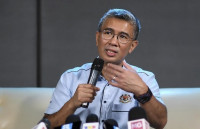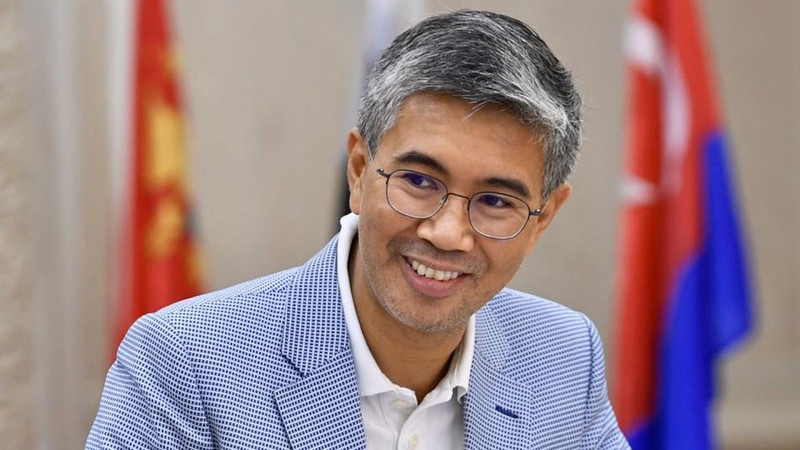
THE government should look beyond the minimum wage in Budget 2027 and find ways to raise the earnings of middle-income workers, particularly those making around RM2,000 a month, said Tengku Zafrul Abdul Aziz.
The senior political adviser to the prime minister said workers in this group could come under greater financial strain as the cost of living rises without a corresponding increase in their salaries.
He said companies that could afford to do so should review wages across their workforce, rather than focusing solely on workers earning the minimum wage.
“I have raised the issue of wages. Companies that can afford it should increase not only the wages of those at the minimum level, but also those in the middle-income group,” he said in an interview on the PodX Utusan Malaysia podcast yesterday.
Tengku Zafrul explained this was important to ensure workers’ incomes continued to grow as living costs increased.
The concern is reflected in recent World Bank data, which showed that Malaysia’s median monthly wage increased from RM1,300 in 2010 to RM1,864 in 2024.
Average wages rose from RM1,792 to RM2,570 over the same period.
That represented wage growth of about 43%, compared with an 82% increase in gross domestic product.
Tengku Zafrul also pointed to employee compensation, saying Malaysia had room to improve workers’ share of the economic gains.
Citing World Bank data, he said employee compensation in Malaysia stood at about 35%, which he considered relatively low compared with developed economies.
He cited the Philippines and Indonesia, where workers receive a 13th-month salary, as examples of how such arrangements could lift annual earnings.
“Workers at all levels, from the lowest to the middle and highest, receive 13 months’ salary. This puts pressure on companies to increase workers’ earnings,” he stressed.
However, Tengku Zafrul said wage increases could not be imposed without considering the ability of businesses to absorb higher costs.
Small and medium-sized enterprises and microbusinesses, in particular, would need to be taken into account, he said.
He added that higher wages should go hand in hand with productivity and company performance to avoid putting undue pressure on employers.
The Malaysian Trades Union Congress (MTUC) has also called for a structured wage system to cover middle-income workers.
Its secretary-general, Kamarul Baharin Mansor, said last month that a broader wage structure would help ensure pay reflected workers’ skills, education and experience, while helping companies attract and retain talent.
He also said the minimum wage was due for another review after it was raised to RM1,700 in February 2025.
Meanwhile, Tengku Zafrul said the government would also have to weigh the impact of geopolitical tensions, oil price fluctuations and other economic pressures when drawing up Budget 2027.
The challenge, he said, was to ease the burden on households without placing businesses under unsustainable pressure.
“We need to think outside the box in this crisis because whatever we do must have an impact on the people,” he added.
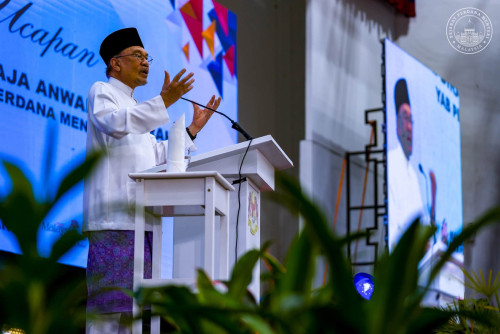
Budget 2027 is scheduled to be tabled by Prime Minister and Finance Minister Anwar Ibrahim on October 9. – September 26, 2026