BEIJING – China’s “wolf warrior” diplomats are back after a brief lull, firing insults over Twitter, smearing critics and suggesting conspiracies.
The hyperactivity of the envoys follows renewed global pressure over Beijing’s treatment of the Muslim Uighur minority in China’s Xinjiang region.
Here are four things to know as the wolf warriors once more bare their teeth:
When did it start?
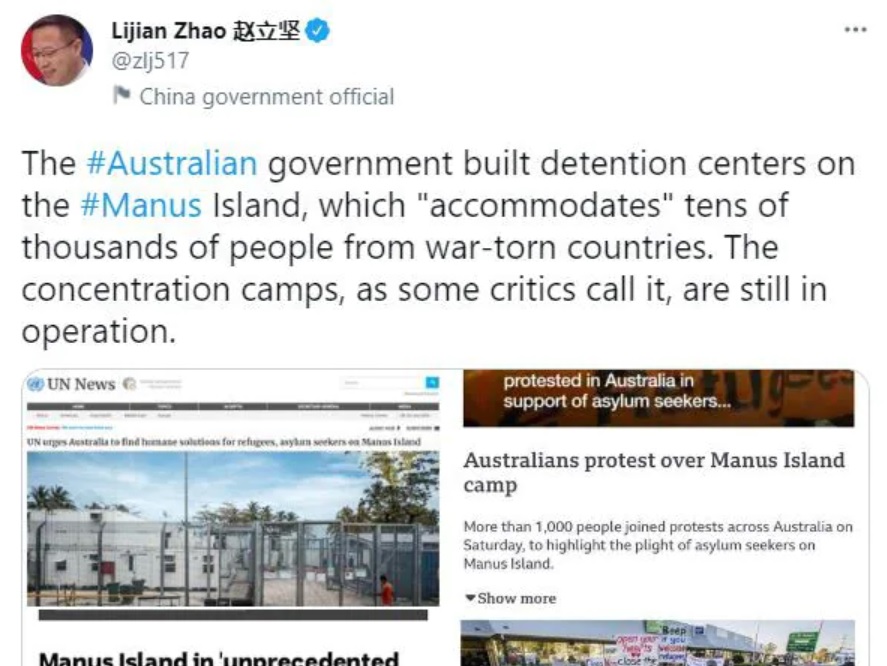
The term “wolf warrior diplomacy” became common parlance in 2019, when Chinese envoys – most prominently spokesman Zhao Lijian – adopted a vociferous defence of the Communist Party-led country on social media platforms such as Twitter, which is blocked in China.
The nickname derives from a film about a Rambo-like Chinese special forces soldier.
China insists it was forced into the change of tone, which came amid the fulminations of Donald Trump’s White House.
But officials like Zhao, who made headlines in 2019 over controversial tweets as an envoy to Pakistan, took to his fresh combat role as foreign ministry spokesman with particular aplomb a year later.
He has promoted conspiracy theories including that the US military might have brought Covid-19 to China, and then railed against Canberra in tweets alleging “the murder of Afghan civilians & prisoners by Australian soldiers”.
That post came with an illustration of a soldier holding a bloody knife to a child’s throat. It was denounced by Australia’s prime minister, but set the tone for feuds that still dominate relations.
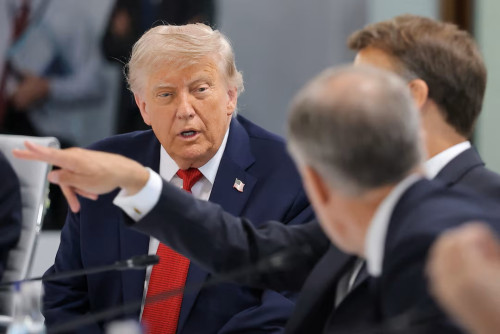
Trump’s rhetoric over the “China virus” saw Beijing’s envoys up the ante as the pandemic roiled the world.
Experts say the switch into attack mode partly reflects the new assertive China of President Xi Jinping.
Why did the wolves return?
As Joe Biden settled into the US presidency in January, China’s diplomats floated hopes of a reset in relations.
But the ceasefire collapsed at a US-China meeting in Alaska in mid-March, where the Chinese Communist Party’s top diplomat Yang Jiechi threatened action over “US interference”.
“Yang’s tough talk in Anchorage seems to have encouraged senior Chinese diplomats to indulge in inflammatory remarks,” said Mathieu Duchatel, director of the Asia Programme at Paris-based think tank Institut Montaigne.
China’s consul-general in Rio de Janeiro Li Yang has since referred to Canadian Prime Minister Justin Trudeau as “boy” while calling Canada a “running dog of the US”.
And, late last month as the European Union, Britain, Canada and the US imposed sanctions over Xinjiang, Foreign Ministry spokesman Hua Chunying went as far as to suggest the CIA helped cook up rhetoric on the northwestern region to destabilise China.
In response to backlash against brands like H&M and Nike, which raised concerns over the textile supply chain in Xinjiang, Hua showed a photo she said showed black slaves in US cotton fields.
Referencing the transatlantic slave trade that same week, she argued others were in no position to criticise China.
Attack mode
China’s envoys say Beijing has been forced to retaliate as rivals – particularly in the West – gang up to curtail its rise.
But officials’ attitudes have markedly shifted under Xi from late leader Deng Xiaoping’s philosophy to “hide your strength, bide your time”.
When France recently summoned the Chinese ambassador over “unacceptable” behaviour, the embassy said he would not immediately comply and instead come to “make representations” over sanctions and Taiwan issues.
Observers suggest there are bigger geopolitical calculations at play with a benefit in slinging mud at the once untouchable bigwigs of the global political order.
“The uncertainty of the international environment also gives Beijing a particular strategic development space to challenge the existing international order,” said Zhao Alexandre Huang, an academic at the Universite Gustave Eiffel in France.
What’s next?
Signalling strength and threatening costs for non-compliance may lead to friction with some states but could cow others, said Chong Ja Ian of the National University of Singapore.
Nations dependent on Chinese trade “are more susceptible to submission”, he said, adding that those with experience handling Chinese pressure may find it easier to ride out Beijing’s ire.
But if it wants to signal costs in opposing China, Beijing may edge towards demonstrating “capacity and determination to escalate at each moment of confrontation”, Duchatel said.
While the wolf warriors have overturned many diplomatic assumptions, the surge into social media has not all been to Beijing’s benefit.
In September last year, a Twitter account belonging to Liu Xiaoming, China’s long-standing firebrand ambassador to Britain, “liked” a pornographic foot fetish video on Twitter. He played off the incident as a hack.
Liu retired a few months later.
China’s embassy in Ireland drew mirth last week when it cited a fable to push back against the wolf warrior label: “Aesop described how the Wolf accused the Lamb of committing offences...BTW, China is not a lamb.”
The tweet appears to have since been deleted. – AFP, April 5, 2021