World

Myanmar torches over half-billion dollar drugs stash

Cannabis, heroin, ketamine, tramadol and ice laid out on pyre

Updated 5 years ago · Published on 26 Jun 2021 9:30PM

Myanmar torches over half-billion dollar drugs stash
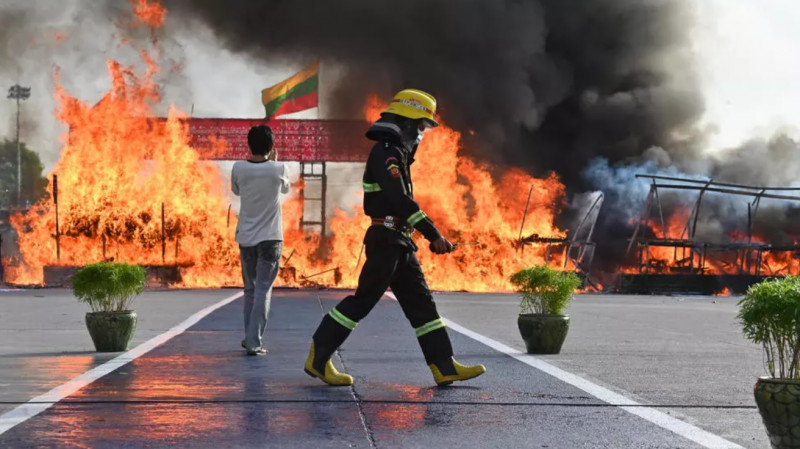
Sacks of green-brown cannabis and other drugs going up in a blaze at a compound in Myanmar’s commercial capital of Yangon today. – AFP pic, June 26, 2021

YANGON – Myanmar authorities torched over half a billion dollars worth of narcotics across the country today, sending opium, heroin and methamphetamine up in smoke as experts warn smugglers have adapted to Covid-19 travel restrictions and are back in business.

Sacks of green-brown cannabis were stacked high at a compound in the commercial capital here, alongside bin-liner-sized bags of red-pink pills, marking one of Myanmar’s offerings for the annual World Drug Day burning.

Slabs of heroin, bags of ketamine and tramadol and ice were also laid out on the pyre. 

Stashes were also burned at ceremonies held in Mandalay and Taunggyi in Shan state, Myanmar’s anti-drugs police department said. 

A total of just under US$668 million (RM2.7 billion) of narcotics, including 224 million meth tablets, were torched in the three cities.

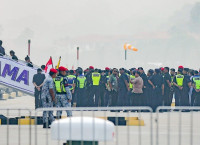
As a woman barked a command over a loudspeaker here, four men in military uniform pressed buttons on tables in front of them, and the stash went up, flames licking the early morning sky.

Firefighters stood ready and well back from the noxious smoke.

Despite Covid-19 travel restrictions, there has been an “overall sustained expansion of the methamphetamine market in East and Southeast Asia”, the UN said earlier this month. 

Myanmar’s troubled Shan state remains the main source of the drug, it added, which is often smuggled on to wealthier overseas markets, such as Australia and Japan, in its more potent crystallised form.

The body has warned of an even bigger deluge as Myanmar’s legal economy tanks, following weeks of nationwide unrest and strike action following the military takeover.

The Golden Triangle, traversing the Myanmar, Laos and Thailand frontiers, has for decades been the hub of Southeast Asia’s lucrative drug trade.

Myanmar’s poppy-covered hills provide an ideal location for illicit labs, with a largely unchecked supply of precursor chemicals flooding in from China. – AFP, June 26, 2021
Related News

Malaysia / 2w

Indonesia seizes 1.16 tonnes of ketamine from tanker in Strait of Malacca

Malaysia / 2w

Illegal temple in Klang used to store drugs

Malaysia / 3w

Malaysians warned against carrying strangers’ belongings overseas after Tokyo drug arrests

Malaysia / 4w

12-vehicle crash: Lorry driver tests positive for drugs (video)

Malaysia / 4w

Private jet chartered for RM210,000 by Philippine syndicate mastermind

Malaysia / 1mth

Mixed reactions as 1,476 Myanmar nationals sent home

Spotlight

Malaysia

PLUS highway congested since midnight ahead of Deepavali

Malaysia

AGC: Najib's house arrest should be suspended pending legal review

Malaysia

Anwar becomes a Tamil movie hero for Deepavali (video)

Malaysia

Anthony Loke’s resignation takes effect when Najib arrives home

By Alfian Z.M. Tahir

Malaysia

Tony Pua urges BNM, MACC to audit RM50 million fund used to pay Najib’s fine

Malaysia

Prepare a 72-hour food supply; avoid panic buying – FOMCA

Malaysia

Anwar hopes US election outcome will ease global tensions, hostility towards Islam and Iran

Malaysia

Najib leaves Kajang Prison after High Court issues house arrest order

You may be interested

World

Trump says Washington 'doing very well' with Tehran as nuclear talks continue

World

US sanctions 45 entities linked to Cambodia cybercrime syndicate

World

Iran warns countries aiding US military action will become 'legitimate targets'

World

Leader of a deviant sect sentenced to 200 years in prison for killing 190 children

World

Iran reports six vessels ablaze in separate Strait of Hormuz incidents

World

Death toll from Russian strike on Ukraine aid distribution point rises to 53

World

Nearly 90 million displaced people exposed to climate risks, UNHCR warns