LOS ANGELES – The extreme drought-hit western United States braced for more wildfire destruction today as efforts to contain a vast blaze scorching southern Oregon failed to progress, and dangerous dry lightning storms were forecast in California.
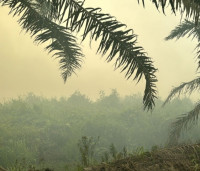
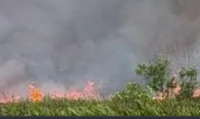
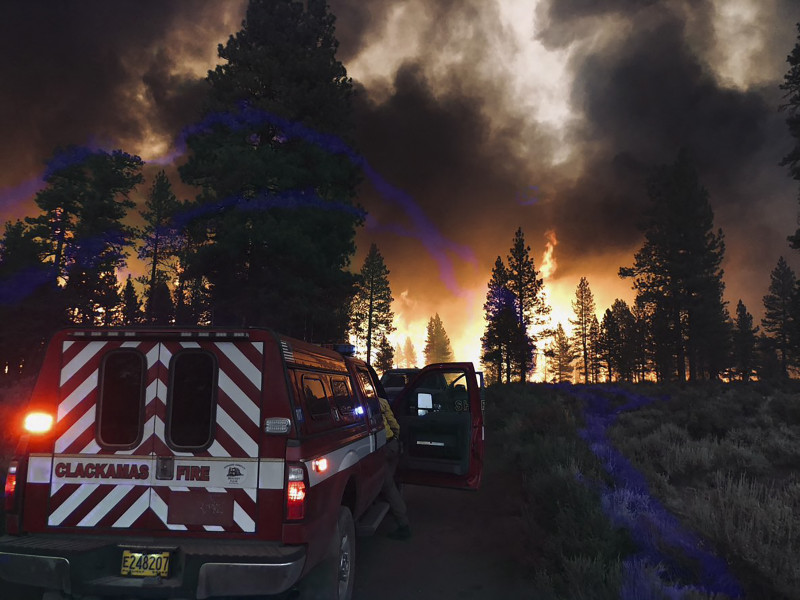
The Bootleg Fire near Oregon’s border with California grew overnight to 240,000 acres – larger than New York City, and by far the biggest active blaze in the US – while remaining just 7% contained.
“The Bootleg Fire perimeter is more than 200 miles (322km) long – that’s an enormous amount of line to build and hold,” said firefighter commander Rob Allen.
“We are continuing to use every resource, from dozers to air tankers to engage where it’s safe to do so, especially with the hot, dry, and windy conditions predicted to worsen into the weekend.”
More evacuations orders were issued late Thursday as firefighters had to withdraw from fast-growing flames and “extreme fire conditions” to the east of the blaze, which began 10 days ago and has grown at 1,000 acres per hour since.
“I was out there,” said Frank Lee Smith, an evacuated resident of Klamath County in Oregon.
“I saw the flames creeping up the side of the bluff about a mile away towards our place and got the call to pack up and go so I threw what I could in the truck and the two dogs and we took off.”
The fire also poses a risk to neighbouring California’s power supply, threatening to plunge residents into darkness, as has happened in past years when heat waves strained the state’s grid.
California Governor Gavin Newsom announced further reinforcements would be sent to help fight the Oregon blaze, even as California battles its own fires, said the governor’s office’s Emergency Services in a statement.
“Climate change impacts are contributing to wildfires that are increasingly dangerous and destructive across the western US,” it added.
Climate scientist Daniel Swain warned that the risk of wildfires ignited by dry lightning strikes forecast in California for this weekend is “quite high”.
Last year’s August Complex fire – the largest in modern California history, which destroyed an area the size of Delaware – was triggered by a massive series of thousands of lightning strikes.
Due to a “long period of unrelenting and frequently record-breaking heat”, California brush is drier than it would usually be at its August or September peak, warned Swain, of University of California, Los Angeles.
But it is “very unlikely there will be nearly as many dry lightning strikes as occurred in August 2020”, he tweeted. – AFP, July 17, 2021