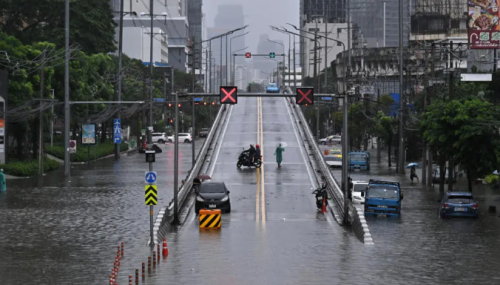
MANILA – The Philippines will send more than 13 million people in the national capital region back into lockdown next week, said the government today, as it tries to head off a surge in cases involving a hyper-contagious Covid-19 strain.
Experts have warned of an explosion in infections fuelled by the Delta variant that could overwhelm hospitals in the coming weeks if restrictions are not drastically tightened in the crowded region.
“We had to make this difficult decision in order to save more lives,” said President Rodrigo Duterte’s spokesman Harry Roque on government TV.
Dine-in and mass gatherings have been banned with immediate effect, and a two-week stay-home order will start next Friday, he said.
The Philippines has recorded more than 1.5 million coronavirus infections – the second-highest in Delta-ravaged Southeast Asia – including nearly 28,000 deaths.
So far, it has confirmed over 200 Delta infections, many of them local cases, and there are fears that the more contagious strain could tear through the nation like it has in neighbouring countries.
Independent research group Octa, which advises the government on its pandemic response, earlier called for an immediate lockdown in the capital, warning that daily cases in Manila could triple to 3,000 by mid-August if no action was taken.
“It could overwhelm (the healthcare system) in a few days at that rate,” the group’s Ranjit Rye told AFP this week.
Duterte flagged the possibility on Monday even as he lamented that the country could ill afford it.
Previous lockdowns have already shattered the economy, thrown millions out of work, and left many families hungry.
Mayors in the capital region, comprising 16 cities and one municipality, reportedly back stay-home orders if the federal government provides assistance to residents.
The said region, also known as Metro Manila, and its surrounding provinces were last locked down in March as record infections pushed hospitals to their limit.
As new cases eased earlier this month, the government lifted a ban on children aged 5 to 17 going outdoors for the first time since the start of the pandemic.
Two weeks later, however, it reimposed the stay-home order as authorities confirmed local transmissions of Delta.
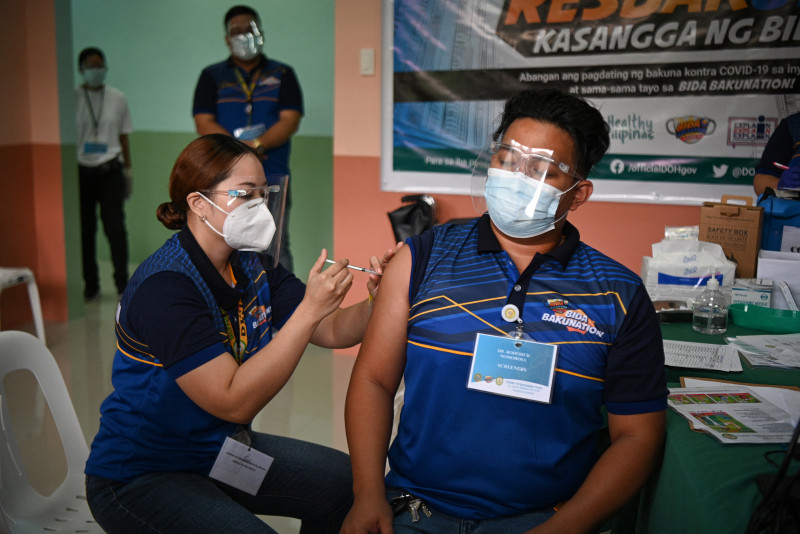
The tougher restrictions come as the country struggles to vaccinate its population due to tight global supplies and logistical challenges.
Only 7.8 million people, or 7% of the population, have received both vaccine doses. – AFP, July 30, 2021