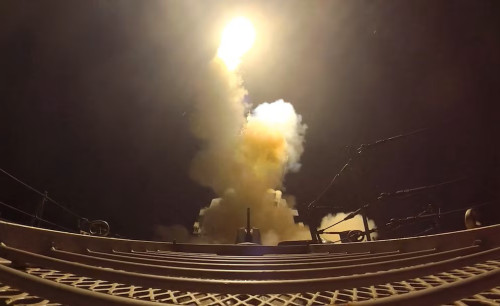
SEOUL – South Korea is in the final stages of developing a ballistic missile that can carry a warhead of up to three tonnes, the Yonhap news agency reported today, as the country unveiled budget proposals aimed at bolstering its defences against the North.
In its defence blueprint for 2022 to 2026, the Defence Ministry said it will develop new missiles “with significantly enhanced destructive power”, upgrade missile defence systems, and deploy new interceptors against long-range artillery.
“We will develop stronger, longer-range and more precise missiles so as to exercise deterrence and achieve security and peace on the Korean Peninsula,” said the ministry in a statement.
Among those missiles is a new weapon with a flight range of 350km to 400km and a payload of up to three tonnes, designed to destroy underground facilities such as those North Korea is believed to use to store nuclear weapons, said Yonhap, citing unnamed sources.
The missile would be the latest in a tit-for-tat conventional missile race between the two Koreas that is set to accelerate after South Korea and the United States agreed to scrap all bilateral restrictions on Seoul’s missile development earlier this year.
Last year, the South announced that its new Hyunmoo-4 short-range ballistic missile (SRBM) can carry a two tonne warhead, while in March, the North tested an SRBM that it said can deliver a 2.5 tonne payload. The Hyunmoo-4 is South Korea’s largest missile.
“Following the termination of the guidelines, we will exercise deterrence against potential threats and improve strike capabilities against main targets,” said the Defence Ministry statement.
Before the decade is out, Asia will be bristling with conventional missiles that fly farther and faster, hit harder, and are more sophisticated than ever before – a stark and dangerous change from recent years, said analysts, diplomats and military officials.
Overall, South Korea’s defence blueprint calls for spending 315.2 trillion won (RM1.1 trillion), a 5.8% year-on-year increase on average, over the next five years. – Reuters, September 2, 2021