SYDNEY – Community groups in Australia’s Covid-19-hit cities are battling misinformation in multiple languages as they race to vaccinate a way out of “traumatic” lockdowns.
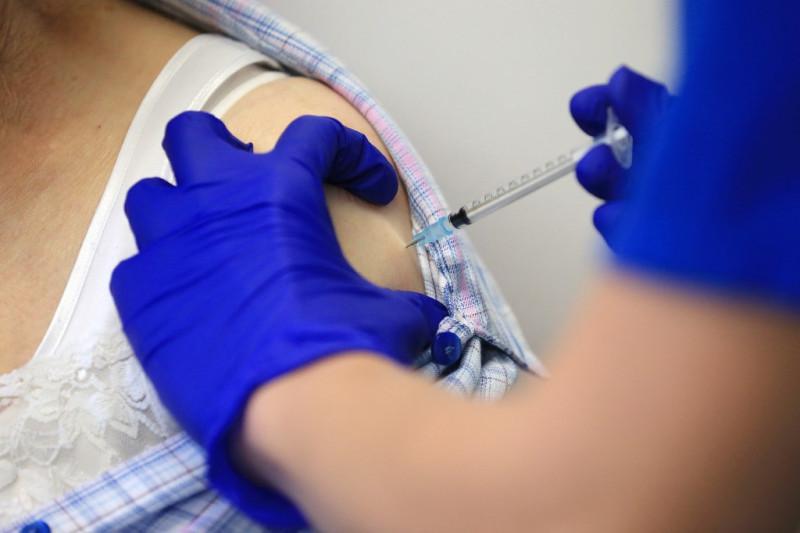
Beneath the minarets of a mosque in west Sydney, 500 people are booked in for vaccine appointments at a pop-up clinic – part of a burgeoning network of initiatives by minority communities trying to fill a void left by Australia’s mostly Anglo-centric officialdom.
For many, it is the longest time they have been out of their homes in weeks.
“They just want to go back to work, they want to go back to life,” said Omar Moussawel, one of those getting jabbed to end Sydney’s nearly three-month lockdown.
When Sydney’s outbreak began in late June, a lack of doses made national vaccination efforts tortuously slow.
Myths, fears and outright misinformation – notably about the AstraZeneca vaccine – were allowed to spread largely unchallenged.
Khaled Kamalmaz, a health coordinator with the Lebanese Muslim Association, remembers such misinformation spreading rapidly across languages.
“We’ve had to step in and, you know, try to change the narrative,” Kamalmaz said.
The group enlisted sheikhs and religious leaders to get themselves jabbed as an example and to counter damaging misinformation. Communities also partnered with local government authorities increasingly aware of the issue.
Quinn On, a pharmacist serving Sydney’s large Chinese and Vietnamese communities, saw a similar problem.
“Word of mouth is very powerful in this area,” he said.
“There’s a big elderly population in this area that is still very reluctant to have the vaccination, especially with the AstraZeneca.”
Andre Renzaho from Western Sydney University’s Translational Health Research Institute believes “the government still hasn’t played enough role to dispel those myths”.
“I can guarantee the impact of WhatsApp, Messenger, TikTok within culturally and linguistically diverse communities is far greater than government can imagine,” he said.
Turnaround
The pandemic continues to impact the rich and poor differently, exposing racial, ethnic and cultural divides that may take a long time to bridge.
“It’s much more traumatic than last year,” said Peter Doukas, Ethnic Communities Council of New South Wales chairman.
In Melbourne, five million residents are currently in the city’s sixth lockdown since the pandemic began.
Many residents in hard-hit areas cannot work from home and have tight-knit family groups that rely on each other for even the most basic of needs.
During the city’s worst outbreak in July 2020, Mohamud Omar, 31, was among hundreds of public housing tower residents placed under “hard lockdown”.
He spent five days in his apartment with his wife and then 1-year-old child, unable to leave his home for any reason.
With no way to get access to culturally appropriate food and supplies for his family, he relied on local community organisations.
“We were treated differently. The government must take responsibility and apologise,” he said.
But even as Sydney’s outbreak has worsened, spiralling into over a thousand cases a day, there are signs community efforts are working.
Vaccine hesitancy has slowly given way to demand.
New South Wales now leads the country on vaccination rates, and is weeks away from reaching 70% of adults being fully vaccinated, allowing lockdowns to end.
Areas with large minority populations are among those leading the vaccination charge.
On and his team delivered over 3,000 jabs in under a month.
Moustafa Fahour, the founder of the Islamic Museum of Australia, has been making hundreds of calls daily with a small team of volunteers, helping people access everything from government support to home-schooling tips.
“The community is standing up in their own right, and some with the support of government, to really combat and tackle the language gaps.” – AFP, September 11, 2021