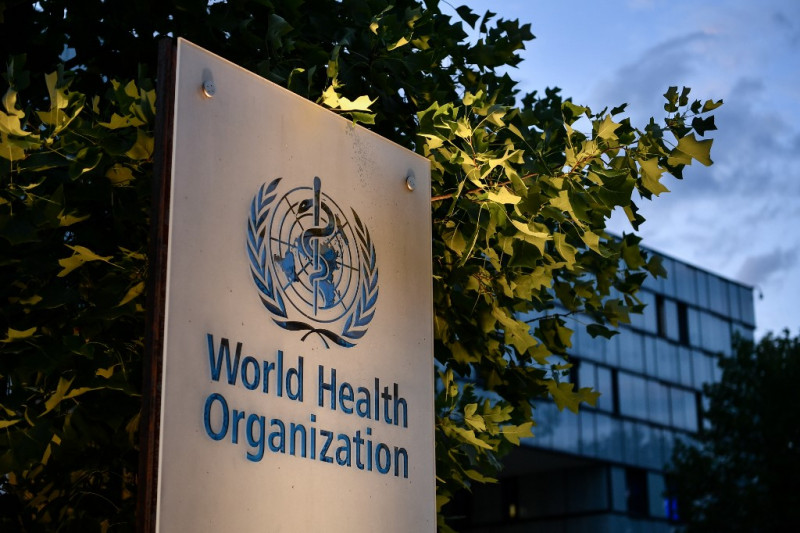
GENEVA – The World Health Organisation (WHO) has warned that blanket travel bans will not prevent the spread of Omicron, as more countries rushed to impose curbs and the first cases of the new Covid-19 strain were detected in Latin America.
In the week since the new virus strain was reported by South Africa, dozens of countries around the world have responded with travel restrictions – most targeting southern African nations.
But WHO yesterday warned that “blanket” travel bans risked doing more harm than good, just as Canada expanded its restrictions.
In a travel advisory, WHO warned the bans could ultimately dissuade countries from sharing data about the evolving virus.
But it did advise that unvaccinated people vulnerable to Covid-19, including over-60s, should avoid travel to areas with community transmission of the virus.
WHO chief Tedros Adhanom Ghebreyesus said it is understandable for countries to seek to protect their citizens “against a variant we don’t yet fully understand”.
But he called for the global response to be “calm, coordinated, and coherent”, urging nations to “take rational, proportional risk-reduction measures”.
The likely futility of broad travel restrictions was underscored as Dutch authorities reported that Omicron is present in the country before South Africa officially reported its first cases on November 25.
The new variant – whose high number of mutations WHO believes may make it more transmissible or resistant to vaccines – was found in two Dutch test samples on November 19-23, with one having no travel history.
So far, well over a dozen countries and territories have detected cases, including Australia, Britain, Canada, Hong Kong, Israel, Italy, and Portugal.
Latin America reported its first two cases yesterday – in people who travelled from South Africa to Brazil – and a first case was confirmed in Japan, one day after it barred all foreign arrivals.
However, US President Joe Biden said the travel bans on just the southern African nations would stay in place, without referencing the other places where Omicron has been detected.
Asked how long the travel restrictions – that took effect on Monday – on South Africa and seven other southern African countries would remain, Biden said it “kind of depends”.
“We’re going to learn a lot more in the next couple weeks about the lethality of this virus, about how much it spreads, what we have to control it, etc,” he told reporters.
Asked if any expansion of the travel restrictions to other countries could be made suddenly, as happened under former president Donald Trump, Biden said: “Unlike Trump, I don’t shock our allies.”
In Asia, governments today continued to expand restrictions, including with Indonesia adding Hong Kong to its travel ban list alongside various African nations.
Hong Kong also added three more countries – Japan, Portugal, and Sweden – to its highest travel restriction category after Omicron cases were discovered in those nations.
Vaccine-resistant?
While much is still unknown about the Omicron variant – it could take weeks to determine whether, and to what extent, it is vaccine-resistant – it has highlighted that the global fight against Covid-19 is far from over.
Omicron emerged as much of the northern hemisphere was already bracing for a new winter wave of the pandemic – leaving even nations with high vaccination rates struggling to contain rising infection numbers, and prevent health services from being overwhelmed.
Governments, particularly in western Europe, have already reintroduced mandatory mask-wearing, social distancing measures, curfews, or lockdowns – leaving businesses fearing another grim Christmas.
Greece yesterday went ahead in making vaccines compulsory for over-60s, while Norway will offer booster shots to all adults before Easter, which is preferable to a lockdown.
Britain has set a target of delivering third jabs to all adults within two months.
While the European summer of fleeting Covid-19 freedoms may be over, in the southern hemisphere, the Pacific island of Fiji ended 615 days of international isolation today and reopened to tourists.
Traditional dancers in grass skirts welcomed waving holidaymakers from Sydney, the first of an expected flood of desperately needed tourists in the coming weeks.
Fiji Airways chief executive Andre Viljoen said it is a “momentous” occasion, where tourism accounts for about 40% of the economy.
“The international border reopening will reignite Fiji’s economy,” he told reporters. – AFP, December 1, 2021





.jpeg)