DOHA – A Taliban delegation arrived in Qatar yesterday for talks with the United States on unlocking some of Afghanistan’s reserves following a devastating earthquake, with Washington seeking ways to ensure the money goes to help the population.
The White House said it is working “urgently” on the effort, but a member of the Afghan central bank’s board said it could take time to finalise.
The Taliban’s Foreign Minister Amir Khan Muttaqi arrived in the Qatari capital Doha along with finance ministry and central bank officials for talks with the US envoy on Afghanistan Tom West, Taliban foreign ministry spokesman Hafiz Zia Ahmed said, posting a tarmac picture on Twitter.
After the Taliban takeover in August last year, Washington froze US$7 billion (RM31 billion) in reserves and the international community halted billions in direct aid that Afghanistan and its population of roughly 40 million people had relied on.
The currency has collapsed, and the country descended into a serious economic crisis, although some assistance has been restored.
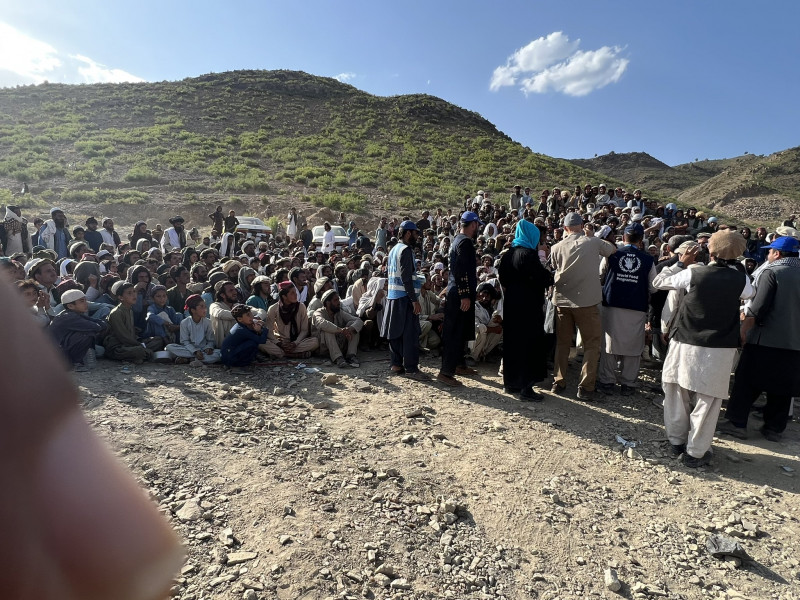
Last week’s 5.9-magnitude earthquake in eastern Afghanistan, which killed more than 1,000 people and left tens of thousands homeless, adds urgency to the funding debate.
“Negotiations are underway, and it is our expectation that a final proposal under discussion will be finalised,” said Shah Mehrabi, member of the Supreme Council of the Central Bank of Afghanistan.
However, details on “the mechanism to transfer the reserves to the central bank has not been finalised,” he told AFP.
“It is going to take a while. These things do not happen overnight.”
‘Get these funds moving’
The State Department did not immediately confirm the Doha talks, but White House press secretary Karine Jean-Pierre said over the weekend that there are efforts “to get these funds moving” from the frozen reserves.
“We are urgently working to address complicated questions about the use of these funds to ensure they benefit the people of Afghanistan and not the Taliban,” she told reporters travelling with President Joe Biden to Europe.
In question are US$3.5 billion in frozen reserves, half the total blocked by the US government.
“I have argued that these reserves should be released to the central bank,” said Mehrabi, who also is an economics professor at Montgomery College in the suburbs of the US capital.
He proposed a “limited, monitored release of reserves” of about US$150 million each month to pay for imports.
That would help “stabilise prices and help meet the needs of ordinary Afghans so that they can afford to buy bread, cooking oil, sugar and fuel,” alleviating the misery of families facing high inflation, he said.
Use of the funds “can be independently monitored and audited by external auditing firms with an option to terminate in the event of misuse,” he said.
The United Nations has warned that half the country is threatened with food shortages.
The US earlier said it is contributing nearly US$55 million to relief efforts made more urgent by the earthquake, directing aid to groups working in Afghanistan.
The Taliban are still considered a terrorist group by the US, which has insisted that any improvement of relations would be dependent on meeting key concerns, including on the treatment of women.
Biden in February gave the green light for the other half of the frozen reserves to go to compensating survivors and families of the victims of the September 11, 2001 attacks, which triggered the invasion in which the US toppled the Taliban and kept afloat a pro-Western government for two decades. – AFP, June 30, 2022