KYOTO – Thailand’s democracy is at a crossroads after May’s election result was effectively struck down by the courts.
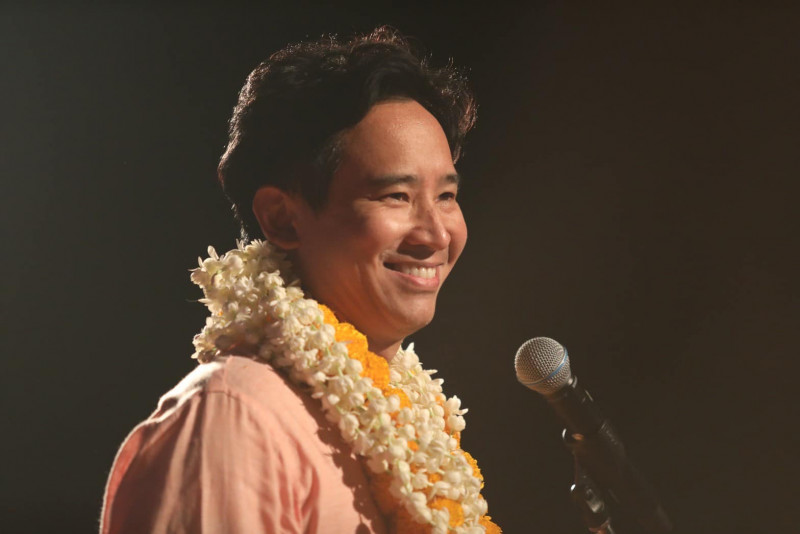
Last Wednesday in Bangkok, as the second round of voting to approve Pita Limjaroenrat as prime minister was in progress, the Constitutional Court ordered that he be suspended as a member of Parliament.
The court alleged that Pita, the leader of the Move Forward Party that won the most seats in May’s election, held shares in a now defunct media company, which rendered him unqualified under local law to run in the election.
This was not the first time the Constitutional Court interfered in politics in an apparent attempt to undermine political opponents of the old establishment. The future of Pita is unknown at best, or bleak to be more accurate.
Thai politics was already in a precarious position in the post-elections period after the Senate also blocked the premiership of the progressive leader.
Pita must secure at least half of the votes from the combined two Houses (House of Representatives of 500 and the Senate of 250 votes). The veto of the Senate reaffirmed the staying power of the old establishment.
The members of the Senate and the Constitutional Court were appointed under the direct guidance of the old establishment, which broadly consists of the military, the judiciary, senior bureaucrats as well as powerful businesses.
The Constitutional Court, founded in 1997, reemerged as a key political referee in the aftermath of the death of King Bhumibol Adulyadej in 2016. The Senate was reconfigured by the junta in the wake of the 2014 coup. Both were designed as instruments in preserving power interests of the old establishment. They were inventions in the long line of strategies to eliminate political enemies.
‘Judicial coup’
For a long time, Thailand’s old establishment has had little interest in investing in electoral politics, but has instead relied on shortcut strategies, such as staging a coup, to manage political challenges. The country has witnessed 12 successful military coups in the past century.
The latest political intervention of the Constitutional Court was a blunt obstruction of democracy in Thailand. It has been dubbed a “judicial coup” that robbed power from the Thai voters.
While the electoral victory of the pro-reform Move Forward Party signals Thailand’s hope for a growing democracy, it continues to be impeded by the entrenched power of the old establishment.
Today, the forces behind the old establishment have succeeded in installing a political infrastructure favourable to their own position. The powerful are becoming more sophisticated in exploiting the parliamentary and legal process to their advantage.
The early demise of Pita does not rest solely on the allegation of the shares controversy, which the leader claims should not render him unfit to run, as he inherited them from his father.
But more concerning, is that his Move Forward party is the only one which has proposed to reform Article 112, or lese-majeste law, in the Criminal Code which punishes anyone defaming the monarchy for up to 15 years in prison.
The main debate during the first round of voting for Pita’s premiership focused specifically on the reform of Article 112. Pita and his party were accused of trying to overthrow the monarchy, considered a serious crime in Thailand.
Politically active royalty
Such debate illustrates the central role of the monarchy in the political deadlock. King Vajiralongkorn is a politically active king. Unlike his father, he has directly interfered in politics, requesting the amendment of the constitution to empower himself.
In 2020, Thai youths staged protests to call for immediate royal reforms. Not only was their call ignored, but they were targeted in a harsh crackdown by authorities.
So when the Move Forward Party built its platform on the demand of the protesters, it was perceived as anti-monarchist, thus deserving to be annihilated.
The fault lines of Thai politics are traced back to the monarchy.
In this fight, the Move Forward Party is alone. The second most successful party, Pheu Thai, backed by former prime minister Thaksin Shinawatra, has been playing a double game.
In public, Pheu Thai has appeared to be willing to partake in a coalition led by Move Forward. In reality, Pheu Thai has tilted more toward reconciling with the monarchy, which has long been a policy of Thaksin.
Thaksin himself declared he wanted to return home this month, but recently rolled back his plan given he failed to secure a landslide win.
For Move Forward, Pheu Thai is not a reliable bedfellow.
Tycoon gunning for PM’s post
It is now increasingly likely that Pheu Thai will nominate one of its candidates from May’s election to become prime minister with former property mogul Srettha Thavisin, a close ally of the Shinawatra family, firming to take the top job, despite the election results.
It raises debate over the slim chances progressive politics has to rule in the current political climate, with the international community crucial in influencing and pressuring those in power in Thailand to respect the will of the voters.
The US’s concern over the Thai situation was commended. Any undemocratic effort to disqualify Pita and his party will jeopardise Thailand’s relations with its key allies.
Thailand’s political parties have a duty to defend parliamentary politics which should be kept free from interference of illegitimate players. Parties will need to be brave to tackle the royal “elephant in the room”, by openly discussing the issue of the monarchy to break the deadlock.
This represents the only way to move the country out of the vicious cycle that has gripped it for almost a century.
If this political process fails, it will only drive the people onto the streets. After long years of feeling politically deprived, they are angry.
Protests driven by anger are dangerous and could become violent. All sides can prevent bloody confrontations if they choose to respect the rule of democracy. – 360info, July 28, 2023
Pavin Chachavalpongpun is an associate professor at Kyoto University’s Centre for Southeast Asian Studies.
Published under Creative Commons and in partnership with 360info.org