ASIAN markets opened the week on a downbeat note, as investors reacted to a series of negative catalysts, including renewed trade tensions sparked by U.S. President Donald Trump’s latest tariff announcements.
The slide followed a weak performance on Wall Street, where data revealed growing concerns over inflation and disappointing jobs growth, dampening investor sentiment.
Trump reignited his hardline trade policies over the weekend by unveiling new tariffs on steel and aluminium imports, setting the stage for a potential escalation in the U.S.-China trade conflict.
He announced that a 25% tariff would be applied to all steel imports, including aluminium, and signalled that the U.S. would soon implement "reciprocal tariffs" to mirror trade levies imposed by other nations on American goods. The president warned that "every country" would be subject to these measures, further fuelling uncertainty in global markets.
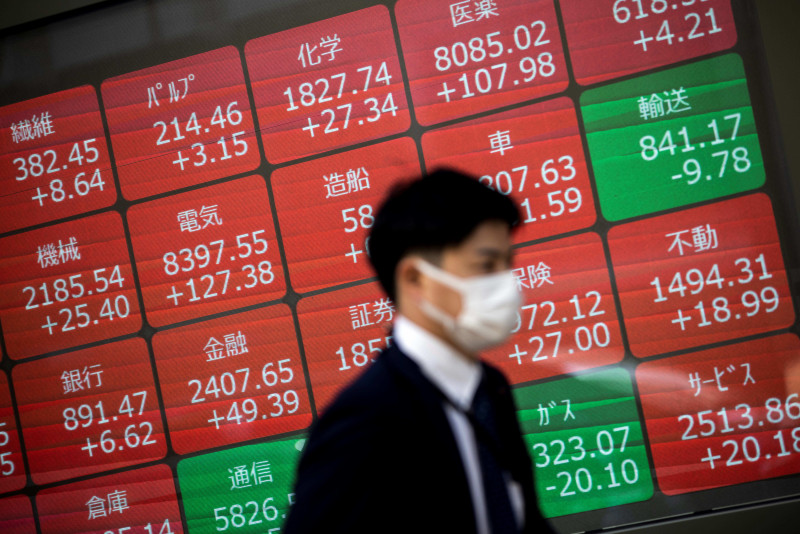
The announcement caused immediate fallout in Asia, with stock indices across the region mostly in the red. Markets in Sydney, Seoul, Manila, Bangkok, Mumbai, Jakarta, Wellington, and Taipei all saw declines, reflecting investor nervousness about the broader economic impact.
On the other hand, Chinese stocks in Hong Kong and Shanghai extended gains from the previous week, driven in part by investor optimism around Chinese tech stocks, including the rise of AI startup DeepSeek, which has been positioning itself as a formidable competitor to U.S. tech giants.
Adding to the unease, the tariffs targeted key steel and aluminium suppliers to the U.S., including Canada, Brazil, Mexico, and South Korea.
The Canadian dollar, Mexican peso, and South Korean won all weakened in response, while markets sensitive to commodity prices also took a hit.
The U.S. is Canada's largest trading partner, and both countries are deeply integrated in the steel and aluminium sectors, which raised concerns over the potential ripple effects of the new tariffs.
The trade tensions have created friction with several other countries. China’s Ministry of Foreign Affairs reiterated its opposition to trade wars, insisting that such conflicts have no winners.
Meanwhile, France’s foreign minister, Jean-Noël Barrot, warned that the European Union would retaliate in kind if Washington moves forward with imposing tariffs. On Friday, Trump also threatened to impose duties on Japanese goods unless the U.S. trade deficit with Japan was addressed, further intensifying global trade anxieties.
Back in the U.S., disappointing economic data weighed on sentiment. A report from the University of Michigan showed a sharp decline in U.S. consumer confidence for February, with the consumer sentiment index dropping to 67.8 from 71.1 in January.
Respondents also expressed increased concern about inflation, expecting it to rise by 4.3% over the next year, marking a full percentage point increase from the previous month.
Meanwhile, the U.S. economy added just 143,000 jobs in January, far below the 200,000-plus growth many economists had anticipated.
Despite the grim economic outlook, there was some positive momentum in Europe, where London, Frankfurt, and Paris all posted modest gains at the open.
The positive tone in Europe helped offset the losses in Asia, where regional markets struggled under the weight of geopolitical uncertainty.
Among individual stocks, Japanese steelmaker Nippon Steel saw its shares drop briefly by more than 2% in Tokyo following Trump’s announcement that it would make a major investment in U.S. Steel, though the company’s bid to take over U.S. Steel was scrapped.
The stock later recovered slightly to end the day down just 0.5%. Meanwhile, U.S. Steel shares plummeted by 5.8% in New York following the announcement.
The latest trade actions are deepening concerns about the stability of global supply chains and the long-term economic impact.
Analysts warn that Trump's aggressive stance could result in lasting disruptions to trade and growth, with Asian economies likely to feel the most immediate effects.
Stephen Innes of SPI Asset Management told AFP that Trump’s latest move as “an escalation of his 'America First' doctrine,” noting that markets had seen similar high-stakes gambles in the past.
However, if the U.S. president persists with his hardline policies, he suggested, Asian economies may face significant fallout. - February 10, 2025