KUALA LUMPUR – Malaysia's participation in the Regional Comprehensive Economic Partnership (RCEP) will help spur the country's economic recovery from the impact of Covid-19, especially in enhancing market access for local products into RCEP member states.
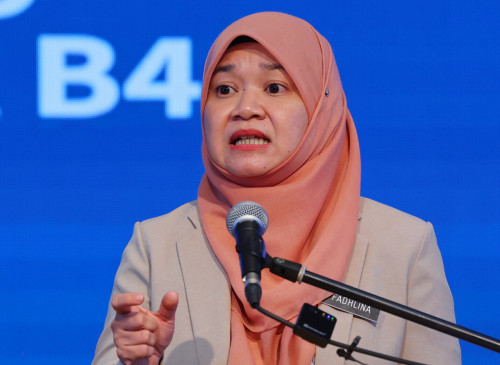
Senior Minister (International Trade and Industry) Datuk Seri Mohamed Azmin Ali said the local industry could enjoy preferential treatment through the progressive elimination and reduction of tariffs.
“Apart from tariffs, the reduction of non-tariff measures (NTMs), which is one of the main challenges in penetrating the international market, is also a major benefit of Malaysia's participation in the RCEP.
"This can be achieved through the coordination of import and export procedures, reciprocal recognition and acceptance of industry and technical standards of the respective countries, as well as information-sharing," he said during the oral question-and-answer session in the Dewan Negara today.
Azmin said, based on the initial projection by Malaysian Industrial Development Finance Bhd, Malaysia’s gross domestic product is set to increase by RM16 billion a year after the RCEP comes into force.
Meanwhile, the Malaysia External Trade Development Corporation (Matrade), which is responsible for the promotion and development of Malaysian trade, has projected Malaysia's export performance to the RCEP market to increase by RM21 billion a year.
“Local companies can also strengthen the integration in the global value and supply chain with the supply of raw materials, components, semi-finished and finished goods in the RCEP market.
“This integration is further boosted through rules of origin that are easier to use due to the uniformity between all RCEP participating countries. Service providers, including e-commerce, will also be able to enjoy greater market access in terms of cross-border supply and create a commercial presence in the RCEP market,” said Azmin.
He said the RCEP agreement is expected to accelerate the process of regional economic recovery post-Covid-19 through market opening, increased investment, trade facilitation and industrial integration, especially among small and medium enterprises into the regional value chain. – Bernama, December 22, 2020