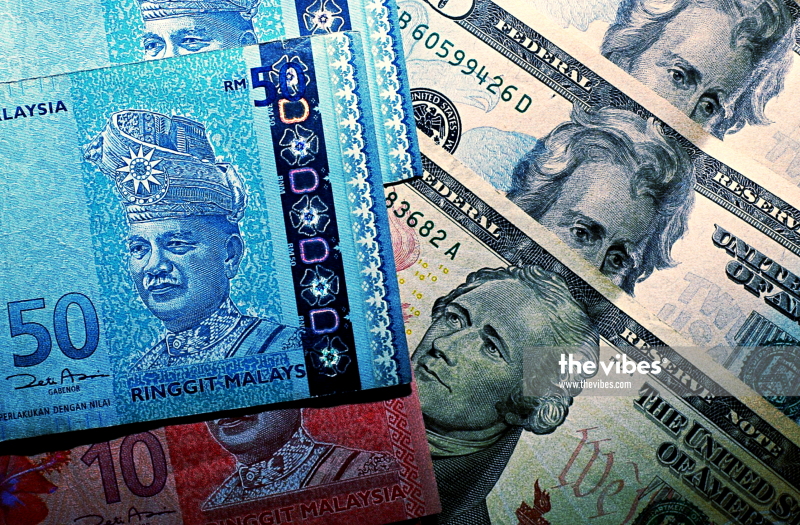
ACTIVE transactions denominated in the ringgit are set to further strengthen Malaysia’s currency, positioning it among the world’s 20 most influential currencies, according to a senior wealth management executive.
Stephen Innes, Managing Partner at SPI Asset Management, said demand for ringgit-based transactions is underpinned by Malaysia’s strong trade links, particularly with China, Singapore and other Southeast Asian nations.
“The ringgit’s broadening use in currency settlements, bilateral arrangements and portfolio inflows into the domestic bond market, combined with healthy economic growth, supports sustained demand for the currency,” he said.
“This will help keep the ringgit in the global spotlight,” Innes told Bernama.
The ringgit strengthened to as high as 4.1990 against the US dollar on 5 May 2025, appreciating by 6.2 per cent since the beginning of the year — its highest level for 2025 so far. It is currently trading at 4.2475/2525 against the greenback.
Innes was responding to a report by Seasia Stats, which compiled data from the Society for Worldwide Interbank Financial Telecommunication (SWIFT) and listed the ringgit among the 20 most influential global currencies.
Seasia Stats is a digital platform that publishes statistics and visual data related to Southeast Asia, spanning topics such as the economy, culture, demographics, health, and technology.
Innes noted that Malaysia’s burgeoning electronics and semiconductor trade, along with palm oil and energy exports, continue to bolster demand for the ringgit.
“Malaysia’s regional financial integration also plays a vital role in expanding the ringgit’s global usage,” he said.
“The increasing use of local currency settlement mechanisms, backed by bilateral agreements with Indonesia, Thailand and China, has elevated the ringgit’s role in cross-border trade.”
He added that despite some volatility, Malaysia’s bond market remains attractive to foreign investors due to its depth and competitive yields.
“This sustained interest helps maintain demand for the ringgit among global asset managers.”
Innes also highlighted Bank Negara Malaysia’s ongoing efforts to modernise the country’s financial infrastructure and enhance digital payment connectivity, which have made the ringgit more accessible and efficient in the international system.
According to Seasia Stats, the US dollar still dominates international transactions with a 49.68 per cent share, followed by the euro (22.24 per cent), British pound (6.51 per cent) and Japanese yen (4.03 per cent).
The ringgit, alongside Hungary’s forint and Thailand’s baht, rounds out the top 20, each accounting for less than 0.3 per cent of global usage.
While modest in proportion, Innes said the ringgit’s inclusion is a clear reflection of its growing importance in regional trade and finance.
“Though its global transaction share remains below 0.3 per cent, its presence on the list speaks to more than size — it signals Malaysia’s strategic position in global supply chains, particularly in Asia-Pacific.
“The ringgit may not yet be a major reserve currency, but its usage in trade settlement, capital flows and regional monetary cooperation is on the rise,” he said.
Meanwhile, Bank Muamalat Malaysia Bhd’s Chief Economist Dr Mohd Afzanizam Abdul Rashid said government reforms aimed at improving Malaysia’s fiscal standing have played a crucial role in supporting the ringgit’s appreciation.
He noted that the federal fiscal deficit narrowed to 4.5 per cent of GDP in the first quarter of 2025, down from 5.7 per cent a year earlier — a result of key fiscal measures including the increase in the Sales and Services Tax (SST) from six to eight per cent in March 2024 and the rationalisation of diesel subsidies in June 2024.
These measures led to a 30.3 per cent increase in SST collection in the first quarter of this year, along with a reduction in subsidy and social assistance expenditure.
“This has strengthened the ringgit, as foreign investors are seen to be net buyers in our bond market, particularly Malaysian Government Securities (MGS) and Government Investment Issues (GII),” he said.
Afzanizam also pointed to a rise in Bank Negara Malaysia’s foreign exchange reserves, which grew from US\$115.5 billion in January to US\$120 billion by end-June — further underpinning the ringgit’s resilience. - July 13, 2025