MALAYSIA’S property sector is poised for a moderate uptick in demand in the second half of 2025 following Bank Negara Malaysia’s (BNM) decision to cut the Overnight Policy Rate (OPR) to 2.75 per cent, say property analysts.
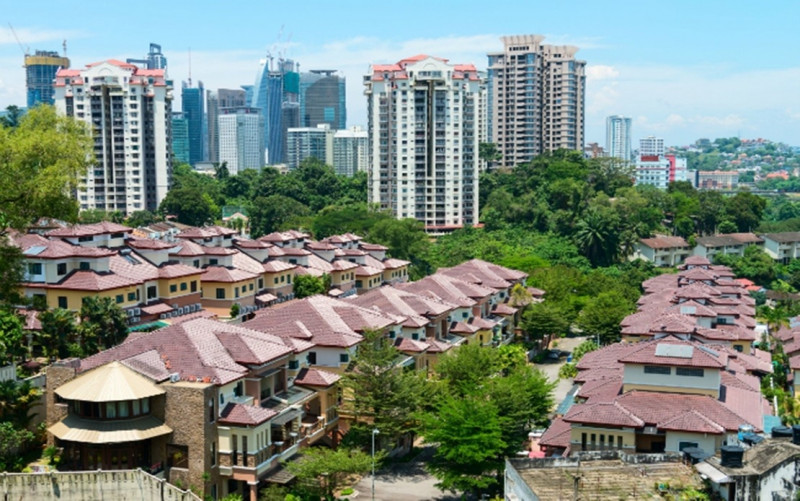
While the mid-range market is expected to benefit most from improved affordability and stronger buyer sentiment, the high-end segment remains notably resilient, bolstered by sustained interest from affluent buyers and robust infrastructure connectivity.
“Stable economic conditions, wealth preservation strategies and attractive incentives have encouraged upgraders and investors to remain active despite the cautious sentiment in the broader market,” Bernama quoted Jamie Tan, Managing Director of JLL Malaysia saying.
Real estate professionals also observed a surge in property viewings and home loan inquiries following the 10 July rate cut, marking the first revision in over two years. “This reduction improves affordability.
A borrower financing a RM500,000 home could save around RM66 per month—amounting to RM23,000 over a 30-year tenure,” said IQI Co-founder and CEO Kashif Ansari.
Luxury Segment Defies Market Softening
According to the National Property Information Centre (Napic), transactions for homes priced above RM1 million rose 5.6 per cent year-on-year in Q1 2025, defying the overall decline in transaction volume and value by 6.2 and 8.9 per cent respectively. Demand was particularly strong in Kuala Lumpur, Penang, and Johor Bahru.
Tan noted that prices for serviced apartments and condominiums in the Klang Valley increased by 1.8 to 2.3 per cent, while double-storey terrace homes rose by 1.4 per cent—reflecting steady demand in well-connected urban centres.
Affordability Struggles in the Mass Market
In contrast, properties priced below RM500,000 continue to face headwinds due to affordability concerns. “Rising living costs and stagnant wages are weighing heavily on the mass market,” Kashif said, urging developers and policymakers to prioritise housing supply in the RM200,000 to RM500,000 bracket.
Despite this, Malaysia’s residential overhang situation has improved significantly from pandemic-era peaks. JLL data shows overhang rates have declined to 23 per cent in Selangor and Johor, and 19 per cent in Kuala Lumpur, compared to 63 per cent during 2020–2021.
However, Tan cautioned, “Not all unsold stock is equal. Properties with strong locations, connectivity and design features continue to attract buyers, while poorly located or overbuilt units struggle.”
Infrastructure Drives Value
Infrastructure connectivity continues to be a major driver of property value and demand. Kashif cited a Universiti Pendidikan Sultan Idris study showing that homes within 400 metres of MRT stations on the Sungai Buloh–Kajang (SBK) line sold at a 9.5 per cent premium post-completion—approximately RM99,900 above the citywide average.
Tan highlighted that transit-oriented developments are viewed as lower-risk, higher-return investments, even in softer market conditions. “Connectivity drives footfall, rental demand and capital values,” he said.
Johor Leads Regional Growth
Johor is fast becoming a standout market due to the Johor–Singapore Special Economic Zone (JS-SEZ) and the upcoming Rapid Transit System (RTS) Link. In strategic locations such as Bukit Chagar and the CIQ complex, serviced apartment prices have surged by as much as 20.4 per cent, with new launches reaching RM1,500 per square foot—levels once exclusive to Kuala Lumpur’s Golden Triangle.
“Johor’s cross-border connectivity is a powerful magnet for both developers and investors,” said Tan.
Call for Sustainable and Inclusive Development
Both experts underscored the need for long-term planning and a focus on livability. “Developers must align their projects with real community needs, not just profit margins,” Tan said, calling for integration with local councils, sustainable design, and access to public amenities.
Kashif echoed this, urging a revival of the Home Ownership Campaign, tax incentives for affordable housing developers, and caution against excessive launches that could lead to another overhang cycle.
“Without proper planning, we risk another overhang situation,” he warned.
Despite affordability challenges and external risks such as geopolitical instability or global economic shocks, analysts remain optimistic. The combination of stable macroeconomic conditions, targeted policy support, strategic infrastructure investment, and responsive developer strategies are expected to support a gradual recovery in the property market.
Mid- and high-end segments, especially in prime and infrastructure-rich locations, are likely to lead the way as the market regains momentum in the latter half of 2025. - July 20, 2025