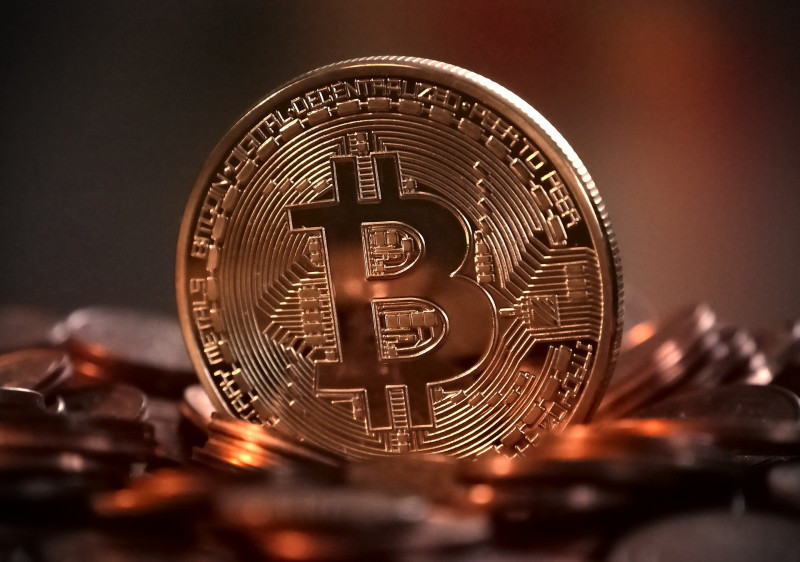
LONDON – After the latest wild ride took the poster child of cryptocurrencies above US$40,000 (RM161,460) before a stomach-churning plunge, the million-dollar question remains: how much is bitcoin actually worth?
The virtual currency barrelled to new highs, rising more than 400% over the past year, before promptly sliding some 20% and settling around US$36,000.
When it started life in 2009 as open-source software, bitcoin was essentially worth zero – though within a year, it had reached the heady height of 8 cents.
At today’s market rates, bloated by a surge in institutional demand, the digital unit’s market capitalisation is worth some US$670 billion, with a myriad of other crypto coins, such as ethereum, lifting the sector nominally close to the trillion mark.
Although that is small potatoes compared to the US$68 trillion or so swilling around world stock markets, it is nonetheless the sort of financial territory staked out by Wall Street tech royalty like Google, Apple and Tesla.
One tech site, AssetDash.com, noted that bitcoin is currently worth around as much as Facebook, and a little more than Chinese e-retail giant Alibaba.
Curse of the forgotten password
Although deep-pocketed investors have recently become enthusiasts, crypto, in its early days, was the preserve of geeky amateur investors.
It is the latter who have mainly suffered, as an estimated four million of the roughly 19 million bitcoin units currently in circulation have been lost.
“Lost” does not mean the coins have fallen down the back of the sofa, or through a hole in a trouser pocket: they have been electronically zapped from the record, often because their owner has forgotten a password to coins hoarded on a USB stick.
One US developer mislaid his password after storing 7,002 bitcoins on a flash drive, forcing him to wave goodbye, on paper (or rather, the trading screen), to around US$280 million.
This week, Welshman James Howells desperately offered his local authority a quarter of his fortune to dig up a landfill site where he believes a hard drive he accidentally tossed away – and which has since soared in value to around US$270 million – is buried. The council refused, citing the cost and logistical restrictions.
According to analysts at JP Morgan, bitcoin may be highly volatile, but could go as high as US$146,000 per unit, putting it in competition with gold as an asset class in terms of private sector investment.
That volatility, as well as the unregulated and decentralised nature of the bitcoin beast, are key reasons why many seasoned financial observers are scared off – as well as the risk of “losing” their stash.
“Most of the lost bitcoins were acquired in the early days,” said Philip Gradwell, economist with Chainalysis.
He said around one in five bitcoins in circulation today has not budged from its location in five years – since days when the unit was worth not much more than US$100.
“One or two million of those belong to Satoshi himself,” he said, referring to the creator of the coin, whose identity remains unknown.
He added that the bulk of investors are not day-to-day traders, but people making a long-term punt – and he estimated that the spectacular price boom of recent weeks has involved only around five millions units.
Patrick Heusser, head of trading at Swiss trader Crypto Broker, said following the trading volumes of a variety of cryptocurrencies, rather than just bitcoin, will give a better idea of how the market is faring.
“Ethereum has a lot of activity on the chain, but on the litecoin side, there is almost nothing going on,” he said, with the former valued at some US$138 billion currently, and the latter, US$10 billion.
He suggested that the rises have been largely a bitcoin slipstream effect, and cautioned against drawing parallels with gold.
“To be honest, I don’t believe that it is a very powerful or insightful metric inside what’s going on in the crypto market.”
After years of experience in traditional currency markets, he judged that it is early days for the crypto equivalent.
“We’re still a small fish.” – AFP, January 17, 2021




.jpeg)

.jpg)