PARIS – A total of 130 countries have agreed on global tax reform that affects multinationals wherever they operate, the OECD said yesterday, but some EU states refused to sign up.
The Organisation for Economic Cooperation and Development (OECD) said in a statement that global companies, including US behemoths Google, Amazon, Facebook, and Apple would be taxed at a rate of at least 15% once the deal is implemented.
The new tax regime will amount in revenues of some US$150 billion (RM624.82 billion) globally once it comes into force, which the OECD said it hoped would be in 2023.
“The framework updates key elements of the century-old international tax system, which is no longer fit for purpose in a globalised and digitalised 21st century economy,” the OECD said.
The formal agreement follows an endorsement by the G7 group of wealthy nations last month, and negotiations now move to a meeting of the G20 group of developed and emerging economies on July 9-10 in Venice, Italy.
US President Joe Biden said the latest deal “puts us in striking distance of full global agreement to halt the race to the bottom for corporate taxes.”
Germany, another backer of the tax reform, hailed it as a “colossal step towards tax justice”, and France said it was “the most important tax agreement in a century”.
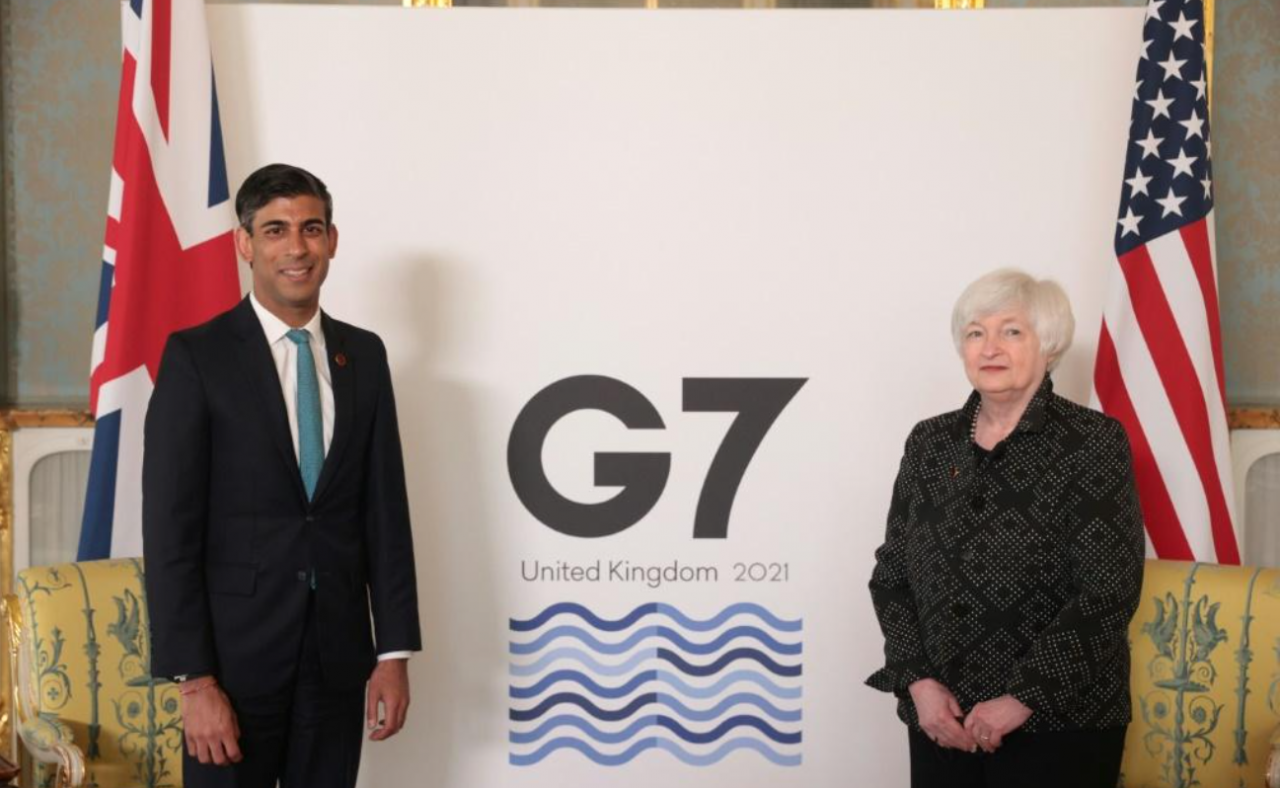
British finance minister Rishi Sunak, whose country holds the G7 presidency, said “the fact that 130 countries across the world, including all of the G20, are now on board, marks a further step in our mission to reform global tax”.
‘In everyone’s interest’
But EU low-tax countries Ireland and Hungary declined to sign up to the agreement reached in the OECD framework, the organisation said, highlighting lingering divisions on global taxation.
Both countries are part of a group of EU nations also including Luxembourg and Poland that have relied on low tax rates to attract multinationals and build their economies.
Ireland, the EU home to tech giants Facebook, Google and Apple, has a corporate tax rate of 12.5%.
Irish Finance Minister Paschal Donohoe has warned that the new rules could see Ireland lose 20% of its corporate revenue.
Yesterday, Donohoe said Ireland still “broadly supports” the deal, but not the 15% tax floor.
“There is much to finalise before a comprehensive agreement is reached”, he said, adding that Ireland would “constructively engage” in further discussions.
Also expressing concerns is Switzerland – known for its banking secrecy laws – which said it would support the measures despite “major reservations” and that it hoped the interests of “small, innovative countries” be taken into account.
An agreement for the implementation of the plan is planned for October.
Nine of the 139 participants in the talks have so far not signed on to the agreement.
But China, whose position was being closely watched as it offers tax incentives to key sectors, endorsed the agreement.
“It is in everyone’s interest that we reach a final agreement among all inclusive framework members as scheduled later this year,” said OECD secretary-general Mathias Cormann.
“This package does not eliminate tax competition, as it should not, but it does set multilaterally agreed limitations on it,” Cormann said, adding that “it also accommodates the various interests across the negotiating table, including those of small economies and developing jurisdictions”.
‘More equitable’ global economy
Finance chiefs have characterised a minimum tax as necessary to stem competition between countries over who can offer multinationals the lowest rate.
For Biden, a global tax agreement will help maintain US competitiveness since he has proposed hiking domestic corporate taxes to pay for an infrastructure and jobs programme with a price tag of around US$2 trillion.
Biden – whose tax plans face a potentially uphill battle in Congress – hailed an “important step in moving the global economy forward to be more equitable for workers and middle-class families in the United States and around the world.”
He noted that those nations who signed up make up more than 90% of the world’s economy.
The OECD’s statement said the package “will provide much-needed support to governments needing to raise necessary revenues” to fix their budgets and invest in measures to back the post-pandemic recovery.
Oxfam, a charity, meanwhile said that the deal fell short of a tax level needed to give poorer countries a sufficient share of additional tax revenue.
Calling the deal “skewed-to-the-rich and completely unfair”, Oxfam said that signatories had missed a “once-in-a-lifetime opportunity to build a profoundly more equal world”. – AFP, July 2, 2021