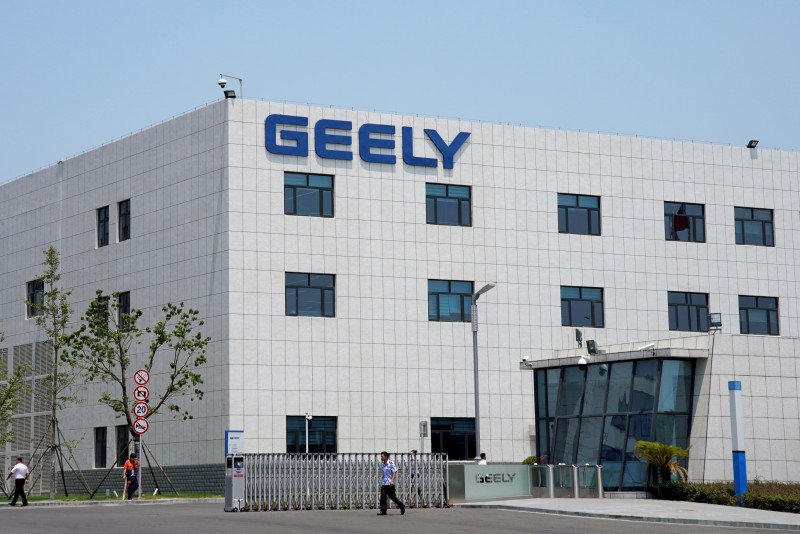
SHANGHAI – Chinese automaker Zhejiang Geely Holding today said its founder Eric Li has launched a new company dedicated to making smartphones.
The announcement marks yet another foray beyond vehicles for the firm and Li, its ambitious founder.
The new company, called Hubei Xingji Shidai Technology Co Ltd, has signed a strategic cooperation agreement with the Wuhan Economic and Technological Development Zone to establish its headquarters in the central Chinese city, where it will develop smart devices including phones, said Geely.
Public records showed that Li currently owns 55% of the company.
In a statement, Geely said Xingji Shidai will position itself in the premium segment of the smartphone market.
“There is a close connection in technologies within intelligent vehicle cockpits and smartphone technologies,” said Li in a statement.
“The major trend in the coming future is to create user ecosystems across borders, and provide users with a more convenient, smarter and seamlessly connected multi-screen experience.”
Li is perceived as an agile opportunist who is making a stream of start-up bets – on ventures like flying cars and helicopter taxis – to prepare for the new age of autos, Reuters previously reported.
Besides cars, Geely has a Danish bank, a start-up developing vehicle control software technology, and Geespace, a China-based firm that received approval from Beijing this year to make low-orbit satellites that will be the eyes in the sky for fully autonomous machines.
The scale of Li’s investments – spanning Europe, Southeast Asia, China and the United States – is unique among Chinese auto firms.
The nation’s smartphone market has matured since an initial boom in the past decade. Shipments of handsets to China last year hit 330 million units, marking an 11% annual decline.
Despite the sector’s shrinking size, major brands have increased their market share after US sanctions caused the once-dominant Huawei Technologies Co Ltd to retreat.
Xiaomi Corp, a long-time Huawei rival, boosted its sales domestically and abroad, and ranked as the No. 2 brand worldwide this year for the first time.
In March, Xiaomi founder Lei Jun said the firm will formally enter the electric vehicle market and invest US$10 billion (RM41.8 billion) in the sector over the next 10 years. – Reuters, September 28, 2021