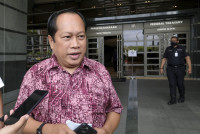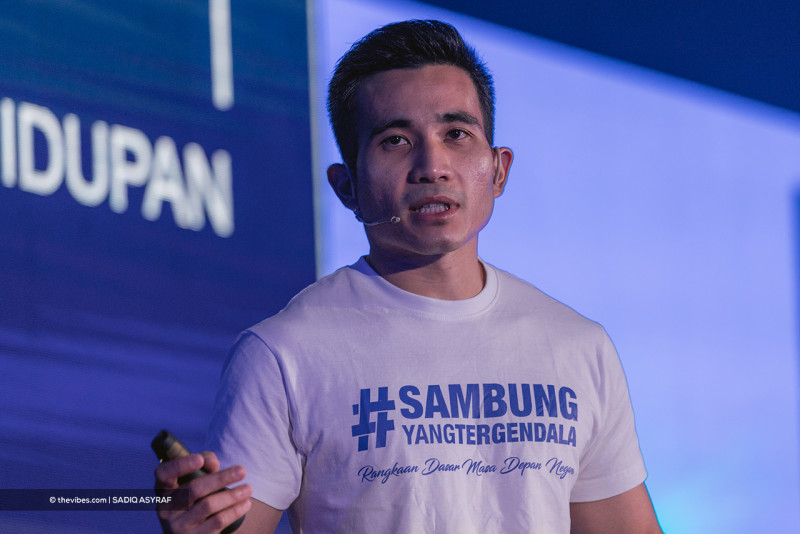

KUALA LUMPUR – While many have described Budget 2023 as an election budget, the Prime Minister’s Office’s economic director Shahril Sufian Hamdan begs to differ.
Shahril said it is an unfair characterisation of what will be announced on October 7.
“People think of it as an election budget, but I don’t think that will be a fair characterisation of what will be announced. This is the first budget after we exit the doldrums of Covid-19.
“By that measure, I think we can look forward to things that we will be spending in the right areas, productive kinds of spending, and really kicking into gear the RMK12 (12th Malaysia Plan).
“We have all these targets that people outside didn’t fully appreciate: about how we are going to increase our wages, how much we want to reduce inequality. So these are all major targets,” Shahril told The Vibes after attending the Wild Digital SEA 2022’s first panel session titled Changing gears: Malaysia’s race to become a digital nation.
The national budget is set to be announced on October 7 instead of October 28 as scheduled earlier. This has led to speculation that Prime Minister Ismail Sabri Yaakob will dissolve Parliament soon after, paving the way for the 15th general election.
In a statement on August 26, Minister in the Prime Minister’s Department (Parliament and Law) Datuk Seri Wan Junaidi Tuanku Jaafar confirmed the new date, stating that the budget would be tabled during the third session of the 14th Parliament session, which will commence on October 3.
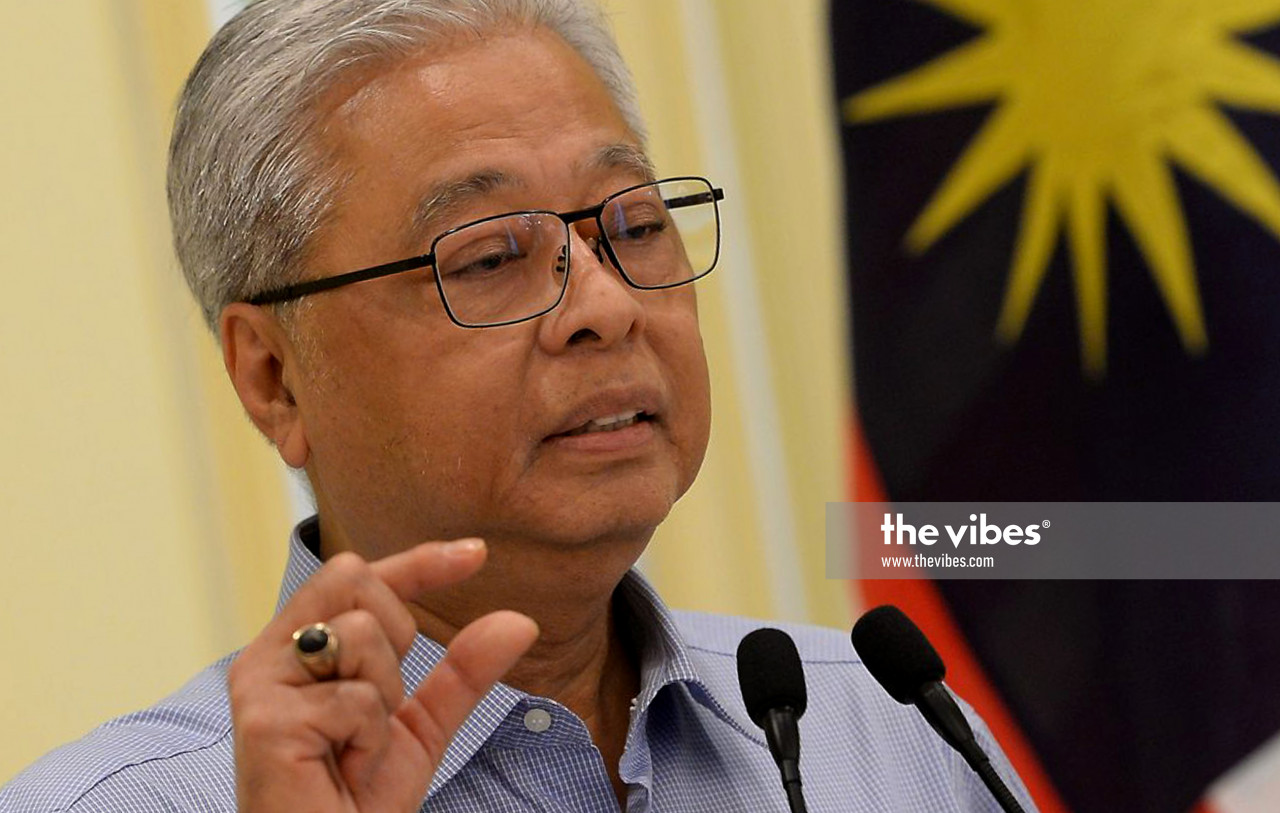
Ismail Sabri had also confirmed claims that he might consider breaking an age-long convention and table the upcoming national budget himself, instead of the finance minister doing so, furthering speculation that the government may call an early general election.
Analysts have said that regardless if GE15 is held prior or after the tabling of Budget 2023, one can expect next year’s spending plan to be an election budget with wide-ranging measures that are appealing to civil servants, farmers, rural folk, low and middle-income groups, youth and families.
Its appeal is expected to transcend even political affiliation in such instances as what transpired in Budget 2018, when even opposition-held states received an allocation for building airports and cancellation of tolls, according to TA Securities Research.
“Of course, there will be a limitation to announce stringent measures if Budget 2023 is held before GE15, as the opposition parties can harp on them to obtain political mileage and have voters show their unhappiness through the ballot boxes,” opined head of research Kaladher Govindan in a market strategy note.
“Despite this, Budget 2023 is not expected to compromise on fiscal discipline, as some of the measures can be funded through public-private partnerships, revenue enhancement through new tax measures – i.e., the global minimum tax of 15% on multinational companies and possible re-introduction of GST – and cost reduction via targeted subsidy measures.”
As such, TA Securities Research said a pre-budget rally is possible in anticipation of a populist budget.
No political party favours blanket subsidies
It is also expected that Budget 2023 will address the imbalances of subsidies enjoyed by the different layers of societies in Malaysia.
Shahril said that while everybody agrees with the implementation of targeted subsidies, no political party will say that we should do blanket subsidies.
“Targeted subsidies, everybody agrees. No political party says we should do blanket subsidies when we already have data to show, for example, that more than half of a few subsidies are going to the T20.
The top 20% take more than half of the subsidies. So the point here is we are not talking about saving money for the sake of saving money, but how those ‘savings’ can be redeployed to even larger assistance and productive spending for the B40 and M40.
“So this is not simply some fiscal discipline for the sake of fiscal discipline. These are fiscal measures which can be redeployed. Whether this is something that is said in the budget, I think that’s not for me to say, but I think it’s about the timing.
“So when we do it, we have to make sure that we do it with all the mechanisms in place to make sure that it works in the area of subsidies. We’ve got tariffs, a bunch of subsidies, so which one do we want to deploy first? That’s a decision for the cabinet to make. Timing is the most important,” he added.

Better coordination needed in funding start-ups
Commenting on his panel session at Wild Digital, Shahril said the time has come for different agencies and companies in Malaysia that provide funding for start-ups to coordinate better among themselves.
“I hope to see a situation where there’s a policy direction around how different funds that we have for capital can coordinate better among themselves so that we don’t lose out on certain stages of funding and we don’t crowd other stages of funding.
“I think better coordination between the different agencies, whether it’s Khazanah, Malaysia Venture Capital Management and even on the debt side like Malaysia Debt Ventures, also helps the start-ups.
These guys can get together and have a Malaysian start-up funding strategy, so that government funds can be deployed for the good of Malaysia as a whole, not merely for the individual agency’s KPI (key performance index).
“Now they have the funds, but I don’t think they speak to each other,” he said.
He also said in striving for better coordination, a grand redesign is not necessary, as one has to respect the separation between the different agencies.
“Our agencies are housed under different ministries, so (it depends on) whether this requires a different kind of entity or really just requires these guys to sit down together.
“It doesn’t always have to be a heavy-handed approach. It can begin with more conversations between them. I don’t think we have tested out their appetite to do that before the government does anything.” – The Vibes, September 8, 2022