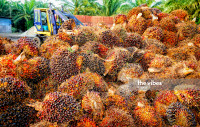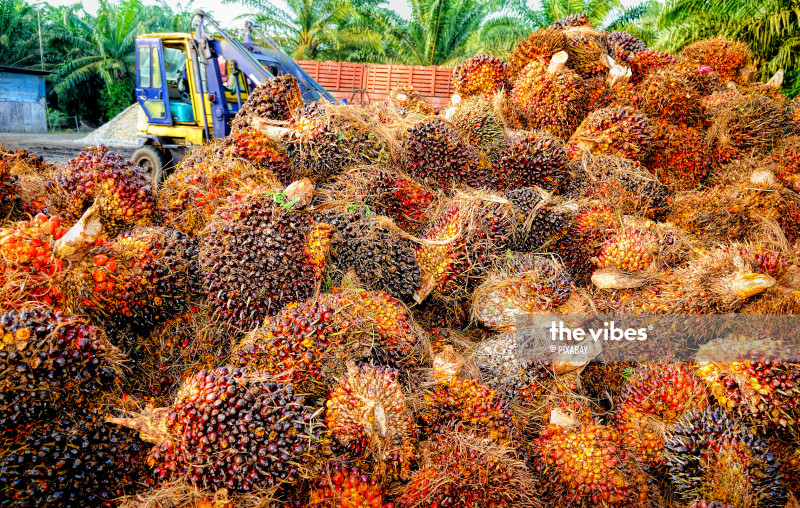

SANDAKAN – Palm oil fruit is left rotting as a shortage of workers is expected to cost Malaysia’s oil palm plantation sector up to RM20 billion in opportunity losses, the Malaysian Palm Oil Association (MPOA) said.
MPOA chief executive Joseph Tek Choon Yee said due to the slow return of migrant workers to plantations, there have been significant crop losses, ranging from 15% to 25%, or higher in some cases.
“This is due to the snail’s pace of return of foreign workers, even as the oil palm trees are now at their peak cropping time of the year and with the monsoon season just around the corner.
“The plantation industry is no longer at the breaking point; it has been pushed beyond its breaking point,” he said in a statement today.
Tek said Malaysia’s Crude Palm Oil (CPO) production this year is estimated to be at 18 million tonnes, which, if realised, would mean that production growth would be stagnant for two years in a row (2021 and 2022).
Total CPO production in 2020 and 2021 were 19.1 and 18.1 million tonnes, respectively.
He said there has been no growth in CPO production after this year to date, as of August. With four remaining months left to the year, and a string of undesirable downside factors, total CPO production for 2022 is estimated to be at 18.0 million tonnes.
Longer harvesting intervals
Tek said oil palm growers have reported that their harvesting rounds have gone way past the best practice of 10 to 15-day intervals.
Growers are now struggling with 30 to 45-day intervals, with many also starting to hit 60 to 90-day intervals.
This would mean that there are blocks of oil palm trees where crops have not been harvested for more than two months since their last harvest.
“There are ‘mothball’ initiatives already being implemented by planters on the ground where harvesting done by respective limited harvesters is only focused on prime and younger mature areas, while tall palms are abandoned or left fallow.
“Priority has been directed to harvesting, while other operations such as weeding and pruning of fronds have been kept in abeyance. This is translating into huge losses in terms of unrecoverable fresh fruit bunches, while the valuable high oil content of loose fruits is rotting in the fields.
“This situation will also affect the extraction of palm oil products. MPOB’s national oil extraction rate as of July 2022 stands below 20%, at 19.72%, and kernel extraction rate below 5%, at 4.88%. Rehabilitation operations in the future will be stretched as they will require time and workers,” he said.
Industry players have to grapple with production costs
Tek said the slow return and entry of migrant workers to the plantation operations is the most critical factor that determines the survival of the industry.
The current manpower shortage in the plantation industry is about 120,000 workers.
Tek said the plantation sector generally prefers Indonesian workers compared to workers from India and Bangladesh, as Indonesians are better adapted physically and known to be more efficient in harvesting FFB from oil palm trees.
As of August 15, 2022, it was reported that only around 8,500 workers from Indonesia were destined for all sectors, but no breakdown of sectors was revealed.
For the palm oil plantation sector, any incoming migrant workers will now miss the peak season in the last quarter of the year.
This will extend labour woes and poor CPO production output for a third consecutive season.
Tek said while the industry players suffer significant losses in yield, they also have to face spikes in production costs such as fertiliser inputs, logistics, as well as the hike in minimum wages.
He said the plantation industry has now reached a miserable state where “money” locked in FFB is just rotting away and cannot be recovered. – The Vibes, September 8, 2022