Business

SC approves Digi-Celcom proposed merger

Telcos say commission also approved Bumiputera equity structure in Digi following proposed exercise

Updated 3 years ago · Published on 16 Sep 2022 8:38AM

SC approves Digi-Celcom proposed merger
According to Digi’s filing with Bursa Malaysia, the proposed merger involves the transfer of Celcom’s entire issued share capital of 1.24 billion shares by Axiata to Digi for RM17.76 billion, as well as the listing of an additional 3.96 billion new Digi shares on the Main Market of Bursa Malaysia. – File pic, September 16, 2022

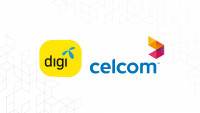
KUALA LUMPUR – The Securities Commission Malaysia (SC) has approved the proposed merger between Digi.com Bhd and Celcom Axiata Bhd under certain terms and conditions, Digi and Axiata Group Bhd said.

According to Digi’s filing with Bursa Malaysia yesterday, the proposed merger involves the transfer of Celcom’s entire issued share capital of 1.24 billion shares by Axiata to Digi for RM17.76 billion, as well as the listing of an additional 3.96 billion new Digi shares on the Main Market of Bursa Malaysia.

Meanwhile, in their respective filings with the exchange yesterday, both telcos said the SC has also approved the Bumiputera equity structure in Digi following the proposed exercise.

According to Digi’s filing, after the proposed merger, the enlarged issued shares allocated to Malaysians would increase to 59.9% from 40.4% as at December 31, 2021, while the allocation for foreigners will drop from 59.6% to 40.1% post-merger.

Of the 59.9% of the enlarged issued for Malaysians, 47.4% would be allocated to non-Bumiputera versus the 21.6% before the merger, while the Bumiputera allocation would be 12.5%, down from 18.8%.

“Axiata, the holding company of Celcom, is a non-Bumiputera body corporate.

Non-Bumiputera direct interest in Digi post-merger is calculated based on the total number of shares held as at December 31, 2021, and the 3.88 billion fully paid-up new Digi shares to be issued to Axiata, Digi said.

On the foreigners’ direct interest in Digi post-merger, the telco said its holding company Telenor Asia Pte Ltd is a 100% foreign-owned body corporate.

Foreigners direct interest in Digi post-merger is calculated based on the total shares in Digi as at the latest practicable date of December 31, 2021, and the 73.38 million fully paid-up new Digi shares to be issued to Telenor Asia post-merger, the filing said. – Bernama, September 16, 2022
Related News

Malaysia / 3mth

Political parties should consider merging to serve the rakyat better – former ADUN

Malaysia / 1y

Talks of PBS - Star merger resurface

Business / 3y

AmBank clarifies merger, acquisition speculations

Business / 3y

Axiata posts RM9.76 bil FY22 net profit on Celcom-Digi merger

Entertainment / 3y

Detective Maniam: an intriguing Tamil web-series

Business / 3y

Digi shareholders approve proposed merger with Celcom

Spotlight

Malaysia

After Johor, the uncomfortable question for Anwar’s critics: Were we too impatient?

By The Vibes Says

Malaysia

Network School's business licences revoked, to cease operations tomorrow

Opinion

Orang Asli in Pahang: Token gestures or genuine recognition?

Malaysia

Tuition teacher sentenced to 105 years in prison and 70 lashes for raping daughter

Malaysia

Azam Baki denies involvement in RM178.29 million contract linked to brother’s company

Malaysia

Aminuddin urges NS voters to weigh manifesto promising benefits for M40 and B40 groups

Malaysia

No need to resign, PM has absolute power if there is doubt – Ahmad Zahid

World

Gaza’s water crisis deepens as families face thirst, disease and collapsing sanitation systems

You may be interested

Business

Oil prices rally above US$84 per barrel as US-Iran conflict deepens

Business

Plastics industry faces tough year as raw material volatility add to cost pressures

Business

Malaysia posts record RM340.9 billion trade in June as exports jump 45.4%

Business

Govt boosts SME digitalisation support with new smart manufacturing co-investment scheme

Business

Oil prices near five-week high as US-Iran conflict fuels supply concerns

Business

Central bank policies remain crucial in shaping currency market movements

By Alfian Z.M. Tahir