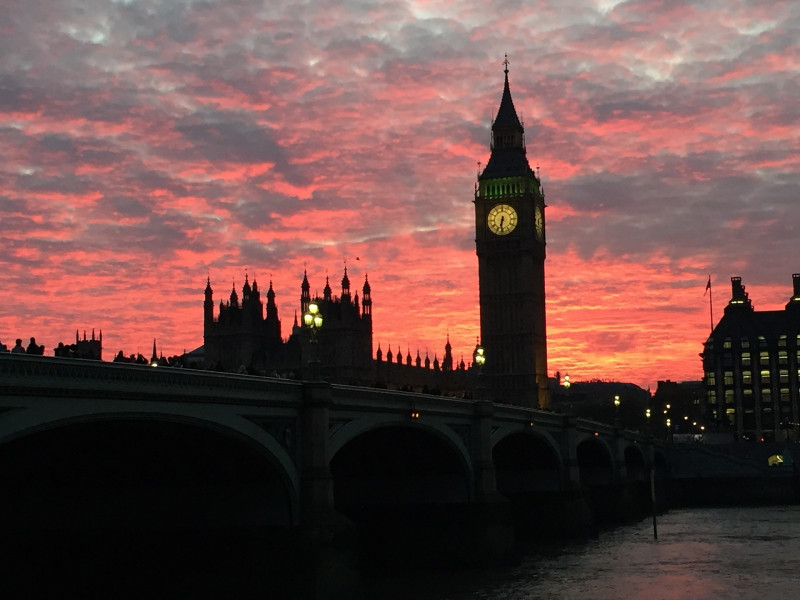
LONDON – In a statement issued on Wednesday, the International Monetary Fund (IMF) openly questioned the United Kingdom’s new fiscal plans and called for more targeted support measures.
Rare criticism
An IMF spokesman called the fiscal measures, including the large-scale tax cuts, “untargeted” and said they will “likely increase inequality” given “elevated inflation pressures” in the UK, reported Xinhua.
The IMF said that “it is important that fiscal policy does not work at cross purposes to monetary policy” and called on the UK government to “re-evaluate the tax measures, especially those that benefit high-income earners”, on November 23, when the Chancellor of the Exchequer Kwasi Kwarteng is expected to make his next budget announcement.
The UK consumer price index rose by 9.9% in the 12 months to August, as food and non-alcoholic beverage prices rose by 13.1%. To tackle high inflation, the Bank of England (BoE) has increased interest rates to 2.25%, the highest since 2008.
Adnan Mazarei, a former deputy director at the IMF, told BBC that “it is common for the IMF to make strong statements on emerging market countries with problematic policies but not often G7 countries”.
Credit ratings agency Moody’s also joined the chorus of critics, arguing that the “large unfunded tax cuts are credit negative”.
In response, a UK Treasury spokesman said Kwarteng will “publish his medium-term fiscal plan on November 23, which will set out further details on the government’s fiscal rules”.
Drastic market reactions
The rebukes were part of drastic market reactions to the government’s new measures.
The plans, announced last Friday by Kwarteng, include cancelling the planned increase in corporation tax to 25% and keeping it at 19%, and reversing this April’s 1.25 percentage point rise in national insurance contributions.
Kwarteng also announced a 1% cut to the basic rate of income tax to 19% in April 2023, one year earlier than planned. The 45% additional rate of income tax on earnings above £150,000 (RM752,163) will also be scrapped.
Kwarteng set a target of 2.5% economic growth alongside these plans. The tax cuts and reforms, the biggest package in generations, “send a clear signal that growth is our priority”, he said.
The £45 billion tax cut is the biggest since 1972, Paul Johnson, director of the Institute for Fiscal Studies, commented.
The large tax cuts are expected to drive up borrowing. The new policies will see an additional £411 billion of borrowing over five years, according to the London-based Resolution Foundation think tank.
Earlier this month, the UK government also announced a series of measures to support households and businesses with their surging energy bills amid a worsening cost-of-living crisis.
Concerns piling
However, since the announcement of the new measures, the sterling has fallen and the cost of government borrowing has soared.
On Monday, the pound tumbled to trade as low as US$1.035 at one point in the early morning, taking it closer to parity. The pound remained under pressure yesterday, trading against the dollar at 1.07.
“Confidence in the UK is collapsing amid fears that the unfunded tax cuts and the energy support package will send inflation and government debt soaring,” Fiona Cincotta, a market analyst for British financial services provider City Index, commented.
Calling the move “an economic as well as a political gamble”, Professor Iain Begg of the London School of Economics and Political Science said, “What the British government has done, particularly in this package announced last Friday, is to take a big bet that you can improve things by maxing out the credit card”.
While the government expects the measures to help the economy grow and the debt to gross domestic product ratio to decline, critics argue that the debt will increase and that the measures will not have an immediate effect on the ratio, Begg explained.
“If it exposes a bigger set of economic problems that result in a combination of higher interest rates and more public money being used to pay interest rather than buy services, the electorate will turn on them,” the professor said. – Bernama, September 29, 2022