KUALA LUMPUR – Petronas recently hosted the second of a three-part multi-stakeholder dialogue series to continue the discourse towards green collaborations within Asean.
The group said the dialogue, themed Southeast Asia’s (SEA) Net Zero Pathways: More Energy, Less Emissions, served as an avenue to strengthen cooperation among SEA’s energy players, policymakers, financiers, technology proprietors, innovators, as well as other key proponents to accelerate towards Asia’s net zero carbon emissions.
Moderated by Energy Asia knowledge partner CERAWeek by S&P Global, the second dialogue brought representatives from Indonesia, Thailand, the Philippines, Singapore, Vietnam, Brunei, and Malaysia.
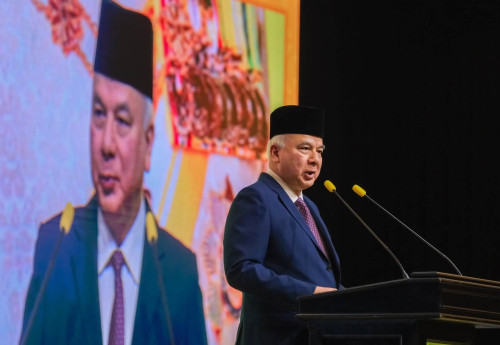
In a statement today, Petronas president and chief executive officer Datuk Tengku Muhammad Taufik said given the unique conditions faced by distinct emerging economies across Asean, achieving its sustainability goals requires a carefully planned transformation and collective action from all stakeholders.
“These dialogues serve as an avenue to surface the wisdom and insights of stakeholders from across both the public and private sectors.
“Through these efforts, come Energy Asia 2023, I am optimistic we can continue to support each other towards establishing just and responsible pathways in realising a lower-carbon future,” he noted.
S&P Global chief energy strategist Atul Arya shared that Asia’s energy transition will be based on technologies and policies that are most suitable for the region.
“A global one-size-fits-all approach is not feasible and will lead to unintended consequences. Rather, successful approaches will have to be tailored to the distinguishing characteristics of the region and countries’ positions,” he said.
Petronas said in the first multi-stakeholder dialogue, the key areas of discussions revolved around the framework of the energy transition for the region and how these unique applications would impact each country in the region, and the range of approaches to decarbonise the energy value chain.
The dialogue also highlighted the heavy investment requirements to achieve a fair and just energy transition.
Based on S&P Global’s regional data, among the six sectors contributing to energy-related emissions, power generation accounts for the highest, at 37%, followed by the transportation sector (29%), industry (19%), other sectors (9%), residential and commercial (9%), and hydrogen generation (9%).
Based on the current scenario projection, Petronas said the region will reach an estimated 4,500 MMTCO2e total emission equating to a 2.4˚C rise in global temperature by 2050.
In contrast, it said with the implementation of effective plans and efforts to reduce emissions, S&P Global’s model predicts a sharp decline in greenhouse gas equivalents as early as 2030.
The conversations are set to continue as the Asean nations reconvene to conclude the dialogue series in December, with CERAWeek by S&P Global returning to moderate the final session leading up to the Energy Asia conference, scheduled to be held from June 26 to June 28, 2023, at the Kuala Lumpur Convention Centre, Petronas added. – Bernama, December 5, 2022