
MARTIN Parry, wants to tell a story of the illegal keeping and smuggling of endangered wildlife, specifically a clouded leopard that happened between Brunei and Sarawak.
Even though it happened four years ago, Parry – a committee member of 1Stop Borneo Wildlife, a non-profit organisation – thinks the story is still relevant to remind everyone that there are still people in Borneo who are exploiting rare wildlife.
In October 2016, an individual who wishes to be known only as Don, came across an advertisement posted on Facebook, selling two young adult clouded leopards in Brunei for 5,000 Brunei dollars (about RM15,000) each.
The seller included a video of the cats in the post, in which they looked malnourished and ill cared for, but apparently several offers had already been made online.
Don took the logical step of contacting the Brunei Wildlife Department.
However, the department did not follow up.
Don then decided to contact the Sarawak Forestry Department instead, and together, they hatched a sting operation to lure the seller to the Brunei-Sarawak border to be arrested.
They contacted the seller and pretended to be an interested buyer.
But the seller was reluctant to cross the border with the clouded leopard and wanted to be compensated with more money.
After two weeks of negotiations, a much higher fee was agreed to; RM50,000 to offset the risks of crossing the border and illegally selling the leopard.
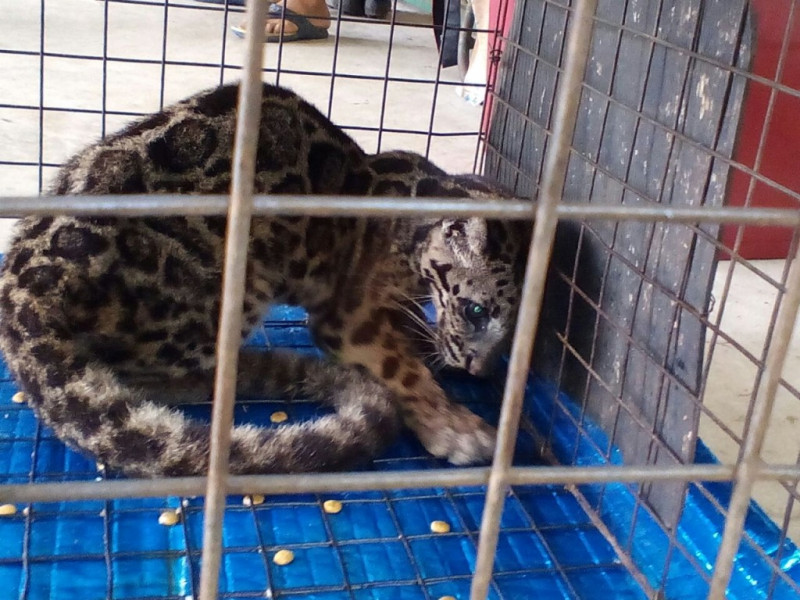
The sale was scheduled to take place at E-mart in Desa Senadin, Miri, where the seller arrived with a caged, drugged clouded leopard in the back of his car, only to be arrested by the waiting Sarawakian authorities.
The seller turned out to be a Brunei army officer who had caught the cubs and was keeping them at his parent’s house in Tutong, Brunei.
As the clouded leopards grew bigger, they were more difficult to care for. He decided to sell one of the two cubs: a win-win situation for him – less work and a nice profit.
He also had an accomplice.

Lack of justice
The Brunei Times (Oct 21, 2016) reported that two men, both Bruneians, were apprehended: Mohd Khairul Abdullah, the Brunei army officer and his accomplice, Abdul Rahim Taib.
Parry said it is likely that one or both of these men have been involved in similar crimes before.
They had drugged the animal, hidden it in a car and illegally driven it across the border.
Only Mohd Khairul was charged by the Sarawak authorities and he was prosecuted for illegally offering a protected animal for sale online and smuggling a protected animal across the Brunei-Sarawak border with the intent to sell.
If found guilty of these offences, he would have been sentenced to a total of two years imprisonment and a fine of RM25,000.
However, he got away with it; he was released after two months in jail awaiting trial due to a legal technicality.
“He is a lucky man. It would be nice to believe that after he returned to Brunei, he was investigated by authorities there and punished appropriately.
“I have talked with the person who engineered the arrest. The Facebook post in which the seller sells the leopard, was a private Facebook group named Bruneifm.
“It was notorious for being an integral part of wild animal trafficking in Borneo and had previously advertised a range of other animals, including hornbills, pangolins and slow loris,” Parry said.
The clouded leopard is listed as a Totally Protected Wildlife under Malaysia’s Wildlife Protection Ordinance (1998) and its capture and export are also illegal under Brunei’s Wildlife Protection Act (1984).
“The clouded leopard’s importance, and the measures for its protection, has been well known in both countries for decades; there is no excuse for capturing, smuggling or selling such an animal,” he said.
That female clouded leopard is now under veterinary supervision at the Matang Wildlife Centre, Sarawak, where she has been since December 2016.
Although she has responded to professional care and is now held in a much larger enclosure, there is no possibility of releasing her into the wild: she was traumatised and has insufficient skills to survive in her natural habitat.
Unfortunately, the fate of the other clouded leopard remains unknown.
Is it still held in captivity in Brunei, has another attempt been made to smuggle it, or have the Bruneian authorities acted as they should to protect it?
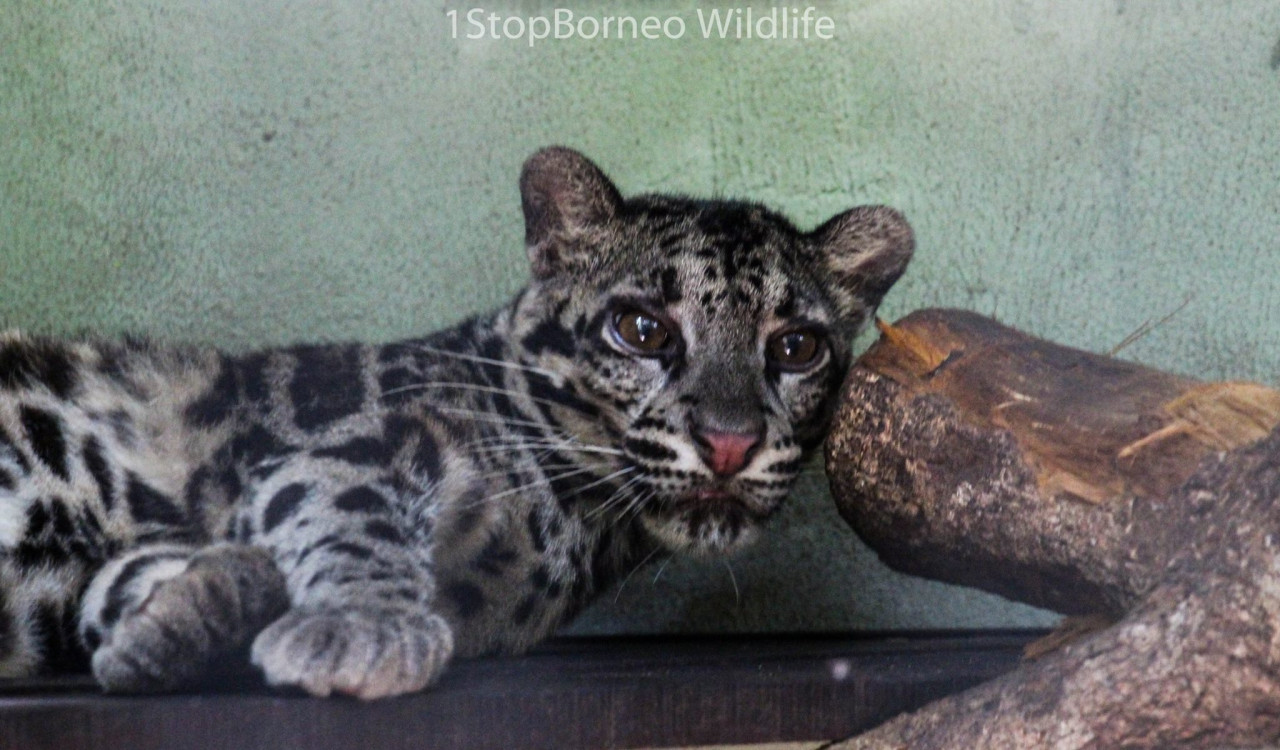
The clouded leopard
Clouded leopards are found in the mountains and forests of Southeast Asia, from the Himalayas eastwards through Southern China, Thailand, Peninsula Malaysia, Indonesia, and Borneo.
They are regarded as ‘the smallest of the big cats’ and, although not closely related to other leopards, they are in the same subfamily as them.
It is not a surprise to learn that poaching and habitat destruction has reduced both their distribution and numbers.
Currently, the estimated population in the wild is believed to be around 10,000, made up of individuals of the Sunda clouded leopard, Neofelis diardi, which exists only in Sumatra and Borneo, and the ‘mainland species’ Neofelis nebulosa ( N. nebulosa) that is found elsewhere in Southeast Asia.
The Scientific American reports that increasing pressure on clouded leopard populations come from poachers responding to dwindling tiger populations, as a result of the continuing demand for their body parts in Chinese traditional medicine.
Parry’s story of the smuggling of the clouded leopard from Brunei is an example of an additional pressure: the trade of these animals for pets.
The threat to these cats is highlighted by the recent extinction in Taiwan, confirmed in 2013, of a subspecies of the mainland clouded leopard, N. nebulosa brachyuran.
How we can all play our part
Parry’s story is an example of how an individual’s actions, in this case, Don, led to an intervention that prevented the smuggling of a clouded leopard and has improved the quality of the animal’s life.
It also illustrates how the willingness and speed of action by a government body - namely the Sarawak Forestry Department and Malaysian police - can lead to the exposure of an animal smuggler.
However, the story also shows how the inactivity of other government authorities can hinder action against animal smugglers
Parry said the arrest of the smuggler may have been a small victory, but it is valuable as an inspiration for others.
“Be vigilant, monitor social media and be prepared to engage with relevant authorities,” he said.
How can you help? For one, you can always report wildlife trafficking issues.
In Sabah, the Wildlife Rescue Unit is a frontliner on wildlife rescues.
The Bornean Carnivore Programme led by Dr. Andrew Hearn is doing groundbreaking work on clouded leopards through research and 1StopBorneo Wildlife is doing a lot of awareness work on various wildlife.
The public is encouraged to support such organisations.
1Stop Borneo Wildlife is an organisation that aims to conserve the rainforests through education programmes, wildlife rescue service, and developing dynamic new economic models to save animals, while conducting research on different flora and fauna. – The Vibes, December 27, 2020