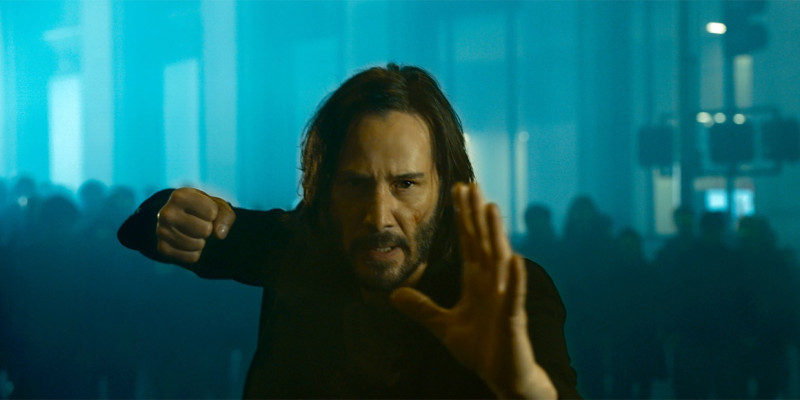

WHEN The Matrix was released way back in the summer of 1999 (it almost hurts to type that out), the world was a very different place. No pandemics, the boy bands were American and not Korean, while one of the most exciting sounds in the world was a dial-up modem booting up.
Back then, the most anticipated movie of the year was the long-awaited 'Star Wars: Episode 1 – The Phantom Menace'. Though it was a massive financial success – becoming the highest-grossing movie of the year – 'The Matrix' came out of nowhere to become a massive success in its own right.
Ironically, the negative responses to the Star Wars prequels would later be mirrored by the criticisms mainstream audiences would levy against the Matrix sequels. Too talky, too distracted by plot machinations that detracted from what fans wanted, unsubtle and clunky storytelling.
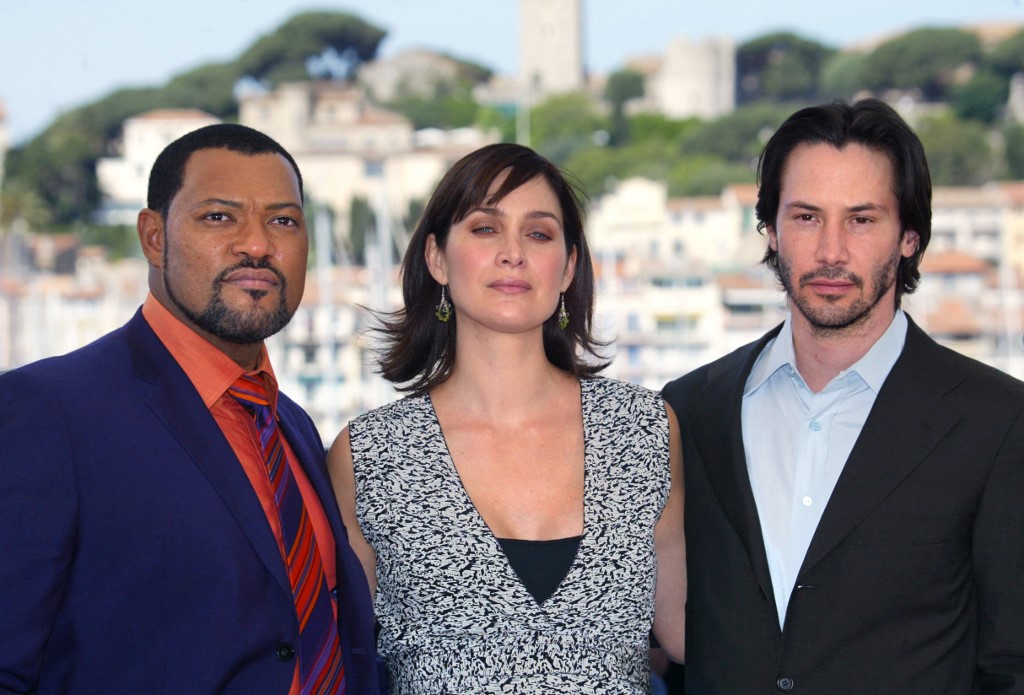
While it is true the sequels – 'Matrix Reloaded' and 'Matrix Revolutions', both released in 2003 – don’t hold a candle to the thrill of experiencing the first movie for the first time, they do possess an ambition and philosophical complexity that most Hollywood blockbusters lack, which has only become rarer even today.
What was most exciting about this trilogy was their fusion of high-minded philosophy, and truly next-level action sequences – merging the best of Hong Kong action cinema and the latest advancements in special effects.
If anything there was too much ambition given the limitations of the technology of 20 years ago, but sometimes you need to fly before you can walk.
What is real?
In 1999, the Internet had been in use by the public for a few years but it was at an embryonic stage compared to where it is today. There was still a lot that was unknown about cyberspace and virtual reality was just a hot buzzword.
People weren’t always tethered to their devices (if they even had a device, to begin with), social media was non-existent and according to some of the most influential movies of time (American, of course), the worst thing to have was an office job.
In addition to 'The Matrix', where we are introduced to our hero Neo (Keanu Reeves) toiling away in an office as his day job, there’s the anxious and restless Narrator in 'Fight Club' – an office drone that dreams of anarchy, and the report-filing white-collar workers in Office Space.
One of the reasons 'The Matrix' resonated with audiences was that it visualised the idea that maybe the world isn’t all it seems, that our lives are boring or seemingly meaningless not because of any fault of our own, but because we live in a simulation that is out of our control – we feel awake, but we are sleeping.
In 2018, Elon Musk brought up the possibility that we’re all in a simulation, a theory that is catnip for an apathetic population. Why not, have you seen the news?
“If you assume any rate of improvement at all, (video) games will eventually be indistinguishable from reality,” Musk said before concluding, “We’re most likely in a simulation.”
Blue pill vs red pill
When Neo meets with Morpheus (Laurence Fishburne), about a half-hour through the movie, he’s seen and experienced enough weirdness to know that something’s not right. Before going any further he’s offered a choice of either staying in the simulated reality (blue) or seeing the world for what it is (red).
For him the choice is simple and he takes the red pill (after all, there would be no movie if he took the blue pill). Soon enough he wakes up in the real world, a post-apocalyptic hellscape run by machines who are using human bodies as batteries a few hundred years in the future.
But for the average person, it’s not that simple. For many living in the simulation of the Matrix is preferable to the horrors of the real world.
Cypher (Joe Pantoliano), after suffering through nine years of reality, comes to the personal realisation that “ignorance is bliss” and would rather be hooked up to a machine to live a lie. While he is ultimately a villainous character, that worldview appeals to a lot of people.
Interestingly enough the whole concept of a red pill has been co-opted by right-wing political movements as a code word for fighting against mainstream progressive thought.
The directors of the Matrix trilogy, the Wachowskis strongly disagree with this. In fact, it is more likely the red pill has to do with the transgender movement. When the Wachowskis worked on the Matrix they were known as the Wachowski brothers, but they have both since transitioned and are now sisters.
In hindsight, transgender themes and ideas can be found all over the trilogy and in the siblings following movies, including the Netflix series 'Sense8'. How the mind transcends the body and how the bodies we are born into do not define us.
Gun-fu and bullet time
The concept of gun-fu started out in the action cinema of Hong Kong in the 1980s and features a dizzying and acrobatic combination of martial arts and stylistic (aka not entirely realistic) gunplay. Hand to hand combat and shootouts have been a staple of movies for decades, who knew combining them could be so satisfying?
John Woo was among the pioneers of this art with his classic movies 'Hard-Boiled', 'The Killer', and 'A Better Tomorrow', among others. He would bring that talent to Hollywood with mixed results – though 'Face/Off' is of course a masterpiece.
The Matrix would pair this style of action with the best cutting edge visual effects of the time, most of which still holds up to today.
To further enhance the Hong Kong action pedigree of the trilogy, the Wachowskis would enlist the talents of legendary martial arts choreographer Yuen Woo-Ping, who had worked with fellow martial arts luminaries Jackie Chan, Sammo Hung, Jet Li and Michelle Yeoh throughout the 80s and 90s.
Yuen was hesitant on working on an American science fiction film with actors who did not come from a martial arts background, but the Wachowskis won him over and the results speak for themselves.
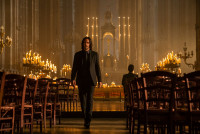
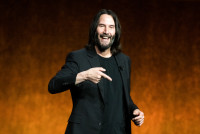
This style of action is very much still with us, as best exemplified in the John Wick series. Not coincidentally those movies also star Keanu Reeves, whose dedication to being an action star despite his age (he’s now 57) is almost legendary. He practices martial arts and puts in the time to learn how to use the guns his characters do.
The 'John Wick' movies are also directed by Chad Stahelski, who served as Reeves’s stunt double in the Matrix movies. Stahelski has made no secret of how much he learned from the Wachowskis.
Sequel blues
While the first movie established the visual template of the Matrix, the sequels kept pushing the boundaries of what was possible – and sometimes it wasn’t perfectly executed.
The ‘Burly Brawl’ from the 'Matrix Reloaded' has Neo fighting off against dozens and dozens of copies of Agent Smith (Hugo Weaving). While ambitious, it bumps up against the limits of what is possible, oftentimes looking like a video game (albeit one with high production qualities). Neo and the Smiths look too elastic at times. The fight also ends with Neo flying away, which he could have done at any time.
However, the other action scenes in Reloaded, specifically the stairway fight (for a lack of a better term) and the highway chase are high watermarks in action cinema.
Revolutions introduces machine gun firing mechs, and while it is well done, it does mark a departure from the rest of the action in the trilogy. It looks cool and very anime, but the characters doing the fighting are the least developed.
Then again, when you have a Māori badass named after Toshiro Mifune, the legendary Japanese actor known for his samurai epics, do you really need in-depth characterisation?
If there’s one big complaint of the sequels is they went full speed into Star Wars prequel territory by spending so much time on councils and committees. Much like how audiences didn’t want to see the Galactic Senate debate trade tariffs, fans didn’t really care about deliberations between political types.
More interesting is how the sequels interrogate the notion that Neo is the Chosen One who will save humanity. The much-maligned scene between him and The Architect pokes holes in that idea. Maybe if a more famous and charismatic actor had played the role it would have been accepted differently.
There’s also an open-heartedness (or corniness, if you want to be negative) in a lot of the storytelling. These are people, Neo and Trinity (Carrie-Anne Moss), on the edge of survival, and all they have is each other.
This is a real love story, and the Wachowskis aren’t afraid to show it. The extended rave sequence in Reloaded is not something you’d see in any other movie of this scale. It’s a departure from how sexless much of big-budget Hollywood has become.
Where it all fits
The movie industry is in a different space than it was in 2003. Superhero movies were already around and popular, though nowhere near as dominant as they are today.
Now, with the pandemic ebbing and flowing with seemingly no end, the long term survival of cinemas is in question, especially when it comes to large scale blockbusters that are not made by Marvel Studios.
Movies now are not allowed to be self-contained or even conclude. There must be a never-ending mythology to mine for content.
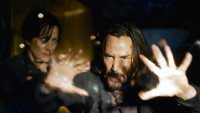
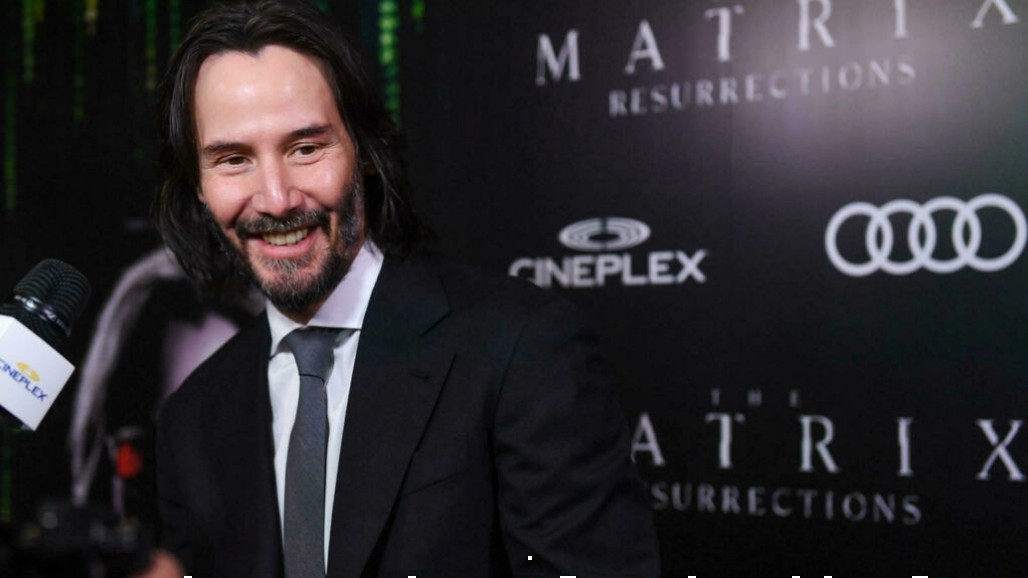
Judging by early reactions, 'The Matrix Resurrections' is likely to be as contentious as the previous sequels, so who knows what will follow – if anything.
The first 'Matrix' hit at the right time – at the edge of a new millennium, when anything seemed possible. Many of its questions remain unresolved, which is why it still has appeal today. – The Vibes, December 19, 2021