
GEORGE TOWN – The younger generation is embracing the music of other countries and cultures, but songs that depict the Nusantara heritage is heading fast toward extinction.
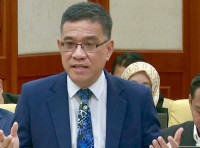
During one of the programmes under Peranakan Penang Festival entitled Musical Peranakan Tea: A Malay Folksong Recital, artistic director and conductor of the Penang Philharmonic Chorus, Mak Chi Hoe, told The Vibes that many of this generation no longer sing in their mother tongue. Instead, they sing songs that do not originate from the region.
Since these are oral traditions, it often goes undocumented, and risk being lost.
To preserve them, the Malaysian Association for Music Education (MAME) published four books on Malay folk songs, arranged by renowned Belgian pianist and music lecturer Professor Gilbert De Greeve. However, plans to have recitals to reintroduce and reeducate locals on these traditions were halted due to the pandemic.
“It is sad because Malaysians did not pick this up to document to the point where we needed someone from another country to arrange and stylise these pieces.
“Most Malaysian composers think Malaysian folk songs don’t have value and don’t even want to look at it.
“It’s always always a foreign body that tells us that we have something really good that we should work towards preserving it,” he said.
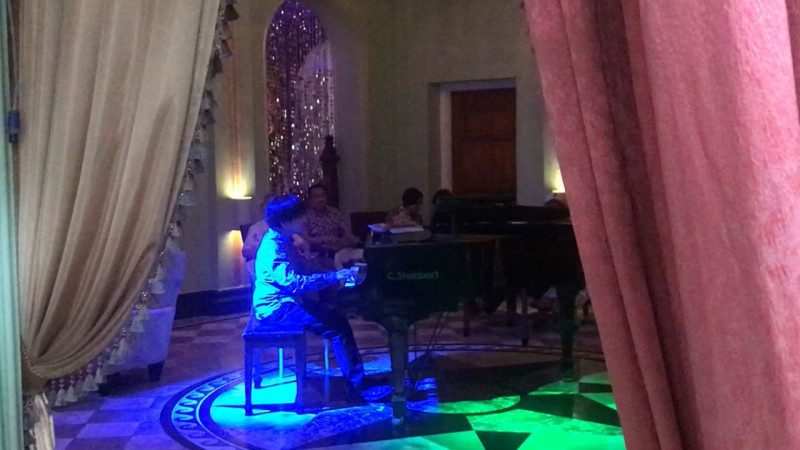
During the one-hour recital at 32 at the Mansion here, 18 songs were performed by Mak and Vincent Ong on the piano. Four singers – Teresa Ong, Lim Sze Yuin, Khaw Lian En and Joyce Khoo – serenaded the audience. They dined on delectable Nyonya kuih in the operatic style before coming together for a harmonious finale to Rasa Sayang.
This is the second recital since the books were published.
Mak said that many of the songs performed, such as 'Jong Jong Inai' and 'Ulek Mayang', predates the region’s Islamisation. They originated during the ancient Hindu kingdoms like Srivijaya and Majapahit.
These songs are crafted based on stories passed down from generation to generation. They were used as game songs, clap songs and even to cast magic spells.
The reason why it is called Malay folk songs and not Malaysian folk songs are because these traditions are passed from one island to another within the Nusantara region. For example, a song may have different words when sung in Malaysia and Indonesia, but Mak says the melody and spirit remain the same.
By conducting recitals and running sales of the books for musicians to learn the songs, he hopes Malay folk songs will not be lost due to urbanisation and music colonisation.
The Peranakan Penang Festival is in full swing and will run until Sunday, December 26. – The Vibes, December 20, 2021