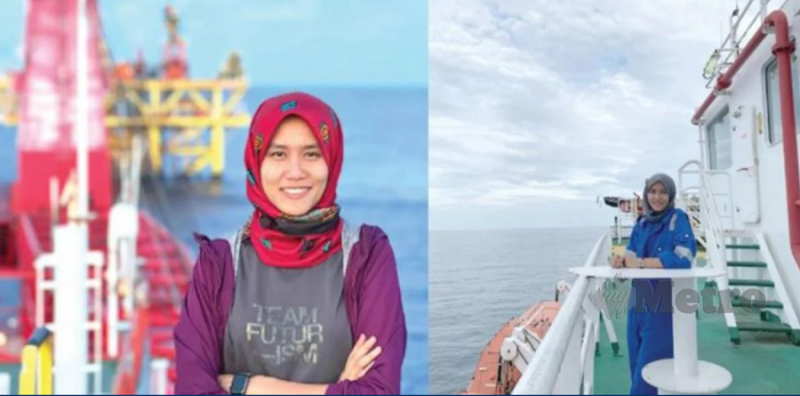
NORMALLY, a doctor is synonymous with working in a hospital or clinic, but not for Dr Shafiqah Mohamed Shamsuri, 35, who has been working on a ship for the past five years.
During that period, this Kuala Selangor native has worked in many locations including in the waters of Malaysia, Spain, Mozambique, Australia, Indonesia and Korea.
As an 'offshore' doctor, the scope of her duties is quite broad and covers various aspects of medicine including providing emergency treatment in the event of an accident or injury at work.
At the same time, she is responsible for conducting regular health checks for the crew, monitoring their health and providing advice on how to maintain a healthy lifestyle in a challenging work environment.
Dr Shafiqah said doctors play a very important role offshore due to the high-risk and remote working environment.
"Ship crews are often exposed to physical hazards, such as industrial accidents, injuries, and even illnesses related to the work environment.
"The presence of doctors ensures that immediate medical treatment can be provided in the event of an emergency, which can save lives and reduce the risk of complications.
"In addition, doctors are also responsible for conducting regular health checks, providing health education, and ensuring that all workers are healthy and safe. This not only improves the well-being of the crew but also ensures that work productivity is not affected," she said.
According to her, before diving into the offshore field, she worked as a doctor at the Kuala Lumpur Hospital since 2017.
She said that she then began to look for other opportunities to develop his career in the medical field.
"I was attracted by the idea of working in a remote location with unique challenges and the opportunity to see and experience new things.
"With curiosity and a passion to try something different, I decided to apply for a position as an offshore doctor.
"Alhamdulillah, my application was accepted, and since then, I have been venturing into this field. I really like the concept of working in remote areas, facing different challenges, and always learning new things in a dynamic environment," she said.
She said that her daily routine usually starts with routine clinical work, such as conducting regular health check-ups for employees with chronic diseases, such as diabetes or high blood pressure.
"In addition, I also hold health briefing sessions to promote healthy lifestyles and share the latest information on current epidemics or diseases, including mental health.
"At the same time, I am also involved in training rescue teams to improve their preparedness in dealing with medical emergencies. Part of my duties also includes conducting hygiene checks to ensure the cleanliness and health of the ship's environment is maintained.
"At night, I am always ready for emergency calls if needed," she said.
Working on a ship comes with various challenges because the work location is remote and far from complete medical facilities.
Dr Shafiqah has to constantly think about the limitations and ways to overcome these shortcomings, especially in emergency situations.
"For example, if a patient needs further treatment in a hospital, I have to plan their transportation carefully because they are in the middle of the sea. Sometimes, assistance or evacuation of patients can take a long time depending on the weather conditions and distance to land.
"In addition, the unpredictable weather and sea conditions can also make work difficult, especially when it comes to emergency evacuations. However, these challenges are also what make my work more meaningful and satisfying," she said.
Among the unforgettable experiences during her time as an 'offshore' doctor was when one of the crew members fell into the sea at night.
"Despite the challenges, quick action and close cooperation from the team on the platform, we were able to quickly remove the crew from the water. Fortunately, the crew did not suffer any serious injuries.
"This experience reminded me of the importance of teamwork, emergency preparedness and quick response in critical situations. It also reinforced the value of safety and the continuous training we do offshore," she said.
Since working offshore requires her to be away from her family for long periods of time, she always contacts them whenever she has free time.
She said that even while offshore, she is still able to connect with her family through the internet.
"This constant communication helps me maintain a close relationship with my family even though I am far from them. Support from my family is the main key for me to be able to balance these two responsibilities.
"When I return to shore, I will spend quality time with my family and doing activities that I missed while I was on the ship," she said.
Although jobs in the offshore sector are dominated by men, Dr Shafiqah never feels isolated or discriminated against.
"The crew members are very respectful, always professional and concerned about my well-being. Since we spend a lot of time together, they look after me like family.
"In addition, the strict policies and regulations at work also protect me from any form of harassment or discrimination, thus making me feel safe and comfortable working in a male-dominated environment.
"The mutual respect and cooperation between colleagues made it easy for me to adapt, and I felt valued as part of the team," she said.
She advises women who want to pursue a career as an offshore doctor to always be confident in their abilities and not be afraid of challenges.
"This field is challenging, but it is also very rewarding if you have a deep interest in medicine and health. Women are welcome to join this career, and I have female colleagues who also serve offshore.
"As long as you have courage, a deep interest, and a willingness to learn, you can definitely succeed in this field," she said.
Asked about her future plans, Dr Shafiqah wants to complete the "Diving Physician" course which she hopes to complete this year.
"In addition, I am also interested in furthering my studies in the field of occupational health because I believe it will further enhance my knowledge and skills in maintaining the health of workers in challenging environments.
"I hope to continue to make meaningful contributions in the field of offshore medicine and occupational health while pursuing my personal interests," she said. – May 14, 2025
This article first appeared in Harian Metro on May 13