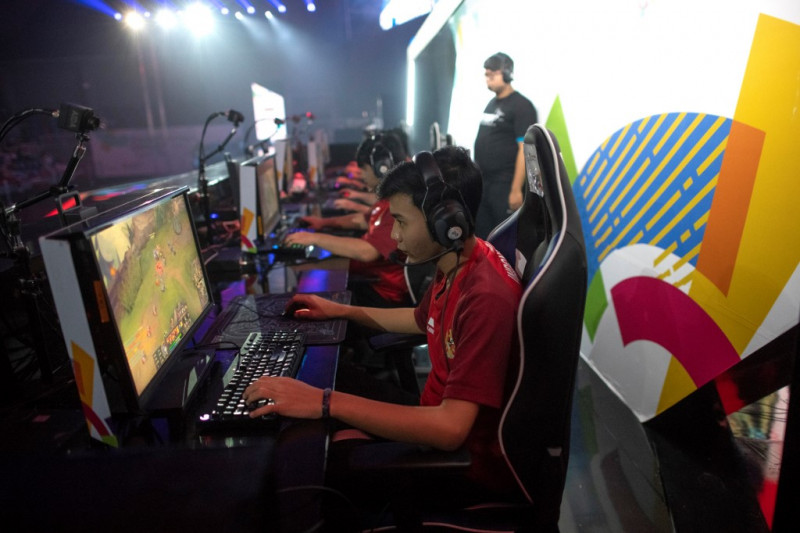

IF there was an industry built not just to weather, but to thrive during a pandemic like Covid-19, it would have to be esports.
Tickets for the Kuala Lumpur Major 2018, a Dota 2 tournament that was held at the Axiata Arena two years ago, sold out in three hours, reflecting the appetite for esports in Malaysia.
However, the Covid-19-enforced lockdown has shifted attention towards online video streaming platforms such as YouTube and Twitch, which allow fans to follow the event from the comforts of their homes.
The spectacle of watching gamers strut their stuff has become a lucrative business, attracting investments to the tune of billions of dollars.
According to One Esports CEO Carlos Alimurung, Southeast Asia’s esports audience is growing by 26% a year. And this was before Covid-19.
In July, one million viewers in South East Asia tuned into the MPL Invitational 4 Nation Cup. Teams from nations around the region competed in Mobile Legends: Bang Bang, with the Indonesian team emerging victorious and bagging US$100,000 in prize money.
In Malaysia and regionally, esports growth is tied to the proliferation of smartphones and the spread of high-speed Internet. Vietnam, the Philippines and Indonesia are the regional leaders, while Singapore, despite having the necessary physical infrastructure, lags behind.
Evos Esports marketing and public relations regional head, Allan Phang says esports represents a great opportunity for companies to directly market their products to the younger generation, who do not watch television or read newspapers, and utilise pop-up ad-blockers.
"The eSports and gaming (demographics) are a very sticky crowd, with an average age of between 18 and 35 and having spending power, consisting of millennials and Gen Z," said Phang.
He said esports recorded a 50% increase in viewership across its social platforms during the Covid-19 pandemic, from about 350 million views per month to over 500 million views per month now.
Esports’ success has made national organisations sit up and take notice.
During the 2019 SEA Games in the Philippines, six medals were contested in esports. It was the first time esports was a medal event in a multi-sport competition sanctioned by the International Olympic Committee, having first being featured as a demonstration sport at the 2018 Asian Games in Indonesia.
Yew Weng Kean bagged gold for Malaysia, in Hearthstone, an online digital collectible card game played on the PC, while a six-man team won the bronze in Mobile Legends: Bang Bang.
However, esports’ inclusion in the upcoming SEA Games - scheduled for next year in Vietnam – is up in the air. This is seen as an effect of the Covid-19 pandemic, with Vietnam sports authorities deciding to slash 20 events, including esports.
The Asian Electronic Sports Federation (AESF) is currently lobbying countries in the region to appeal the decision.
Esports is also expected to be a part of the 2024 Paris Olympics, but only as a demonstration event.
Closer to home, the Youth and Sports Minister under the Pakatan government, Syed Saddiq Syed Abdul Rahman had previously unveiled an Esports Strategic Development Plan for 2020-2025. This was in addition to RM10 million allocated in Budget 2019, and RM20 million allocated in Budget 2020.
Syed Saddiq’s replacement in the Perikatan government, Datuk Seri Reezal Merican Naina Merican, has said that he would not scrap initiatives previously put in place that are deemed beneficial to Malaysians, including the support provided for esports.
Locally, esports will be contested in the delayed Sukma Johor 2021, featuring three games; Dota 2, Mobile Legends: Bang Bang, and Pro Evolution Soccer.
While Covid-19 has impacted the esports industry, as it has just about everything else in the world, there is no stopping its elevation into the mainstream by corporate investment and national sports bodies. – The Vibes, September 28, 2020