
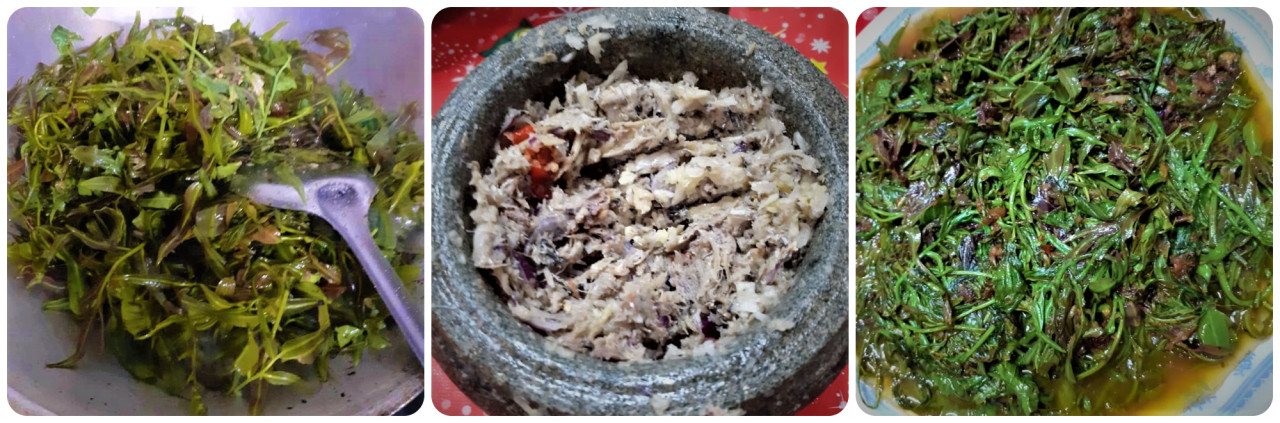
FIRST-TIME visitors to Sarawak are likely to be introduced to midin, perhaps stir-fried with shrimp paste (belacan) or sautéed with garlic.
What is “kangkong-belacan” and “kangkong-garlic-fried” in West Malaysia is “midin-belacan” and “midin-garlic-fried” in the Land of the Hornbills.
Sarawakians do enjoy kangkong, of course. There are plenty growing wantonly in their backyards, but there is “something different” about this humble wild jungle fern called midin or lemidin.
It is also called pucuk midin and is most often confused with pucuk paku but midin and pucuk paku are not the same.
It is midin’s crunchiness as well as its sweet-briny taste when cooked with shrimp paste, or its allicin-like toasted-nuance-flavour when garlic-fried, that makes it an “out of this world” sapidity.
And it is the same accompanying crispy-crunchiness, when fried either way, that makes one go for a second helping, and even perhaps – if no one is watching – a third lunge for the all time stir-fried sensation of Sarawak.
Of late, midin has found fervour with Singaporeans as well. The perishable cargo is freshly air-flown by Scoots Air to the island state where it is sold at $12 (RM36) per kilo – a bounty at this princely price.
The Sarawak Trade and Tourism Office (Statos) recently reported that the first shipment of midin was sold out via online pre-orders even before it could reach Singapore’s shores.
Statos CEO Chew Chang Guan says it is a good initial start. Buoyed by this demand from Singaporeans, he told local media, the agency is looking at further exploring and promoting midin as another of Sarawak’s prime exports to the island state.
Even Sarawak Chief Minister Abang Johari was surprised that midin, once an inglorious wild fern only known to longhouse dwelling Dayaks, is now a hot favourite in Singapore. And he was further amused that it is actually air-flown to the Lion City.
Perceiving a potential market for it, the chief minister urged Sarawakians to cultivate midin as a lucrative cash crop and market it through Statos.
Midin goes ‘Shoppee’
Seemingly cajoled by the chief minister’s call to engage in the cultivation and marketing of midin, Mazidah Azmi of Miri hopped on the bandwagon duly raising her sales pitch on the Shopee platform: “Midin is a jungle fern endemic to Borneo. It is delicious when cooked stir-fried with shrimp paste, baby corn and black fungus.
“It can be prepared as a spicy dish or toasted with garlic according to individual preference. It can also be prepared as a Thai-styled sweet-sour speciality or peppered as garnishing in spicy porridge. Book early for fresh supplies,” she said.
When contacted, the enterprising Mazidah, a former banker, was jolly-upped that even a news portal was keen to feature this once lowly fern.
She tells The Vibes: “Midin is growing to become a very popular vegetable dish.
“I sensed its popularity will explode and since it is only available in Sarawak, I saw a business opportunity to sell it to West Malaysia and Singapore.
“A friend of mine is acting as my agent in Johor Baru and her husband who works in Singapore takes it across the causeway for her regular Singapore customers.”
“Many of them work in Singapore and there are others who are working in the many factories in the state as well.”
She said there are hordes of midin-craving Sarawakians in other parts of West Malaysia as well and she has plans to recruit agents in Kuala Lumpur, Melaka and Penang.

“I get my supply from my regular midin gatherers in Miri at just RM2 a tompok. A tompok is a clutch of a handful, not even amounting to a kilo,” Mazidah explains.
She sells her midin at RM20 a kilo and makes a very tidy profit in this fortuitous business opportunity.
However, as the Covid-19 pandemic dawned on Malaysia, Mazidah faced a setback in her business start-up.
“I have now put my midin business on hold, but still sell it at the local tamu (market) for a much lesser price.
“This is to help my suppliers and to stay in touch with them.
“When the pandemic is over and travel restrictions are lifted I plan to continue my midin sales to West Malaysia and Singapore.”
Uniquely packed
There is another interesting side to midin. It is perhaps the only vegetable in the market packed in green bouquets.
When midin is harvested it is wrapped around in daun simpoh (Dillenia suffruticosa) or commonly known as Dillenia in English.
This leaf is also used by the Iban community to drive away ghosts and evil spirits.
Market vendors sell each bouquet at only RM2.
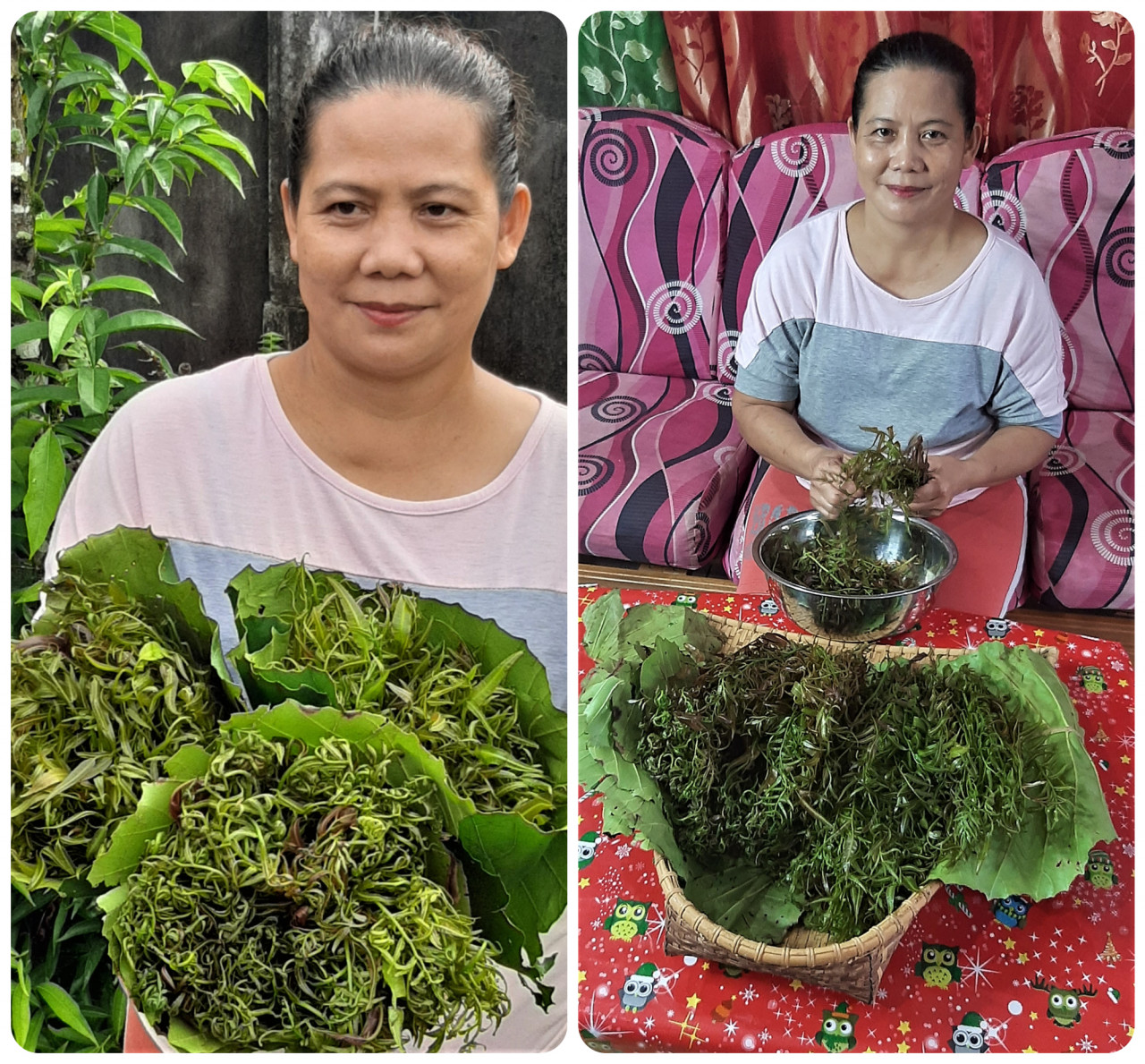
Housewife Roseini Madrod gets her regular supply of midin at the wet market near her village at Kota Padawan.
“At RM2 a bouquet, it is very cheap, perhaps, hardly weighing a kilogram.
“So, I purchase two or three bouquets as my children love it and I prepare it with shrimp paste and fry it with garlic for lunch and dinner respectively.”
According to Roseini, midin must be cooked the same day it is purchased as it perishes quickly. However, it can be stored in the refrigerator for about two days and still be good and fresh.
She says, midin is very easy to prepare and it can be cooked in a hurry.
“We begin by breaking the stalk together with its leaves starting from the top to about a little below the midpoint.
“Anything beyond this point is too fibrous to be eaten. But all the leaves can be consumed, even those beyond the midpoint.”
Asked if she midin should be officially recognised as another of Sarawak’s popular food choices along with Sarawak Laksa, Kacang Ma, Kolok Mee and Ayam Pansuh she says: “Why not, it is perhaps the best naturally growing organic vegetable and is cheap.
“It is never attacked by insect pests, hence no herbicides are used and it is not cultivated by human hands.
“It is available in the remote longhouses of the rural poor, in five-star hotels and restaurants as well as in every Chinese seafood restaurant.
“It is the food of the rich and of the poor,” she says. – The Vibes, January 30, 2021