.jpg)

TAWAU – The human-elephant conflict in Sabah started when the smallest species of elephant in Asia - Borneo Pygmy elephants - had most of their home, the forests in Sabah’s east coast, developed into palm oil and timber plantations over the years.
While the government has been doing their best to move these elephant herds into gazetted forest reserves, it is difficult to move all of them, or to ensure that they stay in the reserves.
When viewed from the perspective of plantation owners, elephants are a liability as they have been destroying their crops; smallholders may lose their entire crop of young oil palm in one day if a herd of elephants arrives on the scene.
The Sabah Wildlife Department revealed that 64 elephants have died in Sabah’s east coast from 2018 to date, mostly in plantations.
To solve the human-elephant conflict, a Sabah based non-governmental organisation (NGO) - 1StopBorneo Wildlife - came up with a project that was implemented in a plantation in Tawau in 2018, and it worked.
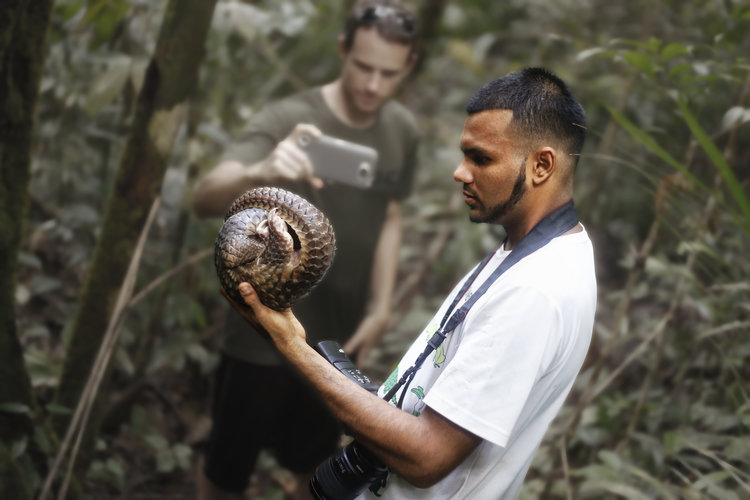
Founder of 1Stop Wildlife Borneo, Shavez Cheema said that the core goal of the project - named Plant4Borneo Elephants - is to turn elephants from a threat, to assets in the eyes of the plantation owners.
Sabah Softwoods Berhad (SSC), an established agro-forest plantation company based in Tawau became the first partner of the volunteer group’s project.
SSB’s core business is in timber and oil palm plantations. About 60 to 80 elephants roam in their vast plantation with the size of about 60,700 hectares (ha).
About 12% of the land, or 7,000 ha is set aside for conservation, including wildlife corridors.
From liabilities to assets
.JPG)
For the project, SSB has set aside a specific wildlife corridor, which is 13.89 km in length and 400-800m in width.
1Stop Borneo Wildlife then worked with travel groups to bring in paying locals, foreign tourists, and volunteers to the plantation for a one-day “elephant safari” tour.
“Through this initiative, 1StopBorneo Wildlife has already raised almost RM30,000 for the plantation in one year.
“Admittedly the elephants are still causing some damages, but the tourist revenue of RM30,000 for the plantation in one year is clearly way above the monetary value of the damage.
“This encourages the plantation owner to protect the elephants. The importance of this programme is that it has created a monetary value for the elephants, showing that they are assets, not liabilities,” Cheema said.
He also said as part of the visitors’ one-day tour, tourists and volunteers would plant saplings of local trees along the wildlife corridor before going out on the safari.
“They planted the elephants’ favourite food: figs, laran (kadam; Anthocephalus chinensis/cadamba) and dipterocarps. To date, about 1,000 trees have been planted along the corridor, all paid for by the visitors,” he said.
Cheema said that the Plant4Borneo Elephants’ model could potentially save more elephants not only in Tawau, but in other plantations in Borneo, Peninsular Malaysia and neighboring countries like Thailand.
.jpg)
“Traditionally, scientists and environmentalists have lobbied for punishments for poachers, as well as for policy changes to upgrade the elephants’ vulnerability status. We, a group of scientists, also suggest that the authorities employ more rangers to protect the elephants.
“However, all these measures cost money. Conservation efforts around the world usually struggle to raise funds as there is not much monetary benefit in it.
“We believe more corporate stakeholders would come on board a project when there is an economic value or incentive,” he said.
The project’s approach to use elephant conservation to entice animal-loving tourists to the state was also commended by former State Minister of Tourism, Culture, and Environment Datuk Christina Liew.
Liew said that the project has boosted Tawau’s economy, not only in tourism, but also in creating more jobs such as drivers, chefs, community guides and photographers among the locals.
“We, at 1Stop Borneo Wildlife are just one small part of this, hopeful that our Plant4Borneo Elephants project will continue to demonstrate that elephants can be an asset on plantations and will serve as a model for many other similar projects in Sabah and elsewhere,” Cheema said. –The Vibes, February 7, 2021.