.JPG)

OVER the last three decades, the Temple of Fine Arts (TFA) has made a name for itself both in Malaysia and overseas for its food and also as a cultural one stop centre, showcasing beautifully choreographed dance performances and above all, providing a place of learning for young and upcoming artistes to learn music and dance and thus preserve a vibrant Indian cultural identity for generations to come.
When the pandemic struck, it caught TFA off guard but within weeks tough decisions were made and online learning became a norm with the help of well-wishers and volunteers who built digital studios for the benefit of teachers, who needed to reach out to students for both music and dance classes.
Thus, it was no mean feat to have faced the pandemic head on and survive, but (TFA) pooled all its resources together and came out with a strategic plan. It was painful at times but the very survival of TFA was at stake, a much-loved institution, with a large following of members and volunteers.
.jpg)
Established in 1981, TFA grew to be a hub for the fine arts and was the brainchild of His Holiness Swami Shantanand Saraswati, who set it up “to help Malaysian youth rediscover their cultural, artistic and spiritual wealth of their forefathers and to make it relevant for themselves and for future generations to come.”
It was indeed a tall order but together with the community and the talent in existence at that time, primarily Gopal and Radha Shetty and Sivadas and Vatsala, thus was born TFA and its strength lay in the families and volunteers who till today, stand solidly with TFA in all its successes and challenges.
Malar Gunaratnam, Senior Dance Director, elegantly dressed in a saree, 79 years whose sprightly manner belied her age, has been with TFA since its inception and in the last three decades has played a key role in many of the show stopping performances which have become the hallmark of TFA.
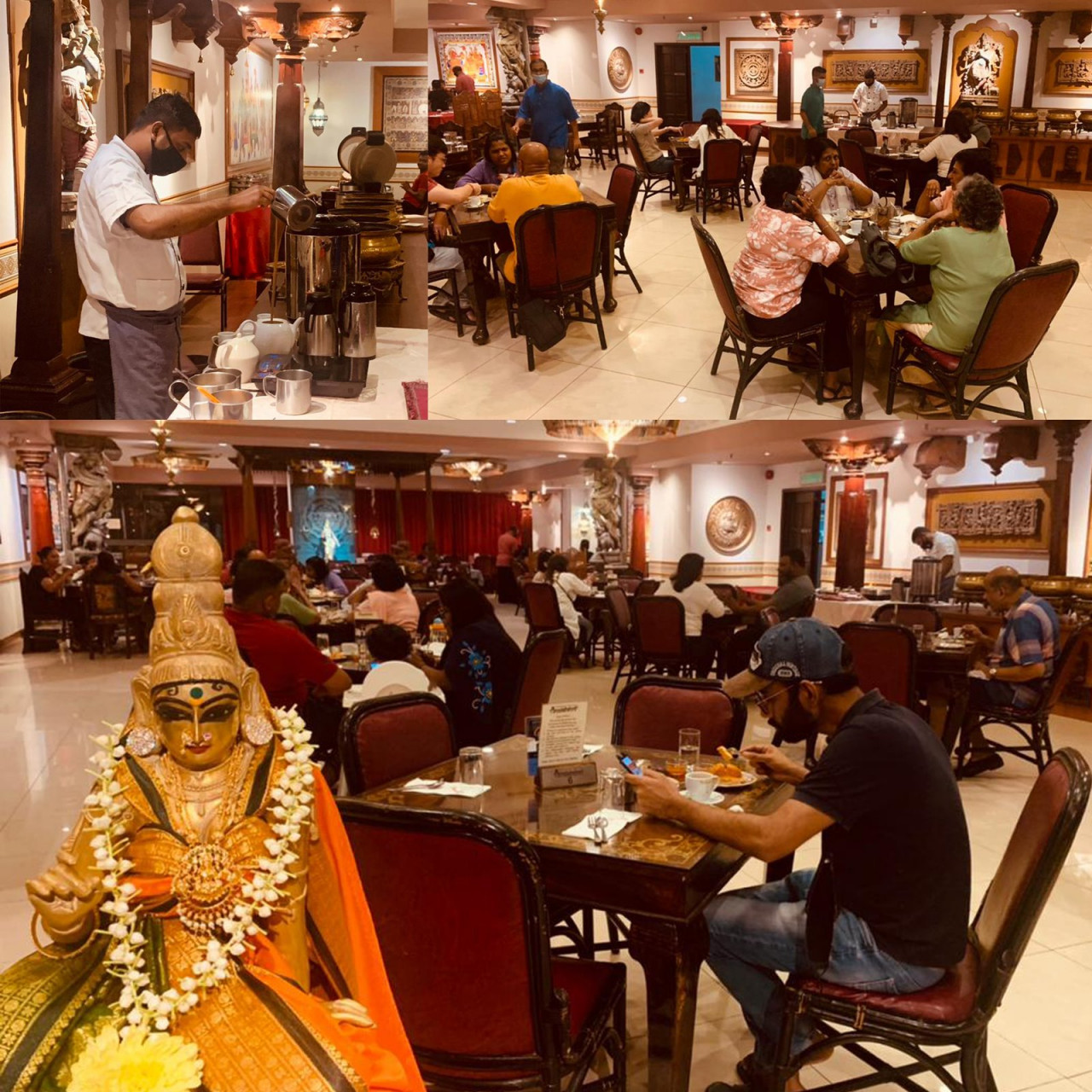
Over the years, TFA also stood synonymous with the ideals of “Serve, Love and Give” and this has given rise to SivaSanta Medical Clinic, the famous vegetarian restaurant Annalakshmi, run totally by volunteers, Lavanya Arts, specialising in arts and craft and Hamsa Vahini Travel & Tours, a specialised travel agency. There is even a café at the back of TFA, catering to those who need only pay what they can afford for the food served.
So what then was the winning formula for the survival of TFA, which at the time of the pandemic had 1,700 students, out of which 600 students took leave as at April 2020.
Malar and Shrither Nagalingam, TFA treasurer, share the various steps taken to lessen the impact of the pandemic.
“Immediately upon the onset of the pandemic in March 2020, we made a decision to move all our classes, with one exception, to online between April 2020-July 2020 (4 months). On top of that, we gave students a 20% discount on their regular fees,” shared Malar.
“It was definitely no easy task due to various factors such as lack of proper space or facilities at home to attend classes, poor internet connectivity and lastly the most important was the lack of instruments to follow the classes at home,” said Shrither.
“Of course, given all these limitations, we had approximately 600 students take leave at the end of April 2020 out of a total student population pre-pandemic of 1,700 students,” said Shrither. “Which in turn caused TFA to suffer a loss of income of RM85,000 of regular collections for 4 months from April to July 2020.”

According to Shrither, in August 2020, TFA was able to resume classes with appropriate SOPs at full fees but all that came to an end from October 2020 to February 2021 due to the reimposed MCO and again classes moved online to ensure students would not lose out.
The losses according to Shrither not only related to the online classes but also to their other sources of income.
“As TFA is involved in other activities covering the booking of the TFA Hall, external performances and also the rental of the Annalakshmi Restaurant, which also suffered a loss of patrons during the movement control order we were hit from all sides, but we quickly adopted strategies that would allow us to carry on despite the pandemic,” said Shrither, who oversees the accounts of TFA.
“Among the strategies we adopted was a salary deferral scheme among staff and we were also lucky to receive contributions from staff and also TFA members, volunteers and well-wishers which amounted to RM300,000.
“We screened a fundraiser digital performance ‘NamahSTAY - Heartfelt greetings from our homes’ which was sent to all social media platforms on May 10th 2020, launched a special Siva-Gopal Covid-19 scholarship fund to support students affected by the pandemic so they could continue classes,“ said Shrither.
According to Shrither, they didn’t raise much, but in the process, there was better engagement and camaraderie between the teachers, management and TFA members.
“We also applied for various grants and schemes by the government to support the arts industry during the pandemic and this provided some relief in the short term.”

Malar, a founder member of TFA, who shares a special and close relationship with all the volunteers and members of TFA, said they formed the backbone of the organisation and they came forward in their own way to render help in one way or another.
“Unlike other commercial entities, TFA was formed by those who support arts and culture and they want it to flourish and so when times became dire during the pandemic, volunteers came forward to set up two digital studios on our premises so classes could be conducted digitally,” said Malar.
“The important aspect to us is that none of our staff were retrenched and we were able to bridge the shortfall in revenues,” shared Shrither.
Kumar Karthigesu, the music director of TFA, said in the end it was quick action on the part of management that allowed them to survive the turbulent times.
“Within 10 days of the first MCO, TFA teachers and management met and implemented online learning for most of its subjects. We made use of freeware teleconferencing software available and roped in a volunteer software engineer to integrate it into the TFA existing system,” said Kumar, who oversees the sound and music systems essential to the smooth running of the various programmes at TFA.
In response to how Annalakshmi Restaurant survived the turbulent times, Kumar said the restaurant converted itself into a daily supplier of fresh vegetables and produce. It also engaged in food distribution by partnering with Grabfood and Food Panda.
Today TFA is coming to terms with the MCO and classes have gone back to normal but with strict SOPs and social distancing. The management of TFA are still kept on their toes as a result of the changing landscape but they hope with the lower numbers and the onset of vaccines, things will return to normal soon. – The Vibes, April 25, 2021