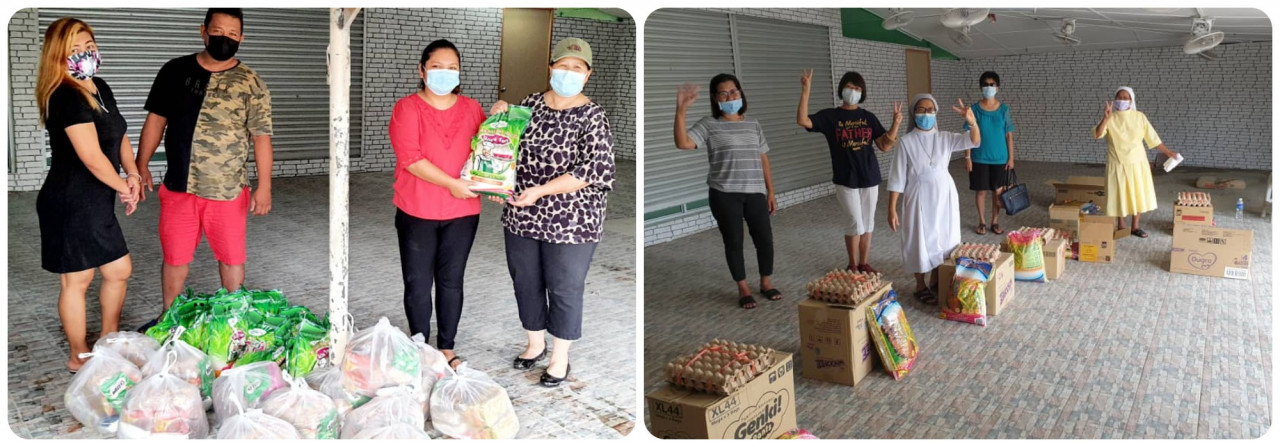
WHITE FLAGS are up in Permyjaya, a township in Miri. Responding to the fluttering chalky-white pennants – which serve as an SOS that a certain household is in need of food – is retired priest-exorcist Fr Sylvesterding Ibau and his team of helpers.
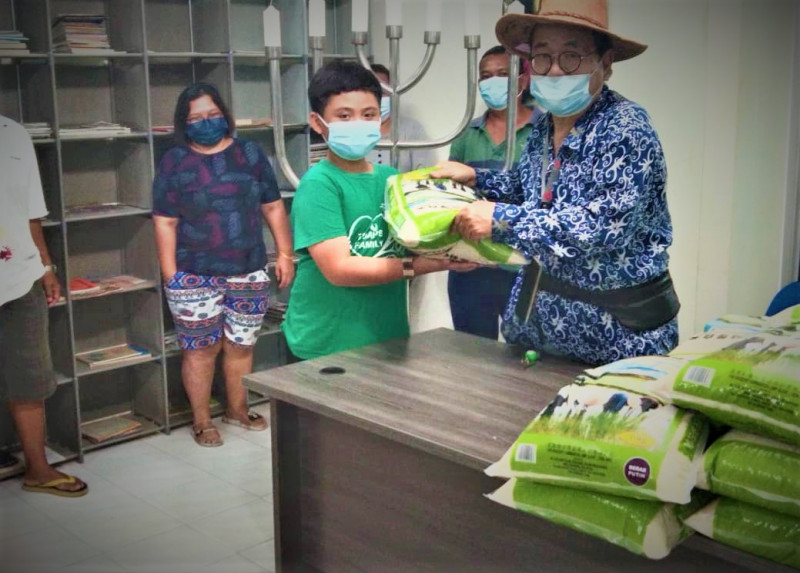
Sylvesterding, donning his trademark Lun Bawang-made tree-bark cowboy hat reaches out to hungry families with a bag of rice and other basic essentials. Sometimes the needy come to his foodbank at his retirement home to collect packets groceries. There are also baby formulas for families with infants.
The families are grateful. At least for today, and perhaps a few more days they will have some food on their tables. And Sylvesterding is pleased to ease the hunger pangs felt by adults and children alike.
Priests usually retire at the age of 75 if they are in good health. But Sylvesterding retired from active priestly ministry in January this year at the age of 69.
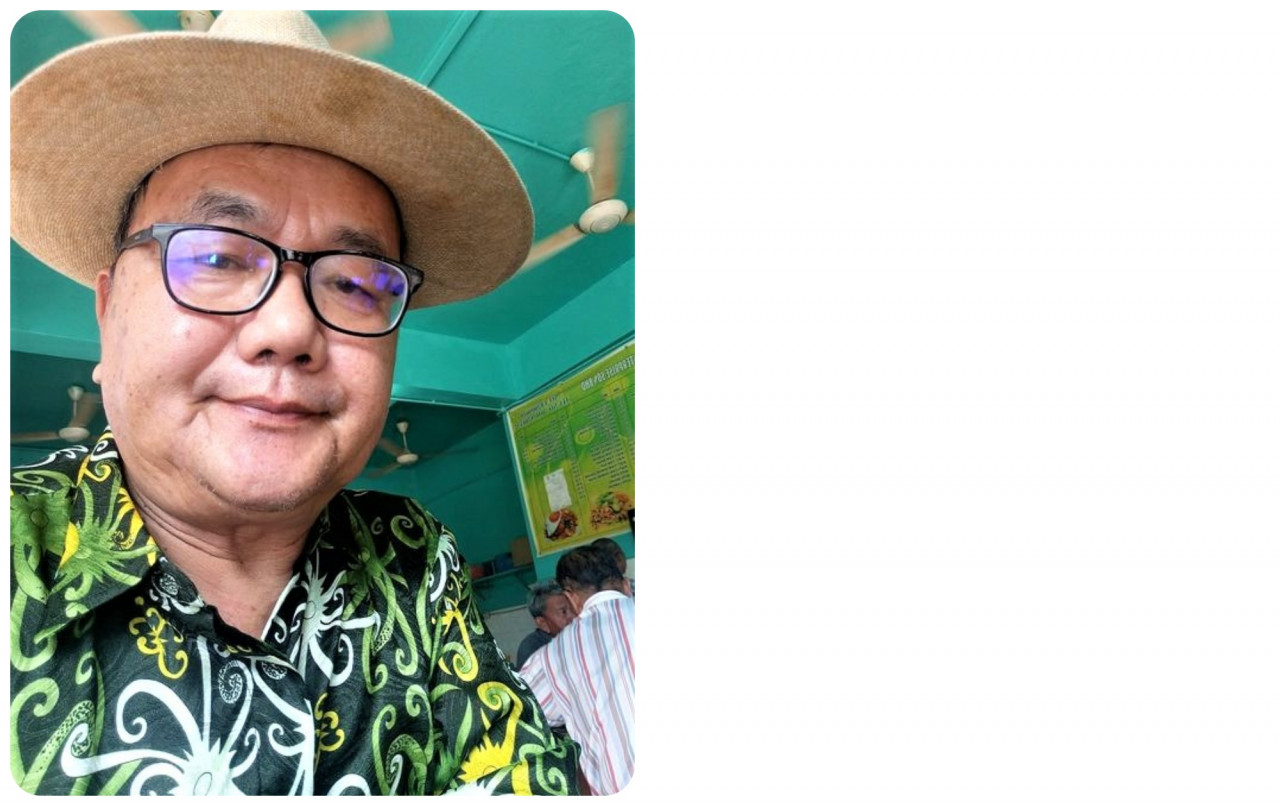
It was his dear wish, as he had desired to engage full time in the ministry by serving the poor. And his boss, the Rt Rev Richard Ng, Bishop of Miri, allowed him to retire earlier from the diocesan ministry so he could engage with the poor.
Sylvesterding, the first Catholic priest to be ordained from the Kayan tribe, had earlier harboured a secret wish to do a doctorate programme at the prestigious Catholic University of America in Washington DC, with the hope of being an academician.
However, he perceived another path before him, a path leading to the oil-rich Miri city teeming with the urban poor. Between the two paths that forked before him, the former priest-exorcist chose the road less travelled – embracing a new vocation to serve and minister to hungry families.
He tells The Vibes: “I have taken upon myself a different yet complementary ministry. There is spiritual poverty in people possessed by the devil. But this poverty has a cousin in the physically poor. In dogma, the first is called ‘spiritual works’ of mercy and the latter which I am now involved in is known as ‘corporeal works’ of mercy.”
“I am still a priest but I am not serving in the ministerial priesthood at the diocese level,” says Sylvesterding, adding: “What I am doing now is equally fulfilling just as when I was serving as a parish priest.”
The urban poor
“Even as a parish priest I was confounded upfront by the urban poor in the community and this has inspired me to celebrate the lives of saints like Mother Teresa, who once said that if you cannot feed the whole world feed just one person at a time.
“I am also inspired by St Lawrence of Rome who propagated that the poor are the ‘asset’ of the Church."
Sylvesterding seems to have stepped into his new mission at the right time.
With the infection rates spreading like wildfire everywhere – the national economy in tatters and melting down, jobless people penniless and families struggling to have one decent meal and Covid-19 deaths “just a breath away” – Sylvesterding has discovered the 'Calcutta' of his own neighbourhood and has a job cut out for him and his team.
In a short span of six months he has garnered RM100,000 from benefactors to start-up his new hunger-defying project. One of the benefactors is the late Cornelius Cardinal Sim, who generously donated RM8,000 to the cause of Miri’s pandemic-hit poor.
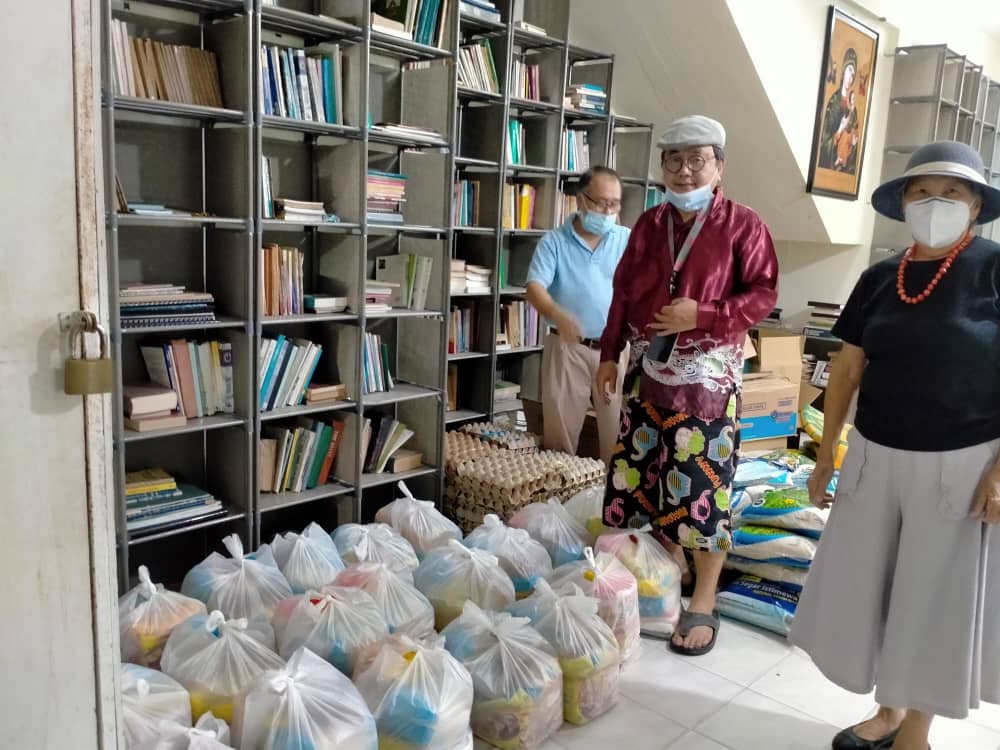
With a food bank set up in his retirement home, he and his team distribute food packages on their daily rounds. There are also desperate people who call at the food bank to pick up some basic essentials that they need for at least a brief period of sustenance – before they return again for replenishment.
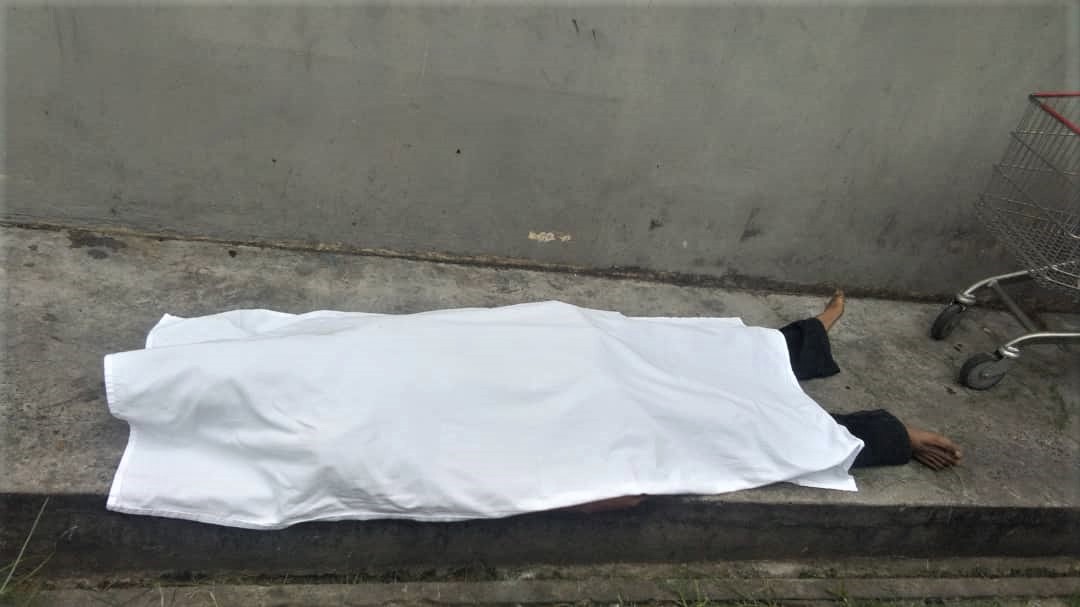
“On Thursday I received a photo in my phone. It was an image of a body covered with white cloth. It was the body of a young man lying dead on the street. Just a few days ago we visited this man and his family to distribute food rations,” said Sylvesterding.
“This man could not face himself or his family being jobless and penniless. He took to drinking cheap liquor to insulate himself from the harsh reality. I was told he died of a heart attack in the streets. He leaves behind a young widow and three children.”
“Poverty has reared its ugly head. It comes in different shapes and sizes,” he says.
“Drinking to drown one’s sorrow is another kind of poverty but people will always be judgemental.
"In our team we try to provide for everyone without asking questions. Our charity is not based on race or religion. In fact, we were surprised that several Chinese and Malays count among the many natives who come to seek our food bank for help.”
Sylvesterding says though this pandemic is harsh, it has brought out the best among the people.
“On Friday I received 120 food packages from a few donors. This is the spirit, where people come together to help their neighbours who are in want.”
The priest-exorcist
Sylvesterding looks back at the time while he served as a priest with continuing fondness and has some rarely heard-of stories to tell. Life in the parish was rarely routine and predictable, he says.
“Each sacrament which I had administered, whether a baptism or pardoning and absolving sins spoken at the confessional, or anointing the sick gives a great sense of edification and fullness of life,” he says.
“I was also quite active in the ministry of exorcism. Every Catholic priest is an exorcist by virtue of his ordination. However, to streamline things, every diocese has a ready pre-selected team of exorcists who will be called upon when the need arises.
“I was first involved in this ministry of exorcism in the early years of my priesthood. In a way, it happened just in the daily routine of my work at the Church of Saint Anthony in Bintulu.”
A man was forcefully brought to the church by several people. He was a victim of demonic possession.
“I immediately called the parish priest in charge who instructed me to call for additional help from the senior lay leaders. We battled a legion of devils that had possessed the man. For five long hours we fought the forces of evil before the demons left the victim one by one.”
The entire prayer room was wet with a peculiar smelling green vomit which the man threw up during the rite of exorcism, says Sylvesterding.
At one point during the rite, the man spoke in a strange guttural voice. It was not his voice. He finally collapsed and was sober again. Evidently, we had defeated the evil force, he added.
The man later admitted to the priests that he had been paying homage to an Oriental deity which eventually possessed him and took control of his soul.
“This experience taught me to learn more about conducting the rite of exorcism according to the Roman Ritual,” said Sylvesterding.
“I read books. I asked the bishop and senior priests to teach me how to deal with such cases. As the charismatic renewal gained momentum in the Miri Diocese, there were more and more cases of possessions. I learnt more abroad in the United States while reading for my masters in theology and in South Korea.”
Among the things Sylvesterding learnt were to recognise “tell-tale signs of demonic possession” such as the victim having superhuman strength, speaking in a language the victim doesn’t know, inordinate aversion to sacred objects such as holy water, the crucifix and the Rosary – having knowledge of events or facts the victim could not possibly know and changes in facial features and the manifestation of multiple personalities.
He also pointed out that a 360-degree head spin as featured in the movie 'The Exorcist' is not one of the tell-tale signs of demonic possession, but a made-for-cinema Hollywood imagination.

Girl possessed, boy with toyol disturbance
Another case of exorcism involved a girl brought by ten strong men to Sylvesterding's office. This happened in Miri while he was a chaplain to the Carmelite sisters. The men had to hold the possessed girl tightly because the evil ones inside her had given her extraordinary strength.
“I told the men not to ease their grip as she can break free and harm the exorcist. I first commanded the evil one to get out of her first. Performing the rite of exorcism can take hours or even days. But this was an easy one. As easy as sprinkling holy water on the possessed girl and invoking the help of the Blessed Virgin Mary by praying the Hail Mary,” he said.
The evil one left the girl. As such is the divine power given to a priest when his hands are anointed during ordination, says Sylvesterding.
“I counselled the girl and discussed with her certain things which she may have done which could possibly be the “entry point” through which the evil one took possession of her personhood.
Sylvesterding said playing such games as 'Spirit of the Coin' or engaging with a ouija board are ways through which the devil can enter a person and take control of his or her soul. After administering the “sacrament of reconciliation” the girl was free, he said.
On another occasion, I delivered a boy who was bothered by toyols. The boy told me the “little beings” disturbed him in his sleep.
“I recited a prayer of deliverance and for a week he slept well. However, they returned to haunt him again by the end of the week and the boy returned to tell me that the toyols are back and bothering him.”
Sylvesterding said from past experience, he knew that some indigenous people used certain linen in pagan rituals.
True enough, the boy showed me a stack of blankets made from this specially woven linen stored in his cupboard and which were used in the performance of the forbidden rituals.
He told me he could see the toyols coming out from the cupboard as he slept. After I recited a deliverance prayer over the blankets, the toyols left and the boy was able to keep his prized blankets.
Ordained a priest among the poor
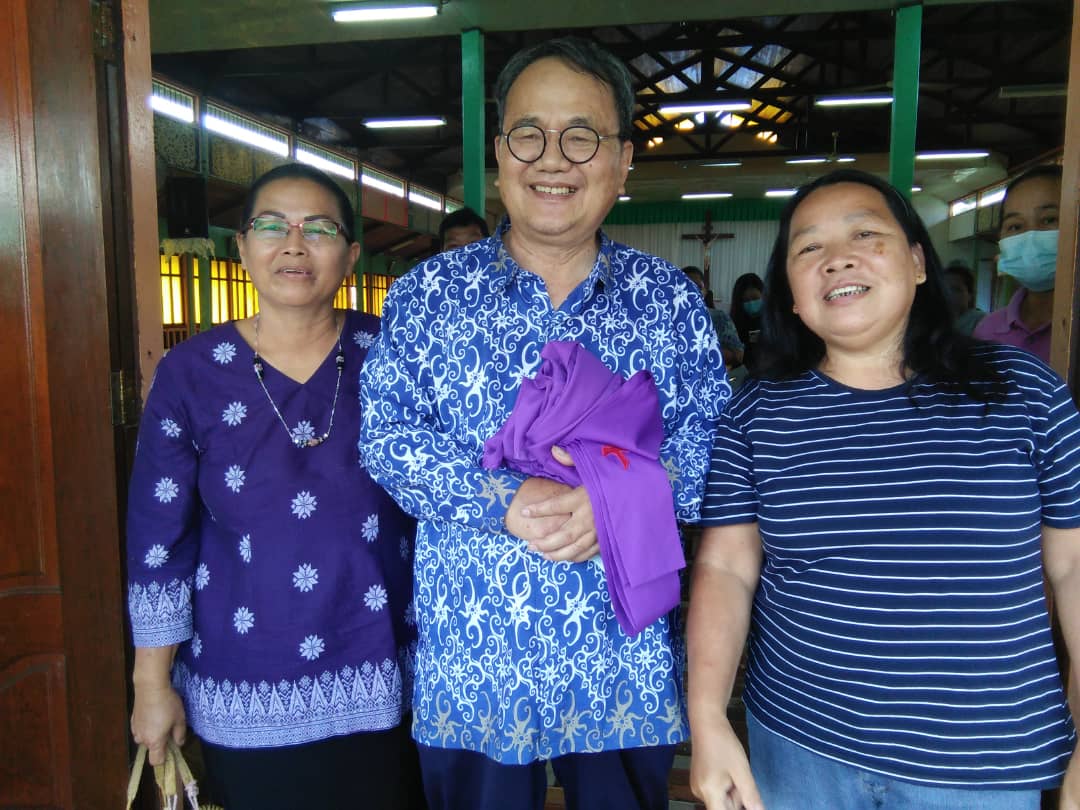
Sylvesterding is no stranger to poverty. He was ordained to the priesthood on Nov 18, 1988, at the longhouse chapel of Our Lady of Fatima in the interiors of Baram, among the poor Kayan community.
At the beginning of his priestly ministry, they were quite poor as the longhouse was razed to ashes six months earlier.
For his ordination, a native chief donated a big cow as an ordination gift, he says. They tried to bring it over by boat, but the agitated cow rocked the boat so much that they decided to shoot the animal and transport the meat over for the ordination feast attended by 2,000 people.
In later years he also served the poor semi-nomadic Penan tribes in the state’s interiors. They too had little money to offer for the upkeep of the parish but they paid in kind, Sylvesterding says.
He recalls on one particular occasion, where the tribes shot ten heads of wild boars and offered the meat to him as stipend for ministering to them. The parish counsellors sold the meat, fetching RM2,000 and that was eventually used for his travels to the deep interiors by a 40hp boat.
“Today, I live among the poor in order to serve them well instead of a parish house. The future of my ministry is under God's Providence. From my neck up I rate myself with an A+ and from the neck down I give myself an A-,” quips Sylvesterding.
In his present mission, Sylvesterding seems to have taken a cue from the Book of Deutronomy (15:11) – “There will always be poor people in the land. Therefore I command you to be openhanded towards your fellowmen who are poor and needy in your land”. – The Vibes, July 18, 2021
Note: Those who wish to support Fr Sylvesterding’s ministry for the poor, please reach him at email: [email protected] or cellphone (Call/Whatsapp) at 0128844355.