FACED with extreme temperatures during the summer, Abu Dhabi is developing various solutions to offer its citizens some respite.
With the help of vegetation and specific urban furniture, the capital of the United Arab Emirates can now serve as an example to other major global cities facing similar challenges of climate resilience.
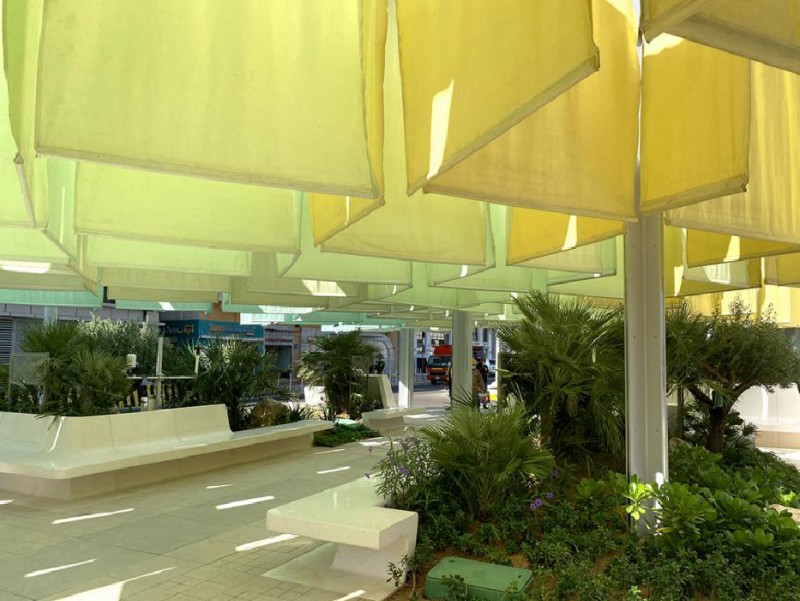
Abu Dhabi recently opened a new kind of park. Among other things, it features canopies and shades that open at night to allow heat to escape, as well as benches that are partially shaded by nearby buildings.
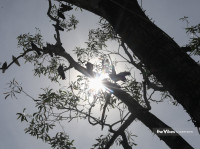
A structure placed just above provides additional shade. Small walls channel the (warm) breeze through the park, and strategically placed misters spray water into the air to provide constant cooling. Finally, native plants also contribute to the feeling of coolness.
The park is an example of the type of design that could help cities around the world deal with rising temperatures. It was designed in collaboration with the architecture firm CBT, which is preparing to offer this type of infrastructure to other municipalities, starting with Boston in the United States.
In Abu Dhabi, the height of the buildings already provides plenty of shade in the streets and partially blocks the circulation of hot air. Nevertheless, sidewalks and traffic often accentuate the feeling of heat, making it all the more important to create small islands of greenery and coolness where possible.
Near Abu Dhabi is Masdar City, a new "green" city where climate resilience was taken into account from the moment it was built. Here, the location of buildings has been designed to protect people from the sun and to shade public spaces. Numerous green spaces have also been planned, from the outset.
The United Arab Emirates is now an open-air testing ground for other large cities facing similar problems around the world. To limit the effects of rising temperatures, many are trying to increase the number of green spaces and plant as many trees as possible, as Los Angeles has done.
Over the whole city, trees now shade 20% of the territory, although that still might not feel like much in hot weather. – ETX Studio, July 20, 201