
LUNG cancer has long been a healthcare crisis, in fact, in 2019 it was the fifth leading cause of death among Malaysians. Cancers as a whole were responsible for 16,000 deaths annually from 2012 to 2016.
The Covid-19 pandemic has only served to make the situation even more precarious as resources have been pushed to the limit. However, it is not all gloom and doom, and there is a silver lining to be had – despite an uncertain future.
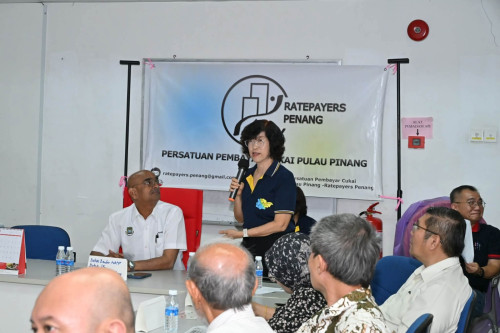
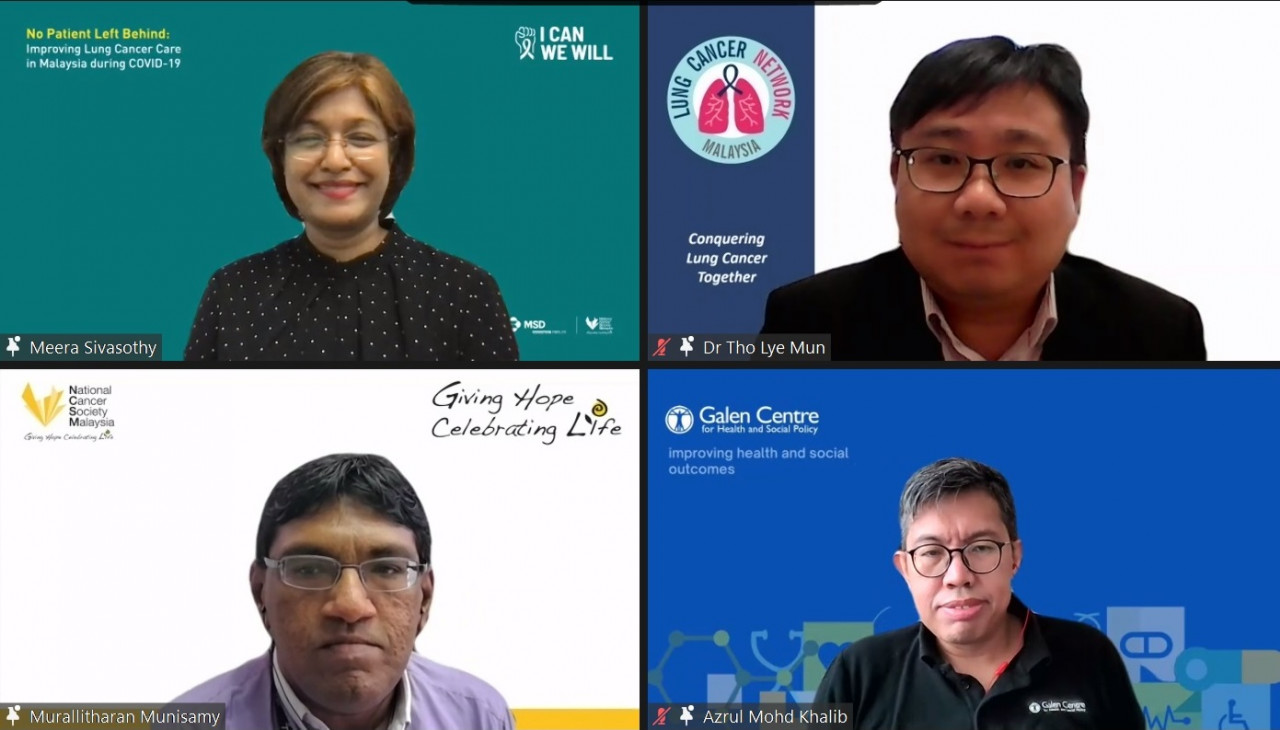
During a National Cancer Society Malaysia virtual media forum last week, experts who have been in the trenches of dealing with lung cancer shared their experiences.
Lung Cancer Network Malaysia clinical oncologist and vice-president Dr Tho Lye Mun shared that there have been positive developments when it comes to new cancer treatments.
“In this age of medical advancement and innovation, cancer is no longer a death sentence. We are seeing an innovative approach to cancer treatment emerge, which takes into account the individual's unique genetics, environment, and lifestyle to personalise the treatment approach.
“We are moving away from a one-size-fits-all model. By studying each patient carefully, we're able to match the right treatment to each patient and move away from a trial-and-error approach.
“This saves time and costs, as well as reduces side effects. We're relying a lot less on chemotherapy and shifting towards targeted therapy and immunotherapy.”
Immunotherapy, the doctor explained, is a relatively new way to fight cancer that harnesses the patient's own immune system to fight the illness.
Unfortunately, because of how new it is, immunotherapy is out of reach for many Malaysians and is only available at private hospitals.
“Only those with good insurance coverage and those being treated in private hospitals will have access to these treatments,” said Dr Murallitharan Munisamy, managing director, National Cancer Society of Malaysia.
“Those who are on these treatments do really well and can go back to normal lives – that’s a big game-changer in lung cancer.”
He added that government hospitals don’t have access to immunotherapy treatments, mostly due to a lack of financial resources – which has been made worse by the pandemic.
“The government needs to be able to invest in these kinds of treatments to make them accessible for a larger segment of the population.”
According to the Malaysian Study on Cancer Survival (MySCan), the five-year survival for prostate cancer and breast cancer is 73% and 67%, respectively, but for lung cancer, it is at a paltry 11%.
80% of lung cancer patients are only diagnosed at stage four. Meanwhile, for breast cancer, 80% are diagnosed at an early stage.
The Health Ministry’s cancer registry says the median survival time for lung cancer patients upon diagnosis is 6.8 months. But with immunotherapy treatments, this can be extended for years. And not just survival, but with a good quality of life.
“I think the beauty of what I spoke about in terms of immunotherapy is that we can get long-term survivors who receive the treatment initially for a period of time, but then they can come off treatment and can continue to experience a good quality of life and continue their life in a normal fashion,” said Dr Tho.
Azrul Mohd Khalib, founder and CEO of the Galen Centre for Health & Social Policy said, “… we need to be able to look not just in terms of dollars and cents, but also in terms of what kind of gains that we can get from lives saved, productivity that's able to be gained, quality of life, etc.”
The panellists agree that there needs to be a change in the mentality of decision-makers in terms of spending funds to increase the quality of cancer treatments.
“We are still stuck with the mindset that cheaper is always better, but we need to move beyond that,” said Dr Muralli.
“Instead of thinking of the total gain in terms of the number of people who can benefit from a treatment, we need to think of whether the return that we get from the treatment is more worth it.”
Azrul adds: “… the reality here is that the public sector itself must make the investment because 70% of the population of Malaysia access the public health system.”
Lessons learned from Covid-19
With healthcare resources pushed to the limit, there has been a never before seen level of cooperation between the public sector, private sector and civil society.
“At one point, the government was not able to manage Covid-19 on its own and the private industry, NGOs, all of us have stepped up to bridge that gap,” said Dr Muralli.
Patients were able to receive consultations from private-sector doctors, as cancer patients were decanted from government hospitals to private hospitals for treatment.
Dr Muralli hopes this level of cooperation can be built upon and expanded to include other healthcare crises, specifically on lung cancer and other non-communicable diseases (NCDs).
“I see lung cancer as a crisis, too, if over 90% of patients only have a median survival of 6.8 months.
“This is another area in which people can step forward to assist in a kind of partnership between the public and private sector, getting co-funders to come in and help subsidise or help improve patient access to cancer treatment,” he said.
Azrul notes that there normally exists all sorts of bureaucratic hurdles that limit the cooperation between the two tracks of the healthcare system. These obstacles have been pushed aside because of the pandemic.
“Right now, I'm glad that the private sector has been so cooperative and open and wanting to be involved.
“We've never really seen this before, and that's going to be a model that we have to learn from,” he added.
Despite some of the silver linings, there will be challenges ahead when it comes to addressing lung cancer. Will the lessons learned through Covid-19 be forgotten? With the spending on Covid-19 take away funds from combating NCDs?
“There are going to be tough decisions that have to be made that people are not going to like. But if the public and private sectors work together, then there can be a way forward. We can make the kind of decisions that need to be made for late-stage cancer patients and we can save lives,” said Azrul. – The Vibes, August 30, 2021