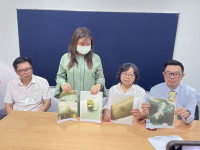
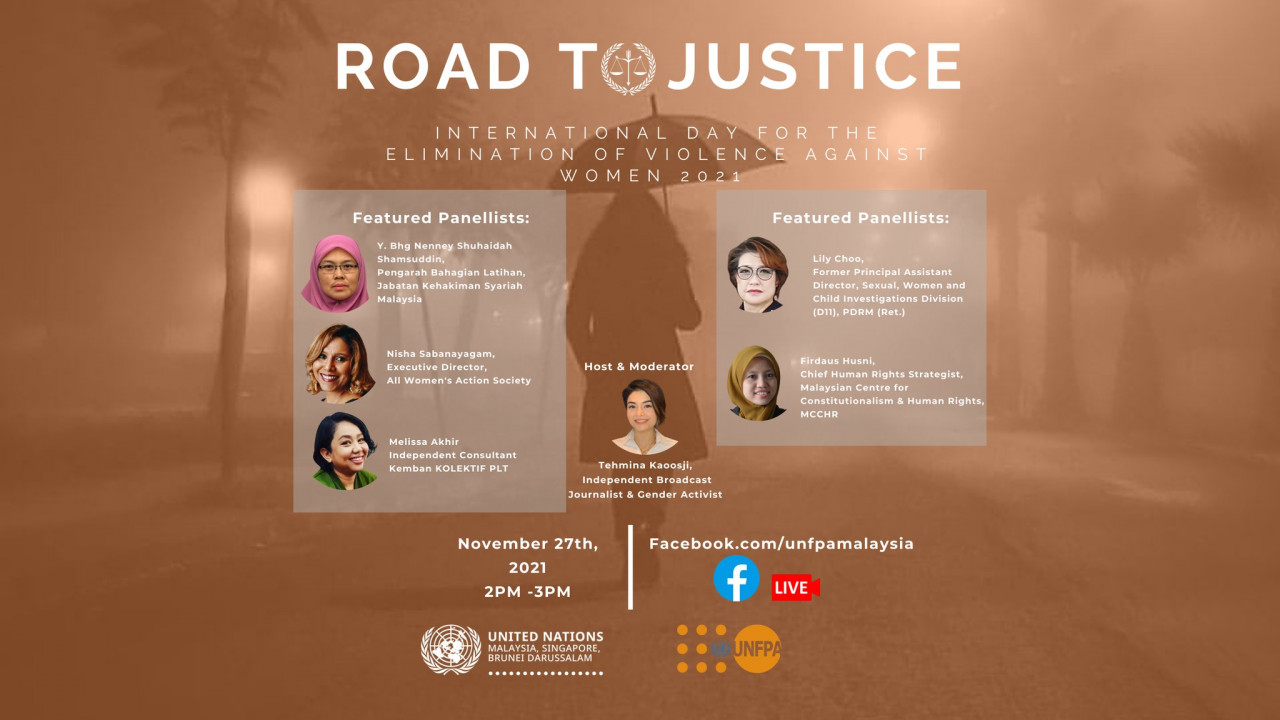
IN conjunction with the International Day for the Elimination of Violence against Women (#IDEVAW 2021) and 16 Days of Activism, with the global theme of 'Orange the world: End Violence against Women now!' – United Nations Malaysia & UNFPA Malaysia hosted Road To Justice, a special presentation on overcoming barriers to justice for women impacted by Gender Based Violence (GBV) during the Covid-19 pandemic.
The Road to Justice panel session moderated by Tehmina Kaoosji, brought together Nenney Shuhaidah Shamsuddin, Director of Training Division, Department of Syariah Judiciary Malaysia; Lily Choo, newly retired former principal assistant director, Sexual, Women and Child Investigations Division (D11), Royal Malaysia Police; Nisha Sabanayagam, Executive Director, All Women’s Action Society (Awam); Firdaus Husni, chief human rights strategist, Malaysian Centre for Constitutionalism and Human Rights (MCCHR); and Melissa Akhir, independent consultant, Kemban Kolektif to discuss the role of existing legislation in ending and preventing violence against women, through upholding their bodily autonomy.
Nenney Shuhaidah Shamsuddin, noted that current key legal provisions in Syariah courts protected women better. Muslim women no longer required their husband’s permission to file for divorce with the process also being shortened to 6 months. Wives can also request maintenance from the court.
She highlighted the severe access to justice issues created by complete Syariah Court closures during the first movement control order (MCO) in March 2020. “The courts are now open for divorce and alimony cases in particular, so women and children, especially those suffering abuse by their husbands are assured of safety and financial provisions,” she stated. She also touched on the importance of resolving Syariah cases of child support as they can only be cleared by court order and are essential for securing children’s rights and education.
However, under the Syariah system, the wife's alimony is safeguarded and can be claimed in many areas, even without a court order. She noted the importance of an Anti-Stalking Bill as there are currently no provisions in the law, given the grave nature of stalking and its tendency to escalate into physical violence.
Melissa Akhir stated that due to the MCO, the surge in demand for public health, social structures and access to justice were the three main challenges in Malaysian society and government for addressing Gender Based Violence (GBV). She pointed to increased psychosocial pressures on women and teenage girls resulting in them forming a worrying 83% of recent suicide cases.
In terms of economic violence under Intimate Partner Violence (IPV), Melissa stated the need to address financial and economic empowerment accordingly in urban and rural areas. Investments must be tied to Gender Responsive Budgeting (GRB) and part of the solution was for each household to normalise sharing of unpaid care work, instead of the full burden falling on women’s shoulders alone.
Lily Choo, drawing from her experiences heading the D11 Unit shared that GBV and domestic violence survivors require great courage to overcome social stigma, shame, financial uncertainties and child custody concerns – all of which often prevents them from filing police reports. She also related that there was a lack of funds and resources for training officers, resulting in rundown offices and a lack of proper vehicles to escort survivors to court and hospital. Lily emphasised that changing mindsets through awareness programs and training for officers themselves was also essential, so they were sensitised to female survivors’ needs rather than compounding their trauma with untoward remarks.
Regarding sexual harassment, Lily expressed concern that as many cases do not neatly fall under existing laws, victims are often unsure of reporting, or in other cases are unaware that what they have experienced is a punishable offence. Such scenarios then led to women living in constant fear, while repeatedly facing harassment and trauma.
Nisha Sabanayagam noted Awam’s concern at further increases in GBV cases this year, with their Telenita Helpline receiving 190 domestic violence cases alone, until October, compared to 82 reports through 2020. She emphasised the need for not just more resources, but to close gaps through national frameworks like the annual budget and the Malaysia Plan. These must include a proper rationalisation and section for addressing GBV, as it is a chief barrier preventing women from participating in the economy and contributing to national development.
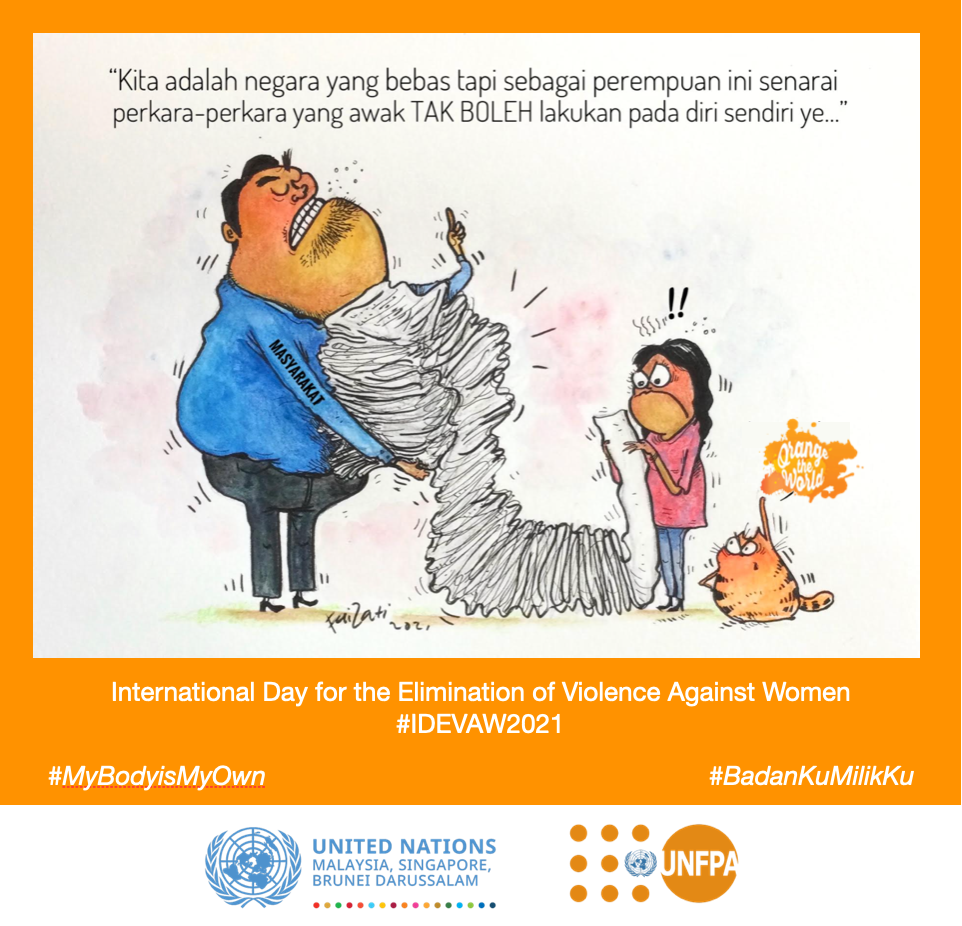
Nisha also pointed out that economic violence is the least studied form of non-physical violence and comes under the umbrella of domestic violence and intimate partner violence (IPV) which marginalises women. She further stressed the importance of Malaysia passing a survivor-centric Sexual Harassment Bill, which also addressed the steep increase in online GBV and sexual harassment, due to Malaysians spending more time online over the pandemic.
Firdaus Husni spoke about the challenges of translating laws into justice for survivors of GBV. She maintained that breaking the silence around discussing GBV so survivors would report needed to be balanced with not normalising a lack of accountability for men and boys. She acknowledged that deeply rooted personal and social prejudices towards women’s human rights and access to justice must be overcome through consistent efforts like gender sensitisation training to reduce resistance to change.
Firdaus also detailed how Malaysia’s current citizenship laws deeply marginalise Malaysian women who cannot pass on citizenship to their overseas born children. Denial of such a fundamental right is interdependent and interconnected with ensuing denial of healthcare, education and justice. Even more concerning, is the impact this has on survivors of economic violence and single mothers.
The forum also featured a special message from United Nations Resident Coordinator for Malaysia, Singapore and Brunei Darrussalam, Karima El Korri, who emphasised a whole of society approach towards ending Gender Based Violence “we call for stronger and firmer action to eliminate violence against women. We need innovative means to address the root causes, discriminatory laws and biased social norms and practices that sanction violence against women”.
IDEVAW 2021 marks almost two years since the start of the Covid-19 pandemic. Malaysia’s women and girls have suffered GBV due to deep rooted harmful practices brought to the fore by the pandemic’s various constraints.
Road to Justice has discussed barriers preventing women’s access to justice – with key insights for overcoming them and achieving gender equality in Malaysia. – The Vibes, November 29, 2021